
Vending Beside a Radiator: Review the Location Before Buying
A convenient empty corner is not automatically a suitable vending position. If a radiator sits beside the proposed cabinet, raise it during the site survey before ordering equipment. The useful question is whether the complete location meets the requirements of the actual machine, including its ventilation and operating conditions. A photograph of the corner alone cannot settle that question.
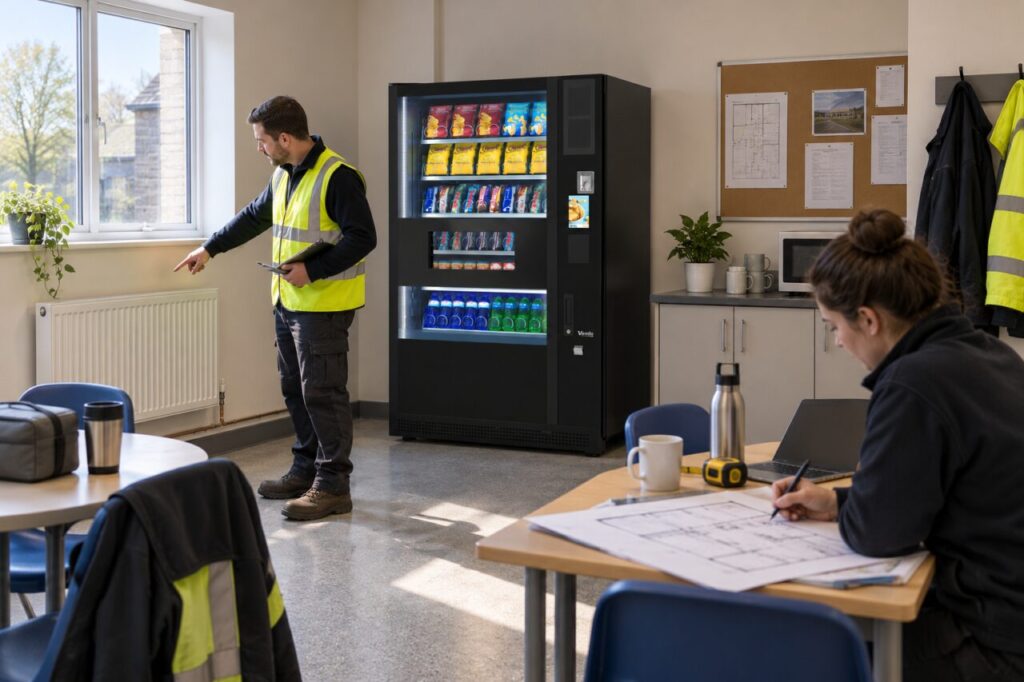
Describe the room as it operates
Tell the supplier when the heating runs, whether the radiator is routinely turned up and whether the room has other heat sources. Include nearby kitchen equipment, direct sunlight and any changes planned for winter. These observations help the assessor understand the space. They do not establish a safe separation distance, and a generic distance found online should not replace the installation instructions for the quoted equipment.
Take photographs showing the radiator, the proposed cabinet position and the surrounding furniture. Add a simple measured plan rather than asking someone to infer dimensions from a wide-angle image. Record where customers stand and where an operator needs access. A cabinet that appears to fit neatly may leave an unsuitable arrangement once maintenance access, ventilation and the normal use of the room are considered together.
Ask for a model-specific assessment
Ask the supplier to identify the installation guidance used for the recommendation. Confirm which clearances and room conditions apply to the exact model and configuration being quoted. Avoid assuming that two machines with similar widths have identical requirements. Our vending equipment and service options provide a starting point for discussing a suitable machine, but the site details still need to be reviewed.
Do not solve the problem by covering a grille, enclosing the cabinet in joinery or placing a screen between equipment without approval. A change intended to shield the machine can create a different obstruction. Similarly, turning off the radiator for the survey gives an incomplete picture if it will be used daily afterwards. Explain the intended normal arrangement and ask for written clarification where it is uncertain.
Compare practical alternative positions
If another position is suggested, compare it against the whole customer journey. Can people reach the controls, collect purchases and leave without blocking a doorway? Can replenishment take place without moving tables each time? Check utilities and access as well as the apparent temperature advantage. The best position is the one that works for the equipment, users and people servicing it under the agreed conditions.
Record any work required before installation and name the person responsible. Moving a radiator or altering electrical arrangements belongs with the appropriate qualified site professionals. The vending delivery team should not discover an unfinished change on arrival. Keep the final approved layout with the order so facilities staff and installers work from the same information rather than different versions of an early floor plan.
Recheck when the room changes
A later heating alteration can make the original assessment out of date. Tell the operator before adding another radiator, partition or fitted cupboard beside the machine. Include the proposed work and dates, and ask whether the position needs another review. This is especially useful where different contractors maintain the building and the vending equipment and may otherwise make decisions without seeing the complete arrangement.
For an existing machine, report concerns through the agreed support route rather than trying to move a heavy cabinet yourself. Describe what changed, when it changed and any visible message or operating symptom. Keep observations separate from a diagnosis. A clear account lets the responsible team assess the next step without relying on an assumption that every issue is caused by the nearby heating.
Discuss your proposed vending location with our team.
Related guidance: Vending on an Uneven Floor: Ask for a Site Assessment Before Ordering.