A Vending Budget Cell Is Blank: Mark Unknown Costs Before Adding the Total
A blank cell in a vending budget is not evidence that a cost is zero. It may mean a quotation is still outstanding, the buyer has not decided which option to choose or nobody has checked who pays that charge. Before adding a confident total, label the missing information so the budget’s limits remain visible.
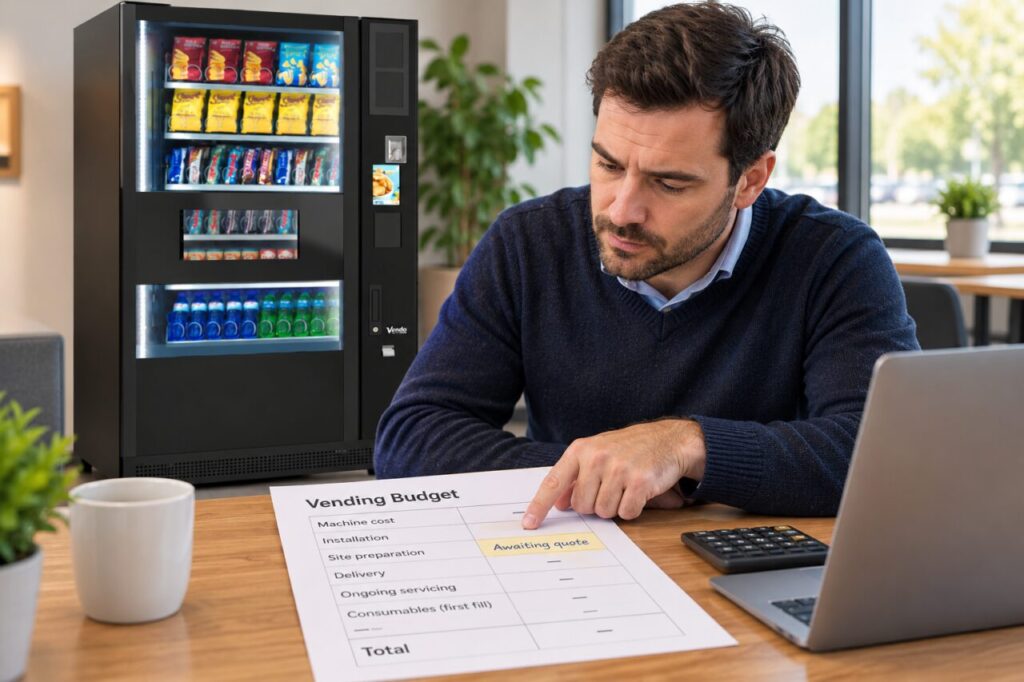
This is particularly useful when several people contribute to a proposal. One person may enter the equipment price while another investigates delivery, payment arrangements or ongoing servicing. A spreadsheet can add the numbers it contains without warning that an important line remains unresolved. The person reviewing it needs that context alongside the total.
Give each missing figure a status
Use plain descriptions such as awaiting quotation, included in another line, not applicable or confirmed zero. These statuses mean different things and should not be interchangeable. If a charge is included elsewhere, name the relevant line so it is not added a second time when a later supplier document arrives.
Record who will resolve each unknown and the next date for an update. A blank with no owner is easy to carry through several revisions. A short note identifying the supplier question makes the budget actionable and helps a colleague continue the work without guessing why the figure was absent in the first place.
Distinguish the known subtotal from the decision figure
Label a sum of confirmed lines as the confirmed subtotal rather than the complete project cost. Show the unresolved items immediately beside it. A separate assumptions section may be useful, but it should not hide information that could materially change the purchase decision. Readers should understand the limitation before they rely on the number.
If you use a provisional estimate, identify its source and explain that it remains unconfirmed. Do not replace an unknown with an invented price merely to make the spreadsheet look complete. Where no defensible estimate is available, ask the supplier for a range or leave the item explicitly unresolved until suitable evidence is obtained.
Check what the quotation actually covers
Match each supplier figure to a clear description and the relevant period. A monthly charge, a one-off installation amount and an annual service figure cannot be combined meaningfully without stating the time basis. Check whether figures are presented on a consistent tax basis and seek appropriate accounting advice if the treatment is unclear.
Ask about the practical boundaries of delivery and installation for your site. The answer should come from the proposal and survey, not an assumption that every building requires identical work. Similarly, record the agreed responsibility for stock and payment charges. A budget for buying and operating equipment may differ from a proposal for an operator-managed service.
Review the completed version deliberately
When the missing quotation arrives, update the value, status and source together. Check whether it changes another line or an earlier assumption. Keep a version date so the team can distinguish the revised decision document from an old email attachment. Recalculate the total and confirm that unresolved items have not simply disappeared during editing.
For vending cost planning, bring a list of outstanding questions to the supplier rather than presenting an incomplete subtotal as a spending limit already agreed. A useful budget makes uncertainty visible, assigns the next actions and explains what the confirmed figures cover. That supports a decision based on the actual proposal instead of accidental zeros.
For a proposal suited to your site, contact our team with the location, expected users and your main requirements.
Related guidance: A Vending Budget Has Several Versions: Identify the Approved Figures Before Ordering; A Vending Cost Rises by a Percentage: Calculate the Euro Change Before Updating the Budget.