Buying Vending for a Site with Temporary Lighting: Assess the Final Customer Experience
Temporary lighting can make an unfinished vending area look very different from the space customers will use. A bright work lamp may hide a dark approach, while unfinished ceilings or reflective surfaces can change how displays appear. Treat the early visit as a planning assessment and arrange a final check under the intended lighting.
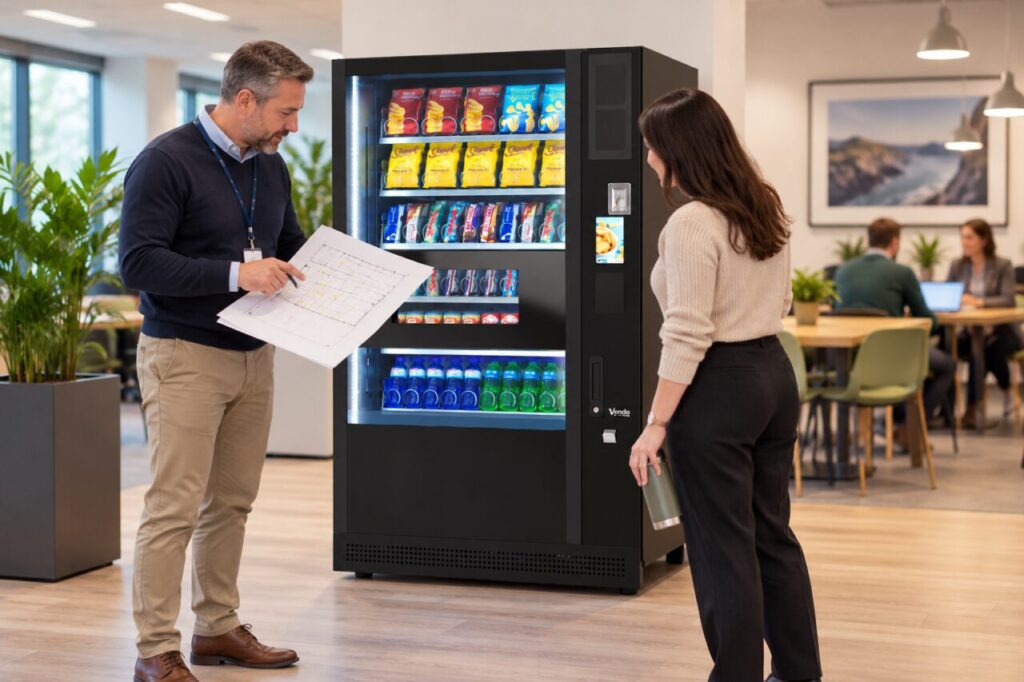
Tell the supplier which features of the room are temporary. Include the lighting arrangement, wall finishes, furniture and any planned window coverings. Do not present a provisional room as a completed installation environment. The equipment decision should account for the finished customer journey, not only whether the cabinet fits in the available floor area.
Review the approach and the task
Look at the route to the machine as well as the selection and collection areas. Customers need to understand where to stand and what to do without relying on someone explaining the layout. Ask the site team responsible for lighting to consider the actual vending position within its wider workplace assessment.
The Health and Safety Authority identifies adequate lighting as a factor in managing slips and trips. This does not provide a universal lighting specification for your vending installation. Ask a competent person to assess the site rather than choosing a fitting or brightness level from a generic article.
Separate machine lighting from room lighting
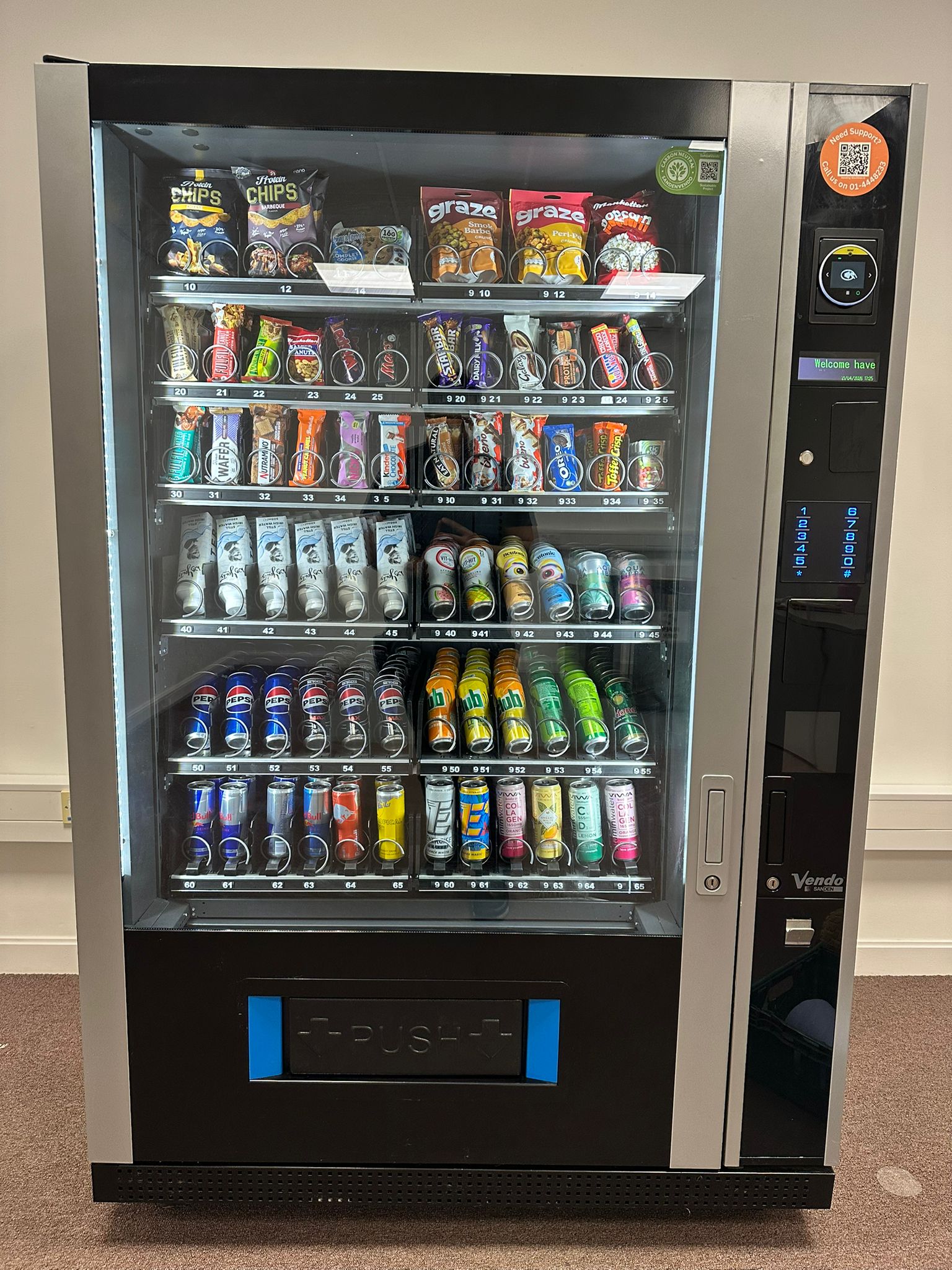
An illuminated product display does not automatically make the surrounding room suitable. Check whether the customer can read the relevant instructions and see the collection area under the planned room conditions. The supplier should confirm the actual machine configuration; do not assume every model or optional display has the same lighting behaviour.
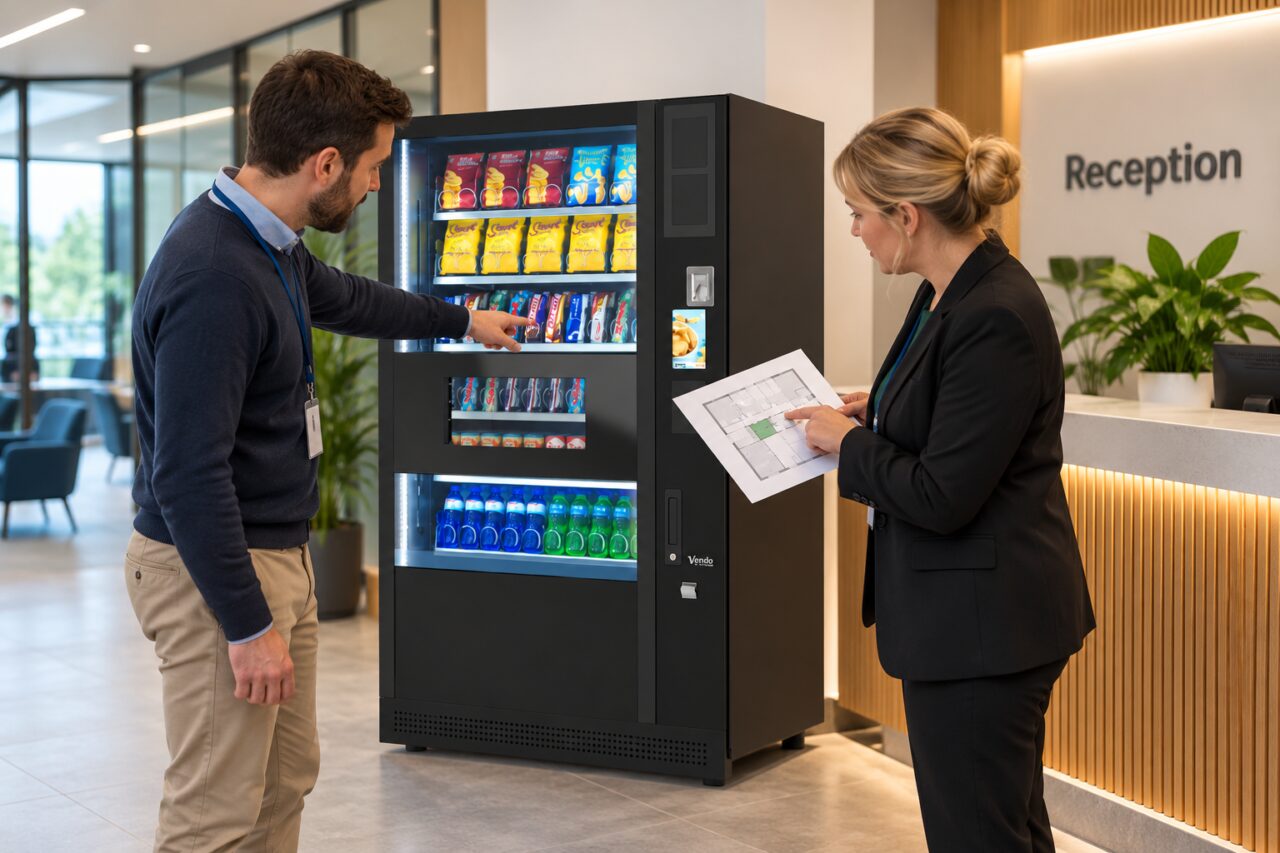
When discussing vending equipment for a new site, share photographs or plans that clearly identify the provisional elements. Explain when the finished lighting will be available for inspection. This allows unresolved questions to be recorded before ordering, rather than discovered after the machine has arrived and the room has opened.
Plan a realistic final check
Assess the completed area at relevant operating times, especially if daylight changes the appearance of the display or instructions. Include the normal furniture and nearby signs. Ask a few representative users to describe what they can read and where they would stand, without encouraging a purchase while installation approval is still outstanding.
Record specific observations such as a reflection over a price display or a shadow across a step. Avoid broad descriptions like “lighting poor” when a more precise note is possible. Let the responsible site team and supplier agree any changes. Do not move the cabinet, add temporary electrical equipment or cover parts of the machine as an improvised fix.
Link approval to the finished conditions
If the room is not ready, keep the outstanding lighting check in the handover list with an owner and review date. Make clear which decisions are provisional and which have been confirmed. A successful delivery into the room should not be mistaken for approval of every aspect of the customer environment.
Once the final arrangement is accepted, retain the relevant notes and report any later changes that affect visibility or access. New furniture, decorations or altered lighting schedules may change the experience again. The practical aim is a vending area that works under everyday conditions, with the site and supplier responsibilities clearly understood.
Related guidance: Buying a Vending Machine Before the Site Is Ready: Agree the Storage Plan.
For help assessing your site, contact Vending-Machines.ie.