
Reviewing Vending Complaints: Separate the Product from the Purchase Experience
A comment such as the vending service was disappointing can describe several different experiences. The customer may dislike a flavour, have been unable to find the item they wanted or have encountered a purchase problem. Before deciding what to change, establish which part of the experience caused the concern. A useful review preserves the customer’s point while turning it into a question the responsible person can investigate.
Ask what happened during the visit
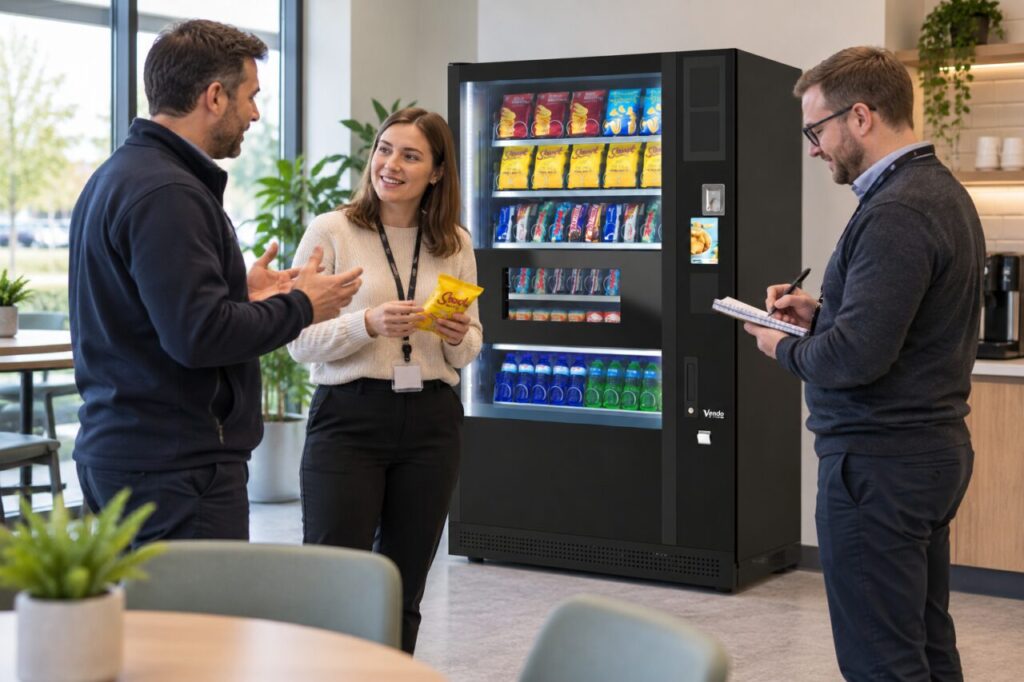
Invite a brief description of the customer’s experience in their own words. Ask which product or selection was involved, when they used the machine and what they expected to happen. Keep the conversation practical and respectful. Do not argue with a preference or assume that the customer used the equipment incorrectly because the first description is unclear.
Separate facts from interpretation in the review record. The customer may report receiving a particular pack, seeing an unavailable message or finding instructions confusing. Those observations are useful starting points. A conclusion about a mechanical fault, product quality or wider service failure may need further investigation by the responsible provider. Record the concern without pretending that diagnosis has already happened.
Distinguish the response each issue needs
A product preference can inform a range review, while a mismatch between the displayed product and the supplied item needs an operational check. An unavailable selection raises an availability question. A transaction concern belongs with the appropriate support process. Keep these categories understandable rather than forcing every comment into a single complaint total.
If a report raises a food-quality or safety concern, follow the business’s established escalation process and involve the responsible provider. Do not treat it as an ordinary preference survey or offer unsupported reassurance. This general review method does not replace the procedures required for a specific incident. The important point is to route the concern according to what was reported.
Look for patterns without erasing the detail
Review repeated comments over a defined period and keep the relevant context. Several reports about one confusing instruction suggest a different action from several requests for another flavour. Avoid counting repeated messages about the same unresolved case as separate incidents without making that clear. A case reference can help preserve the relationship between follow-ups.
Use available records to test a pattern rather than relying on memory. Ask whether the product was available, whether the range changed and whether a known service issue overlapped the reports. Do not assume that a handful of comments represents every customer. It can still justify a targeted check even when it is too small a sample for a broad conclusion.
Agree an action that answers the concern
Choose the next step with the responsible operator or site team. It might be a product-information correction, an availability review, a clearer instruction or a separate investigation. Name the action and the person who will confirm completion. Avoid responding to every complaint with a range change if the underlying problem was the purchase process.
Tell the customer or site contact what has been established and what remains open through the appropriate channel. When reviewing vending service options, include how feedback becomes a practical action. The aim is not to produce a favourable complaint statistic; it is to understand the experience accurately and make a relevant improvement that can be checked afterwards.
Discuss your site’s service needs through our enquiry page.
Related guidance: Vending Service Reviews: Turn Agreed Actions into a Checkable Follow-Up.