
Your Vending Delivery Paperwork: Match the Order, Packing List and Items Received
When a vending delivery arrives, several documents may describe different parts of the transaction. The order sets out what was agreed, the packing list describes the shipment and your receiving record describes what actually arrived. Comparing those records helps identify missing or unexpected items before the installation team needs them.
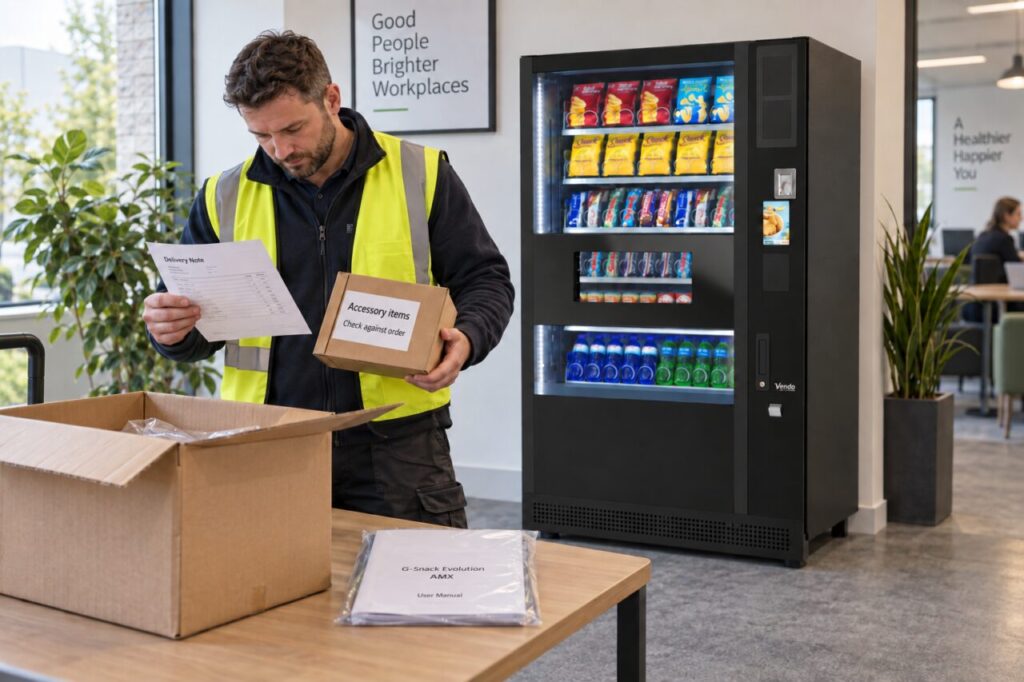
This is a practical receiving check rather than a technical acceptance test. Your colleague at the loading area should know what they are expected to record and which questions need to go back to the supplier or installer.
Prepare the agreed item list
Use the latest accepted order rather than an early quotation or an email discussing possible options. Identify the machine reference and any separately packed accessories, documents or other agreed items. Mark anything that is due in a later shipment so it is not mistakenly reported as missing.
Give the receiving contact access to that list before the delivery appointment. If the person who placed the order will be absent, explain where the final version is stored. A delivery is harder to check when the only person who knows what was agreed is unavailable.
Record what can be seen safely
Check shipment references, package counts and visible condition within the site’s receiving process. Keep the machine upright and leave specialist handling to the appropriate team. Do not unpack heavy equipment or open protected sections merely to make a delivery record look complete.
Where an item cannot yet be checked, record that limitation clearly. For example, a sealed accessory carton can be recorded as received while its contents await the agreed opening stage. Do not turn an unverified item into a confirmed complete package just because the external label looks familiar.
Compare differences precisely
If the packing list and order differ, identify the exact line rather than reporting that the delivery is wrong. Record whether the issue concerns quantity, item identity, visible condition or an expected separate shipment. A clear description helps the supplier investigate without repeating the entire receiving conversation.
Photographs can support the record where appropriate, but keep private delivery information out of unnecessary shared images. Retain relevant documents through your normal authorised process. The purpose is to connect the discrepancy to the order, not to circulate signatures, account details or unrelated site information.
Separate receipt from readiness
Receiving a cabinet and accessories does not confirm that the machine is installed, configured or ready for customers. Keep the operational handover as a separate stage with the installer. Our guide to outstanding installation items explains how to keep those actions visible until they are resolved.
Similarly, an invoice is not a substitute for a physical receiving record. If your internal purchasing process needs both, pass the confirmed receipt and any differences to the responsible colleague. Ask that colleague how unresolved items should be handled rather than guessing at financial or contractual treatment.
Close the loop on missing items
Give each discrepancy an owner and an agreed next update. If an accessory will follow later, record its expected arrival and whether installation or training depends on it. Inform the relevant team before they travel so a small missing item does not create an avoidable return visit.
When planning vending equipment for an Irish workplace, include receiving responsibilities alongside delivery access. Keep the final order, shipment information and closure record together. The next person reviewing the purchase should be able to see what arrived, what was deferred and how the differences were resolved.
For help organising a suitable equipment proposal, contact the team with the site and delivery requirements.