
Buying a Vending Machine: Check What the Demonstration Actually Proves
A vending demonstration is most useful when the buyer knows what it is intended to show. Watching one snack arrive successfully answers a narrow question. It does not automatically confirm every product, payment arrangement or operating condition planned for your site. Before attending, write down the decisions that depend on seeing the equipment work.
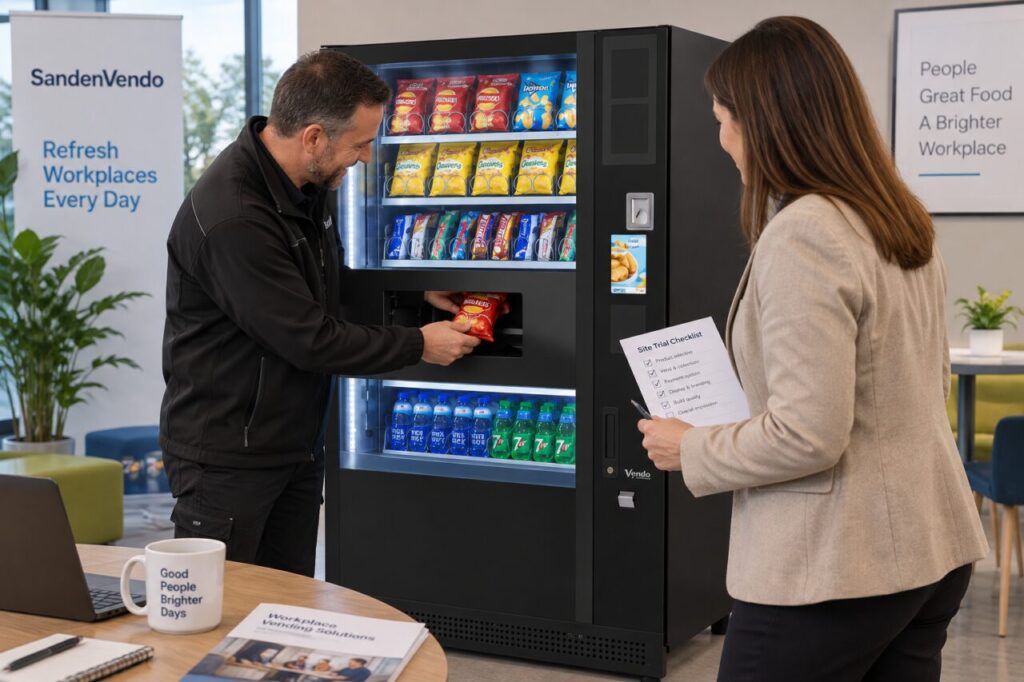
Start with your intended purchase
Bring the proposed product range, expected customer journey and the quotation version being discussed. Ask whether the demonstration machine matches the configuration offered. A showroom example can help explain the controls while differing from the final order. Record those differences so a successful demonstration is not mistaken for confirmation of an unspecified feature.
Choose a small number of representative packs rather than asking for an impressive but irrelevant display. Include the shapes and sizes that matter to your plan, subject to the supplier confirming suitability. Discuss vending equipment options first if you are still deciding what type of machine the site needs. The demonstration should then resolve specific uncertainties.
Agree what will be observed
Follow the customer journey from reading the selection information to collecting the item. Check whether the person can identify the intended product, understand the displayed price and find the collection point. Let a colleague unfamiliar with the equipment try the normal process under the supplier’s guidance. Their questions may reveal unclear instructions that experienced operators overlook.
Separate product handling from payment-account readiness. A demonstration transaction may use a supplier’s account or a different payment configuration. Ask which parts can be shown now and which require commissioning at your own premises. Do not record an account, network connection or settlement process as accepted merely because a demonstration screen displayed a successful transaction.
Record results and their limits
Use a simple sheet with the item tested, the step observed, the outcome and any remaining question. Describe what happened rather than writing only passed. For example, noting that one specific pack was collected after the normal selection process is more informative than stating that all snacks work. Keep the supplier’s explanation alongside the observation.
If a trial does not work as expected, ask the supplier to explain the cause and any proposed adjustment. Record whether the same arrangement was successfully demonstrated afterwards. Avoid attempting adjustments yourself. A useful demonstration can expose a limitation early, allowing the buyer to change the intended range or clarify the specification before ordering equipment.
Photographs can support the record, with permission, but should identify the demonstrated configuration and date. They do not replace the written scope. See the separate guide to matching a machine photograph to the specification when a quotation includes catalogue or showroom images. Keep confirmed equipment details distinct from illustrative marketing material.
Carry open questions into the order
Afterwards, divide the notes into confirmed observations, supplier commitments and checks still required at the destination. Assign an owner to each unresolved point. A buyer might be satisfied with product collection while still needing the installer to confirm the final customer position, electrical provision or connectivity. Those are separate decisions and should remain visible.
Use the findings to refine the purchase specification and the eventual handover checklist. Do not ask the demonstration to prove future demand or guarantee fault-free operation. Its practical value is a clearer understanding of the proposed equipment and fewer assumptions between buyer and supplier. Confirm the remaining acceptance steps before the order is treated as ready.
Discuss your planned vending range and demonstration requirements with our team.