
The vending door will not latch after refilling: what should you report?
A vending service door that will not latch after a refill needs a clear report and a safe pause. Do not force it closed, hold it shut with tape or leave an unsecured cabinet available to customers. Tell the authorised operator or service contact what changed and follow the site’s procedure for keeping people away while the issue is assessed.
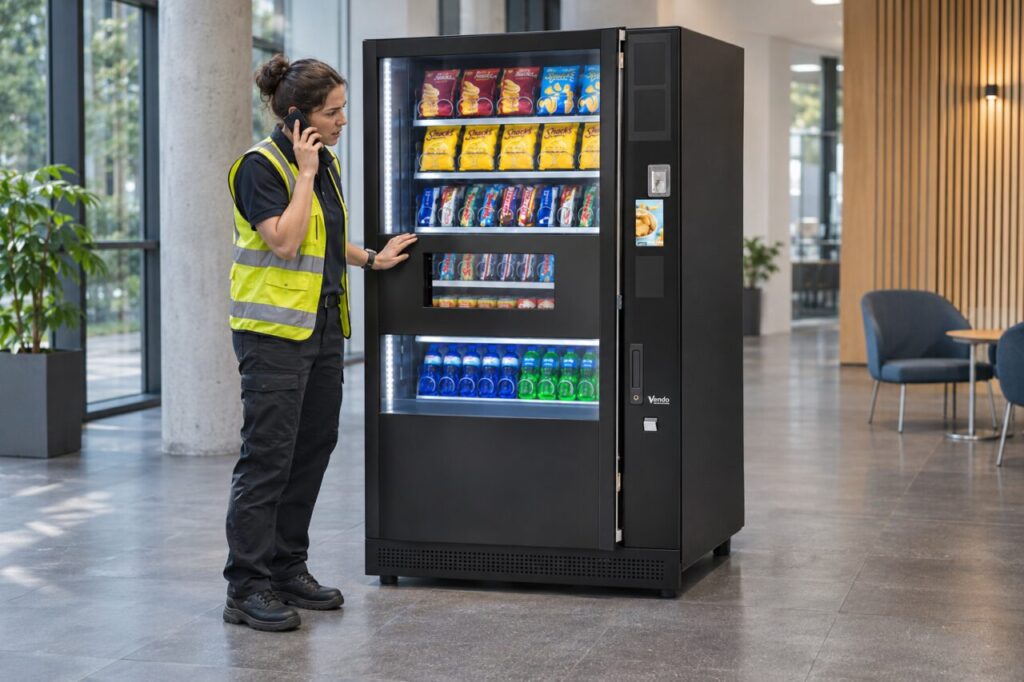
Describe the position without dismantling anything
Record whether the door stops before reaching the frame, reaches the frame but will not lock, or appears to close and then moves open again. Note any visible message and the time of the refill. These observations help the service team understand the problem without asking untrained staff to diagnose hinges, locks or internal mechanisms. A photograph from a safe position can help.
Explain whether the same authorised person had opened and closed the cabinet normally before this refill. Mention any unusual resistance or visible damage, but do not recreate it for a video. Never put fingers into a closing gap or ask a colleague to push while another person turns the lock. Report only what can be observed safely from the normal working position.
Keep the customer area controlled
Use the site’s approved unavailable notice and access arrangements. If the door could obstruct a route or expose internal equipment, contact the responsible facilities person promptly. Do not leave the cabinet unattended with keys accessible. The HSA’s work-equipment guidance supports keeping unsafe equipment out of use and using competent people for maintenance.
Keep customer enquiries separate from the repair. Reception needs the correct machine reference and a way to explain that sales are temporarily unavailable. If a customer had already started a transaction, record the relevant purchase details through the normal support process. Do not promise a refund amount or an automatic reversal merely because the door problem happened at a similar time.
Tell support what the refill changed
Provide a short list of products added, any trays or permitted components handled, and whether the trained operator followed the usual refill sequence. This is a factual handover, not an accusation against the person who restocked. If routine instructions include a safe check that the operator is trained to perform, use those exact instructions. Avoid improvised adjustments suggested by someone unfamiliar with the model.
Tell the operator whether the cabinet contains products requiring temperature control. As the FSAI storage guidance explains, a door left open can affect storage conditions; the responsible food business must assess the stock under its procedures. Closing the door later does not establish what happened while it was open. Keep the timing and any available temperature records for the person making that decision.
Confirm readiness before restarting sales
Ask who will confirm the closure, locking and operating checks after the issue is resolved. Remove the unavailable notice only when the authorised person has released the machine for service. Record any replacement parts or instruction changes on the service record. If staff need a refresher on the permitted refill sequence, arrange it before the next unsupervised visit.
Our service contact route helps a site report symptoms and arrange the next action. When planning vending for a workplace, provide enough space and training for routine refilling. The guide to reporting cabinet damage also explains why a clear incident record matters when the visible problem follows an impact.