
Vending Drink Budgets: Show the Deposit Separately from the Drink Price
When planning spending on vending drinks, a single total can hide the difference between the beverage price and an applicable container deposit. That matters when comparing products, explaining a workplace allowance or estimating how much customers need at the machine. Keep those figures separate in your planning worksheet, then check how the installed system presents the amount payable. This article concerns purchase budgeting and communication, not tax or formal accounting treatment.
Check the actual container
Re-turn’s consumer guide sets out a 15-cent deposit for eligible containers from 150ml to 500ml and a 25-cent deposit for eligible containers over 500ml to three litres. Check the current product and its scheme information rather than assigning a deposit by brand alone. Different packs from the same brand can require different entries in your worksheet.
Record the drink name, pack size, beverage price and applicable deposit together. Include a final total column so the amount the customer pays is clear. If a supplier’s price list already includes a deposit, identify that before adding another one. When the basis of a price is unclear, ask the supplier to confirm it instead of guessing from a similar product elsewhere.
Use a labelled worked example
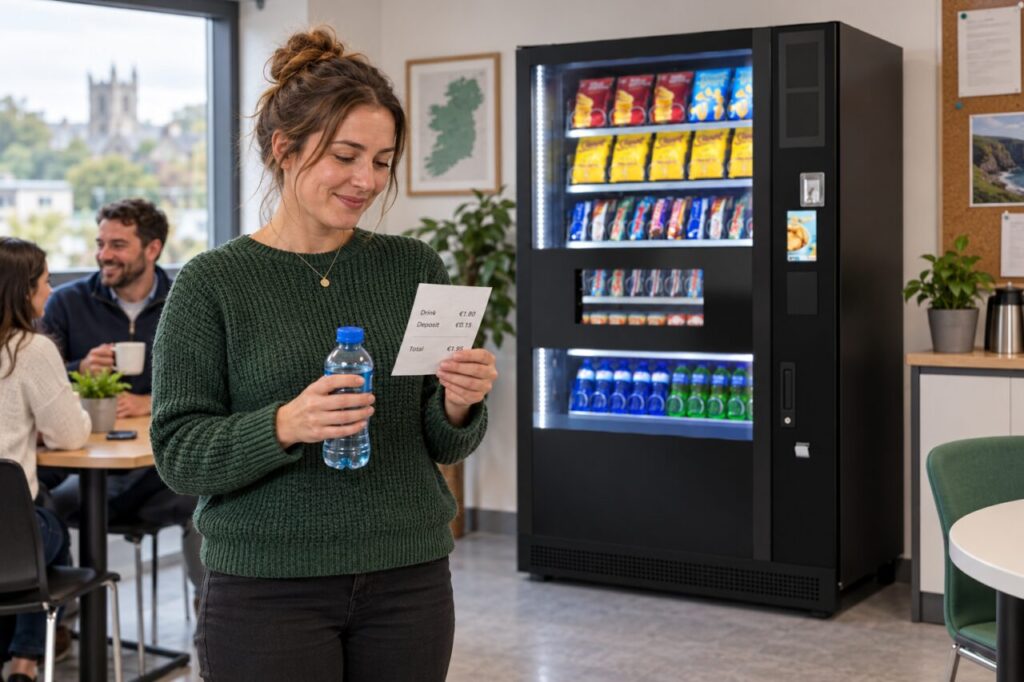
Imagine an eligible 330ml can with a hypothetical beverage price of €1.80. Adding a 15-cent deposit gives a total payment of €1.95. Ten such purchases would involve €18.00 for the drinks and €1.50 in deposits, making €19.50 paid initially. These are illustrative figures for the calculation; they are not a current vending price quote or a forecast of customer spending.
If your budget also considers returned deposits, show that as a separate assumption. Do not deduct every potential refund from the initial cash needed as though all containers have already been returned. Re-turn explains that eligible containers should be returned empty and undamaged. The practical return arrangements and actual refunds need their own record if you are reviewing a workplace collection scheme.
Explain workplace funding clearly
Where an employer contributes to refreshments, ask whether the agreed benefit covers the beverage, the total purchase or another defined amount. Do not infer the answer from a headline allowance. A small difference repeated across many purchases can make the budget harder to understand. Confirm the treatment with the provider before producing examples for staff or approving a monthly forecast.
Keep the employee explanation simple enough to use at the machine. It should describe the amount payable and any relevant funding rule accurately. If the workplace collects containers for a shared purpose, explain that arrangement separately. Do not imply that the ordinary snack-and-drink machine is a reverse vending return point or that the equipment supplier provides a return service unless that has been confirmed.
Review like-for-like figures
When comparing periods, check whether both reports include deposits on the same basis. A change in the mix of pack sizes can alter the deposit total without showing an equivalent change in beverage prices. Likewise, a report labelled sales may need explanation from the provider before it is suitable for a particular budget comparison. Preserve the original figures and document any calculation you make.
Use these distinctions alongside your wider vending cost planning. Clear columns make it easier to discuss price, customer payment and workplace funding without mixing them together. The useful outcome is a budget whose assumptions can be checked against the actual products and payment setup, rather than a total that looks precise but leaves its components unexplained.
Discuss drinks vending and workplace funding requirements.
Related guidance: Vending Drinks and Ireland’s Deposit Return Scheme.