
Measuring Vending Electricity Use: Define the Test Before Comparing Costs
A useful vending electricity comparison begins with a clear measurement question. Are you trying to understand one machine’s use, the whole refreshment area or a change after servicing? Those are different tests. Define the boundary and period before looking at a number so the result can support a sensible operating decision.
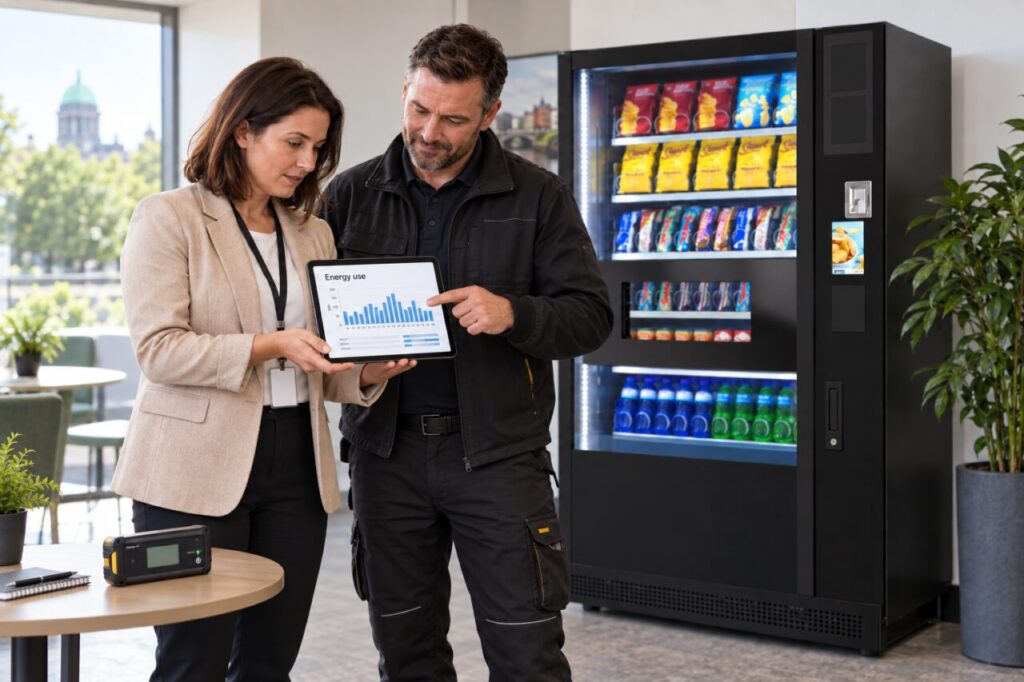
SEAI’s business energy guidance recommends understanding how and when a business uses electricity and looking for demand patterns. For vending, the practical starting point is to agree what equipment is included and how it can be measured appropriately at your site.
Decide what the reading represents
Identify the machine and any other equipment included in the measurement. A reading for a shared circuit or the whole building should not be labelled as one vending machine’s consumption. Record the equipment reference and measurement boundary with every result so later comparisons use the same basis.
Ask the supplier and the site’s qualified electrical support to advise on a suitable method. Do not install improvised monitoring equipment, disturb wiring or interrupt normal operation to obtain a reading. The method must suit the actual installation and preserve the equipment’s required operating conditions.
Choose a representative period
Include the pattern you want to understand, such as normal weekdays and a quieter weekend. Record the start and end times rather than assuming that two readings described as weekly cover the same duration. Note whether the site was unusually busy, closed or hosting an event.
Keep replenishment and service activity in the record. A period immediately after installation or an unusual interruption may not represent steady normal use. The observation can still be useful, but its conditions should remain attached to it instead of being hidden behind a single daily average.
Distinguish energy from price
Record measured electricity use in the units provided by the agreed method, normally kilowatt-hours for energy. Keep the tariff calculation separate. A cost estimate should use the applicable rate and explain what it excludes, rather than borrowing an unrelated household or online example as the site’s price.
For illustration only, ten kilowatt-hours at an assumed thirty cent per kilowatt-hour gives three euros for that energy component. Neither number is a claim about your machine, contract or total bill. Standing charges, time-dependent rates and other billing details need their own treatment where relevant.
Compare like operating conditions
When comparing two periods, note changes in location, settings, product loading and use that may affect interpretation. Ask the supplier about any equipment-specific factors. Do not change cooling or other operating settings outside the approved instructions simply to produce a lower number during a test.
If a result seems unexpected, check the boundary, duration and record before drawing a conclusion about the machine. An apparent increase may belong to another load included in the measurement. Keep the original data so a qualified adviser can review the same evidence rather than relying on a rounded summary.
Use the result for a focused discussion
Summarise what was measured, over which period and under what conditions. Then identify the question for the supplier: whether the result is plausible for that configuration, whether servicing is indicated or whether a proposed alternative deserves a comparable assessment. Avoid promising savings before the comparison has been made.
Our vending equipment overview can support a discussion of suitable options. Bring your measurement scope and operating context so the conversation addresses your actual site, rather than treating a generic energy figure as a guaranteed outcome.
To discuss equipment suitability, contact our team.