Vending Energy Figures Use Different Test Conditions: Ask for a Comparable Basis
Two vending energy figures can look directly comparable while describing different tests. Before choosing the lower number, ask what equipment, settings and conditions produced each figure. A measured result from one workplace and a standardised product declaration are different kinds of evidence, even if both use kilowatt-hours.
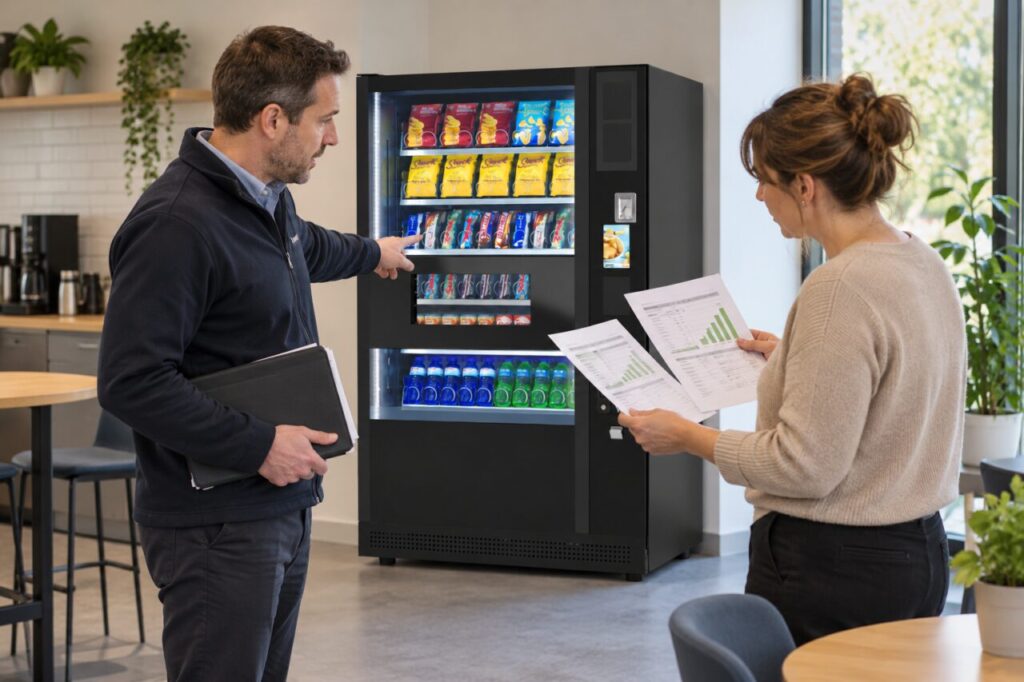
The purchasing decision needs a consistent comparison and a realistic site budget. Keep these as separate tasks. Comparable product information helps assess equipment; a site estimate also needs your actual tariff and a clear description of expected use. Neither becomes a guarantee merely because it appears in a quotation.
Identify the source of each number
Record whether the figure comes from a product information sheet, a supplier estimate or a meter reading. Keep the original document, model identifier and publication date. If a quote copies a number without its source, request the supporting sheet. Do not fill in missing test conditions from a similar-looking cabinet or another model in the same range.
Check the measurement unit and period first. An annual consumption figure, a daily reading and a power rating cannot be compared as if they represented the same quantity. If converting a daily figure into an annual illustration, state the multiplication and the assumption that the measured day is representative. That assumption deserves scrutiny rather than being hidden in a spreadsheet.
Ask which conditions were held constant
Ask the supplier to identify the relevant test conditions, including the stated ambient conditions, operating settings and equipment configuration where documented. Request an explanation of any differences between the two sources. The useful answer may be that the figures should not be used to rank the machines directly; that is better than an unsupported claim of savings.
For a site measurement, record the start and finish times, what the meter covered and any interruptions. A reading that includes another appliance is not evidence for the vending machine alone. Have suitable monitoring arranged by the responsible qualified person. Do not alter electrical connections or ventilation to make the comparison easier, and do not change food-storage settings to obtain a lower reading.
Build a comparison with honest gaps
Put one row per machine in your comparison: exact configuration, source, units, period, stated conditions and unresolved questions. Use an explicit unknown marker where evidence is missing. A blank entry can otherwise be mistaken for zero consumption or an included service. Ask for a revised comparison once both suppliers have answered the same questions.
Keep the tariff calculation separate from the consumption evidence. For illustration only, 1,000 kWh multiplied by an assumed €0.30 per kWh gives €300. This is arithmetic, not a quoted Irish electricity price or a prediction for any machine. Check your own tariff and which additional charges belong in your wider premises budget before using a figure commercially.
Make the purchase decision broader than one figure
Compare the energy evidence alongside product suitability, access, service arrangements and total ownership costs. A difference that remains uncertain should be recorded as uncertainty rather than presented as a proven saving. If energy is a decisive requirement, agree the evidence you need before committing to an order and retain the supplier’s written explanation with the specification.
When discussing vending equipment for your Irish site, provide the intended setting and the two source documents. This makes the question answerable: are these figures comparable, what remains unknown, and what measurement or documentation would resolve it?
For a proposal suited to your site, contact our team with your location, expected users and main requirements.
Related guidance: Comparing Vending Energy Figures: Annual Consumption and Maximum Power Are Different.