
Vending Equipment Stored Before Installation: Agree a Holding Plan
A vending machine may be ready before its intended room is available. Rather than accepting an undefined period of storage, agree a holding plan with the supplier. The plan should identify who has custody, where the equipment will remain and what must happen before it is moved into its final position.
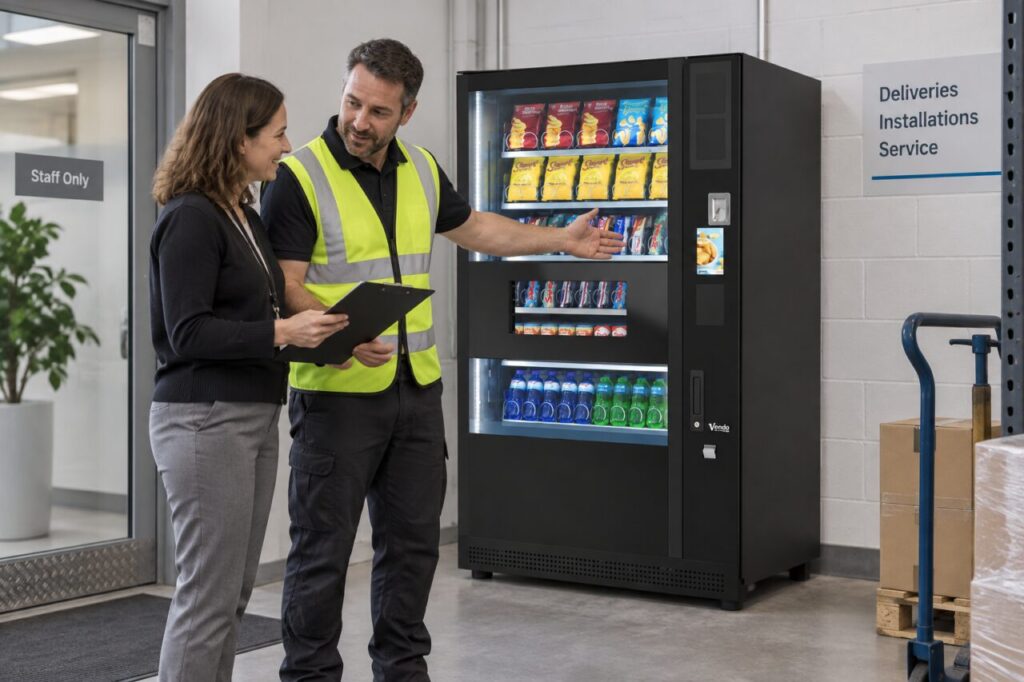
Storage requirements vary with the equipment. Follow the manufacturer’s instructions and the supplier’s advice for the specific machine rather than treating a spare room as automatically suitable. This article focuses on coordination and records; it does not provide a technical storage specification or a method for moving the equipment.
Decide where the equipment will wait
Ask whether the supplier can retain the machine until the site is ready, or whether a suitable holding location is required elsewhere. Confirm the available options and any associated charges in the proposal. Do not assume that delivery can simply be postponed without affecting the agreed schedule or other arrangements.
If the machine will be held on site, provide the supplier with information about the proposed space and access route. Ask the responsible building team to confirm that the arrangement is acceptable. Keep the area from becoming an informal public service point: equipment awaiting installation should not be presented as ready for customer use.
Obtain the applicable instructions
Request the relevant handling and storage instructions for the machine and any separately supplied components. Ask who is responsible for checking that the holding arrangement follows them. Avoid applying generic advice about temperature, orientation or power connection without confirming that it is appropriate to the equipment actually being supplied.
Record whether packaging should remain in place and how the equipment should be protected or checked during the holding period. Let the supplier specify the procedure. Site staff should not unpack, connect or test equipment merely to see whether it works if that activity has not been authorised and properly arranged.
Keep custody and dates clear
Record when the equipment enters the holding arrangement and who receives responsibility for it. Link the record to the order and equipment identification. Where several contractors are involved, name the coordinator who can resolve questions rather than leaving each team to infer that another party has accepted responsibility.
Ask how the revised dates affect the wider order, including planned installation and any applicable warranty documentation. The warranty start-date checklist provides questions for that discussion. Do not assume that unused equipment automatically has a different warranty start date or that a requested schedule change has been accepted.
Arrange the move into service
Before the holding period ends, reconfirm the final room and route with the installation team. Building work may have changed the layout since the original survey. Tell the supplier about new furniture, altered access or other material changes so the competent team can decide whether the previous plan still applies.
Complete the agreed handover and readiness checks before announcing that the machine is available. Keep the holding record with the installation documents, including any observations raised during the period. If the equipment’s condition or identification differs from the expected record, resolve that question with the supplier before treating the project as complete.
For vending equipment planning, discuss timing early when a refurbishment or opening date is uncertain. A defined holding plan gives purchasing and facilities a practical way to coordinate the gap, while preserving the supplier’s specific requirements and avoiding an improvised second delivery arrangement later in the project.
Discuss your installation timetable and explain whether the proposed room will be ready when the equipment is available.