
Vending Prices in Euros: Check the Decimal Display During Setup
During vending setup, check whether a first-time customer can read the price correctly. The currency symbol, decimal notation and selection information should work together in the installed configuration. A buyer may understand a supplier’s demonstration while a visitor remains uncertain at the actual machine. Test the display as part of the customer journey rather than assuming that a recognisable number is sufficient.
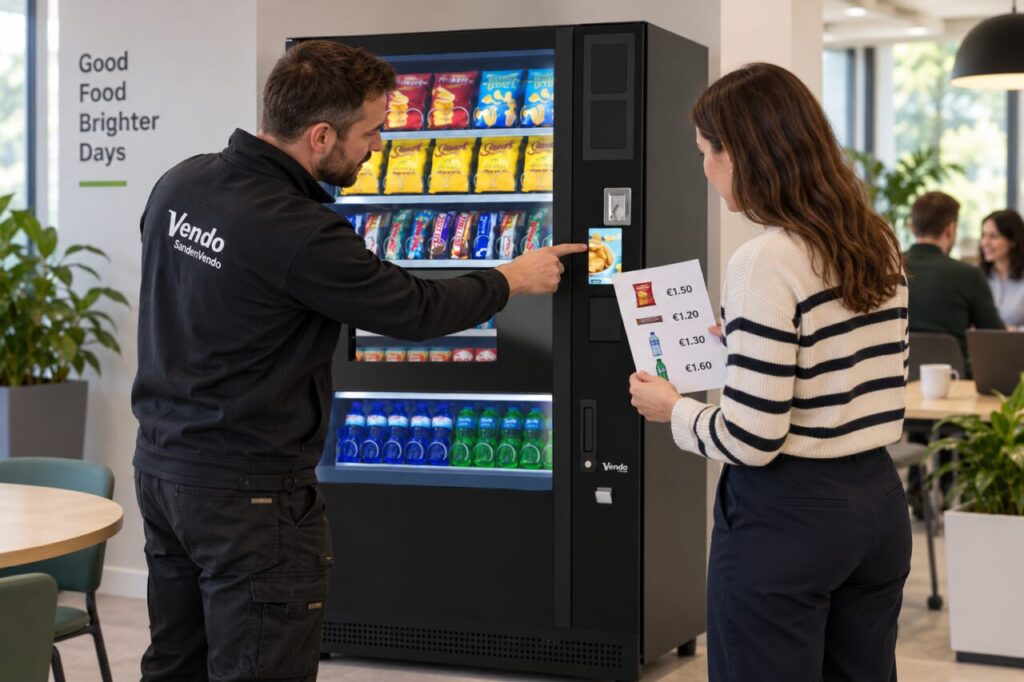
Use a realistic sample of prices
Ask the installer to demonstrate the price format with the products and payment setup intended for your site. Include an amount with cents, so the test does not rely only on whole-euro prices. A hypothetical €2.50 example is useful for discussing notation, but it is not a recommended selling price or a claim about what any particular product should cost.
Observe where the amount appears before the customer commits to the purchase. Ask how the machine identifies the currency and whether another payment screen also shows an amount. The supplier should explain the installed behaviour. Do not assume that a decimal comma, decimal point or omitted trailing zero will be interpreted consistently by every customer without checking the surrounding information.
Test understanding from the customer's position
Invite a colleague unfamiliar with the setup to describe the price they believe they are about to pay. Ask them to point to the information they used. This is a practical comprehension check, not a survey of the whole workforce. If they hesitate between a selection code and a price, that identifies a useful question for the installer before launch.
Check the viewing distance and lighting used during a normal purchase. A display that is legible in a close-up photograph may be harder to read from the queue. Where a separate product list or notice is used, confirm that its notation matches the installed selling information. Avoid adding a homemade explanation that contradicts the machine or conceals the underlying issue from the provider.
Reconcile the amount through the purchase
Arrange an appropriate test with the responsible operator. Record the selected item, displayed price and confirmed transaction amount, using the agreed payment process. If a staff subsidy or other arrangement applies, make clear which amount the test is checking. A standard customer purchase and an employer-funded purchase may need separate explanations; do not combine them into one unclear statement about the price.
If the amounts or notation do not agree, ask the installer to resolve the discrepancy before presenting the setup as ready. Do not enter technical settings or attempt a currency conversion yourself. Keep the original observation and the provider’s correction in the handover record. The useful result is a verified customer journey, not merely a verbal assurance that the numbers mean the same thing.
Keep later changes consistent
Repeat the relevant check when the operator changes the price display format, payment equipment or customer instructions. A product-range change alone may not require every commissioning step again, but any altered price presentation deserves attention. Ask the provider which check is proportionate and retain the outcome with the machine record so future colleagues know what was confirmed.
For a site with visitors from different countries, clarity is especially useful, but avoid assuming a particular nationality will misunderstand a symbol. Use plain, consistent information for everyone. Where customers can ask for help, tell staff how to explain the price without guessing about payment behaviour. Questions that cannot be answered confidently should go through the established support route.
Include this small demonstration in your discussion of vending equipment. It helps connect the technical setup with the simple question every customer needs answered: what amount am I agreeing to pay for this item?
Contact us to discuss the purchase journey for your site.
Related guidance: Vending Price Notices: Make the Amount and the Item Unambiguous.