
Buying a Vending Machine: Build a First-Month Launch Budget
The equipment quotation is only one part of planning a vending machine launch. A first-month budget helps a new operator see what must be ready before customers arrive and which ongoing commitments start immediately. It also separates confirmed costs from assumptions that still need a supplier answer.
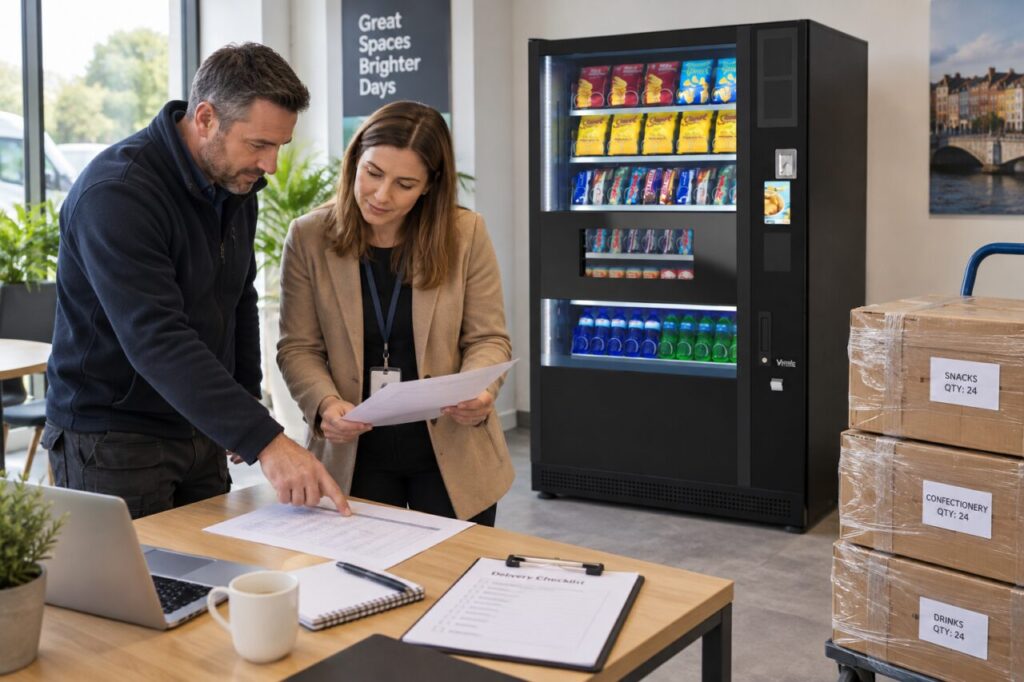
Use actual quotations and your own operating plan. This worksheet approach does not provide a standard startup price or predict profit; it helps you avoid leaving practical items out of the decision.
Separate one-off and recurring items
Begin with the quoted equipment and the activities needed to place it into service. Ask whether delivery, positioning, installation and initial familiarisation are included. Record any site preparation separately and identify who is responsible for arranging it.
Then list recurring commitments confirmed in the proposal, such as agreed service or payment arrangements. Do not assume that every operator has the same subscriptions or charges. The point is to capture the terms of your actual setup rather than copy a generic cost list and treat it as a quotation.
Plan opening stock and the next order
Estimate the initial stock using the approved product layout and realistic quantities. Keep the money spent buying stock separate from the value of items sold during the month. Some products may remain in the machine or store at the period’s end.
Allow for the timing of the next supplier order and the place where spare stock will be stored. Buying a large quantity can tie up money before you know the local demand. Ask about order quantities and lead times, then choose an opening plan that can be reviewed against actual use.
Include the work of operating
List the routine activities someone must perform: receiving deliveries, preparing stock, travelling to the site, refilling, cleaning and dealing with support questions. Even when you plan to do the work yourself, record the time so the operating commitment is visible.
Our buying brief guide helps clarify these responsibilities. If you are considering an operated arrangement instead, discuss our fully managed service and compare the actual scope. Different arrangements should not be treated as equivalent merely because both involve a machine.
Mark uncertain amounts honestly
Use separate labels for confirmed quotation, provisional estimate and question awaiting an answer. Record where each figure came from and when it was checked. An unsupported round number can look authoritative once it is entered in a spreadsheet.
Ask the supplier to clarify exclusions and any charge that depends on the site or chosen configuration. Do not invent a contingency percentage and present it as an industry rule. Decide how to handle uncertainty in your own plan, and seek appropriate professional advice for financing, tax or accounting decisions where needed.
Review cash timing after launch
Record when payments are due and when revenue becomes available under the actual payment arrangement. Sales shown on a report are not automatically the same as money already received. Keep supporting records so timing differences can be explained.
A practical worksheet can include the item, supplier, quoted amount, due date, responsible person and evidence link. Add a separate column for whether the amount is one-off or recurring. This helps you spot timing pressure without confusing a purchase made before launch with an expense that will repeat every month.
At the end of the first month, compare the plan with actual spending, stock remaining and work required. Separate unusual launch costs from the normal service pattern before drawing conclusions. Review our equipment options and request a site-specific proposal with your requirements. A useful launch budget makes the unanswered questions visible before they become surprises.