
Hiring a Vending Machine: Who Handles Routine Cleaning Between Visits?
A vending hire proposal should explain who looks after routine cleanliness between scheduled visits. The phrase maintenance included may not tell the site contact which everyday tasks they are expected to perform. Ask for that boundary to be clear before the service starts.
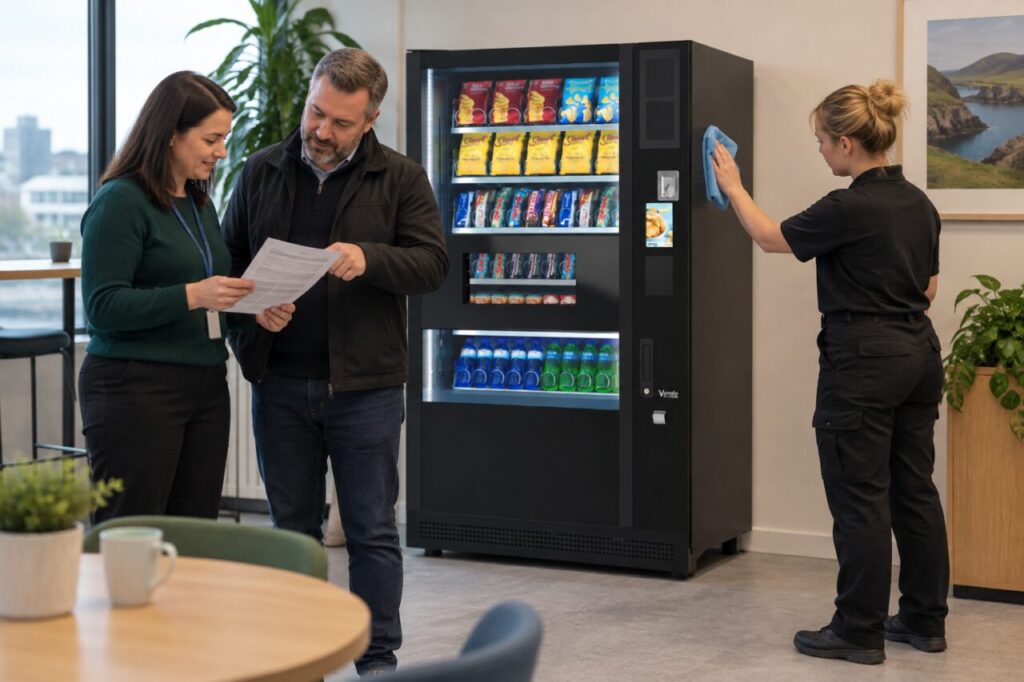
The correct tasks and methods depend on the equipment and agreement. This article helps organise the discussion; it does not replace the applicable cleaning instructions or authorise untrained staff to open equipment.
Ask for a task-based explanation
Separate the surrounding floor and furniture from the outside of the cabinet and any internal work. Ask which party is responsible for each area. A building cleaner may look after the room while the provider retains responsibility for machine-specific activities.
Record the agreed division in plain language. Avoid broad phrases such as keep it tidy when different teams could interpret them differently. If a task is shared, identify who makes the final decision and how the site requests additional attention.
Confirm the permitted routine actions
Ask the supplier what site staff may do and which instructions they should follow. Do not assume that a cleaning method used on a desk is appropriate for the machine, display or payment controls. The approved materials and process should come from the relevant provider or manufacturer guidance.
Make those instructions available to the people actually doing the work. A document sent only to the purchasing contact may never reach the facilities team. If an external cleaning contractor is involved, arrange the necessary information through the site’s authorised process.
Keep technical work with the right people
Distinguish routine external care from maintenance, fault investigation and access to internal parts. A site contact should not be expected to improvise a repair because a service visit is not due until later. Ask how to report an issue and what interim action the provider recommends.
If something appears unsafe, follow the workplace’s reporting process and prevent use as appropriate while the responsible team assesses it. Do not spray liquids into equipment, bypass controls or remove panels in an attempt to complete an ordinary cleaning task.
Plan for spills and unusual situations
Ask what the site should do when an incident occurs between visits, such as a spill in the surrounding area or visible damage. Keep the response proportionate to the actual situation and the site’s procedures. Staff need a clear reporting route, not a list of improvised technical remedies.
Record the location, time and observable issue when requesting support. Photographs can help where appropriate, but avoid including unrelated people or private information. Confirm whether the provider needs any additional details rather than guessing at the cause.
Review the arrangement with the hire scope
Compare the cleaning responsibilities with the actual leasing or hire proposal. Ask whether consumables, visits and additional requests are included or separately agreed. Do not transfer assumptions from a managed-service arrangement into a different equipment contract.
At handover, ask the site contact to explain what they would do in a normal situation and an exception. Any uncertainty is a useful prompt to clarify the instructions. Update the local note when the equipment or responsible contractor changes.
For a different operating model, review our fully managed service and discuss the applicable scope directly. The important outcome is that each task has an owner and that staff know the limits of their role.
Contact our team to discuss the routine-care responsibilities in a proposed vending arrangement.