Vending Hire Cover Is Described as Standard: Ask for the Actual Schedule
A vending hire proposal may describe maintenance or support as standard cover. That phrase is useful only when you can see what the standard actually includes. Before comparing the monthly charge with another offer, ask for the current service schedule that applies to the equipment, location and agreement being proposed.
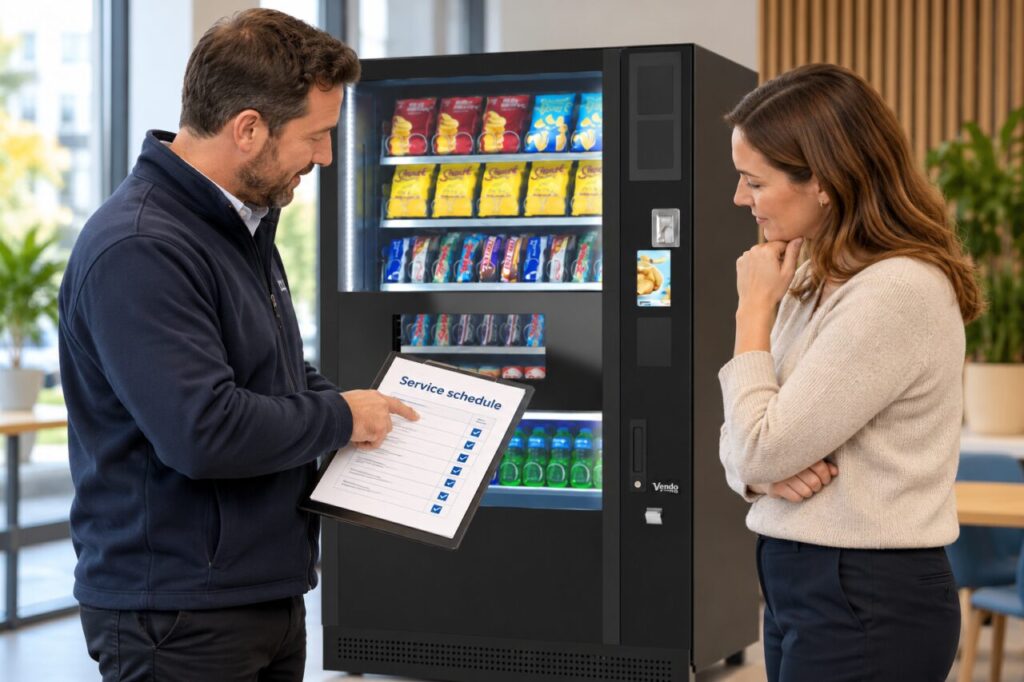
You do not need to predict every possible breakdown. You do need enough detail to understand who handles routine work, how faults are reported and which costs may sit outside the recurring charge. A clear schedule helps the supplier explain its offer and helps the site organise the responsibilities it will retain.
Match the schedule to the quotation
Ask for a dated or versioned schedule and check that the quotation refers to it. A general brochure may describe several packages without identifying the one offered to your site. Keep the applicable document with the accepted proposal so a later facilities contact can understand the arrangement without reconstructing a sales conversation.
Check that the equipment and location are correctly identified. Two machines in different buildings may have different access arrangements or service requirements. If the supplier proposes a change before installation, ask whether the schedule changes as well. Do not assume that a replacement model or additional location automatically receives identical cover at the original price.
Separate routine work from fault response
Identify who will clean customer-facing surfaces, replenish stock and deal with consumables under the proposed arrangement. Then ask separately about maintenance, parts and labour. These responsibilities may be allocated differently. Describing a package as maintained does not answer every question about daily care or about who should visit when a product selection stops working.
Read time commitments carefully. A time for acknowledging a report is different from a target for attending the site or restoring service. Ask the supplier to explain the wording in ordinary terms and identify any conditions, such as access hours or parts availability. Record what is actually offered rather than converting a response target into a repair guarantee.
Make potential additional charges visible
Ask which visits or items could generate an additional charge and how approval would be obtained before that work proceeds. Relevant questions might concern damage, relocation, access difficulties or work outside the agreed arrangement. These are questions to resolve with the supplier, not assumptions that every agreement includes the same exclusions or fees.
Check how payment equipment is supported if it involves a separate provider. The machine supplier may coordinate the issue, while another organisation handles account administration. Ask for the correct reporting route and the information needed. Nobody should need to share a password with a general site contact to establish which organisation owns the next action.
Give the site a usable handover
Turn the agreed responsibilities into a short internal contact sheet. Include the machine location, reporting channel, relevant agreement reference and person authorised to approve additional work. Keep the full schedule available behind that summary. A short sheet should help staff follow the agreement, without replacing its detail or introducing promises that were never made.
When discussing vending hire and leasing, bring the site’s opening hours and access restrictions into the conversation. Ask the supplier to connect those practical details to the proposed cover. You can then compare offers on their actual scope and organise a handover that remains understandable after the original buyer moves to another role.
For a proposal suited to your site, contact our team with the location, expected users and your main requirements.
Related guidance: Vending Hire During Reduced Opening Hours: Review the Service Schedule; A Vending Hire Quote Includes a Service Allowance: Ask What Uses It Up.