
Vending in a Shared Building: Separate the Landlord, Host and Operator Responsibilities
Vending in a shared building can involve a landlord, a tenant hosting the machine and an outside operator. Customers usually see only one refreshment point, so unclear responsibilities quickly become their problem. Agree who handles each everyday task before launch. The aim is a practical route from a question to an answer, supported by the actual building and service agreements.
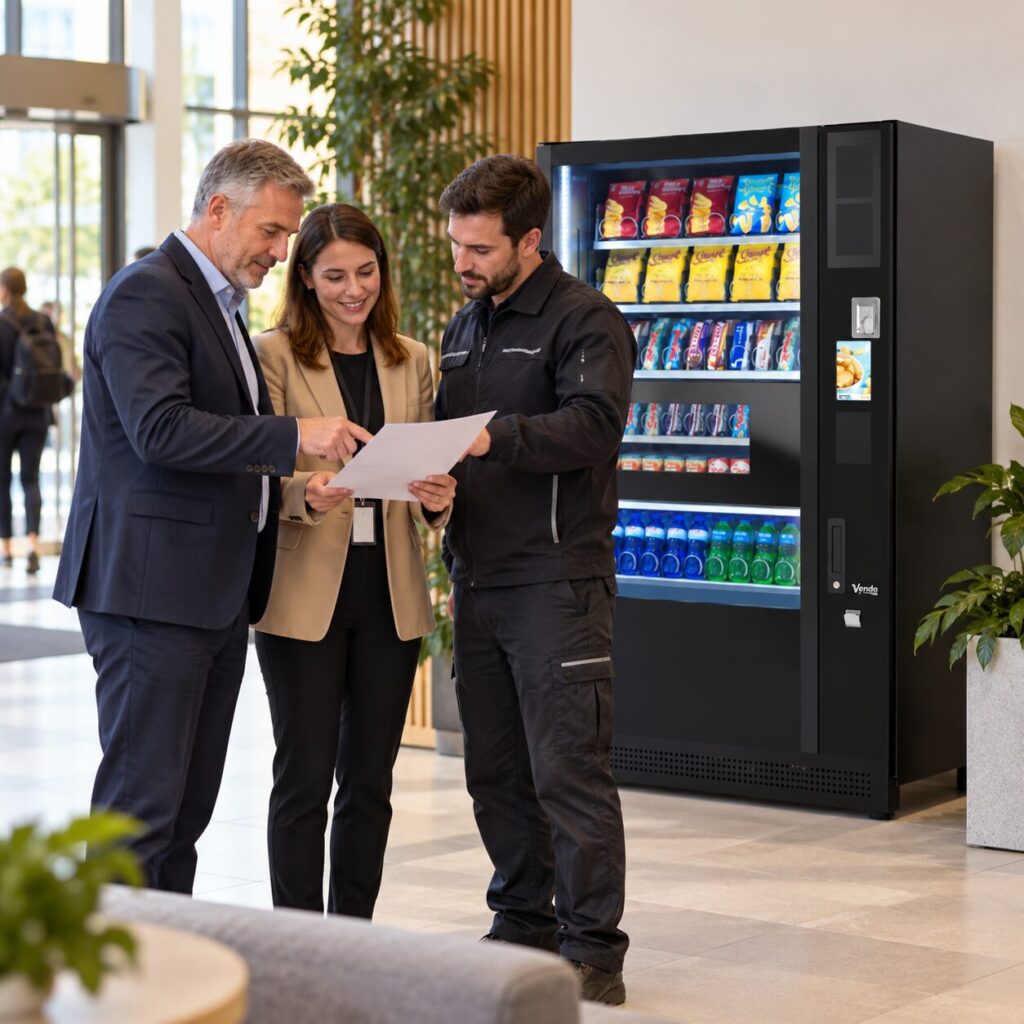
Name the parties and their roles
Start with the people who control the space, manage the customer relationship and operate the equipment. One organisation may hold several roles, but do not assume that this is always the case. Identify a primary contact and deputy for each role. Record which decisions they can make and which must be referred elsewhere for agreement.
Separate ownership from day-to-day responsibility. The person who owns the cabinet may not organise building access, and the tenant paying for refreshments may not maintain the equipment. Use the agreed documents to resolve uncertainty. A simple responsibility sheet should reflect those arrangements rather than create new obligations by accident or contradict the service contract.
Allocate routine work by activity
Work through a normal week: deliveries arrive, stock is replenished, the surrounding floor is cleaned, customers ask questions and service visits may be required. Assign a lead for each activity and explain the handover between parties. For example, the building team may approve access while the operator confirms the visit and the host tells staff about a temporary interruption.
Include the small tasks that often fall between organisations. Who replaces an outdated customer notice? Who reports a blocked service route? Who tells the operator that the reception desk will close early? These tasks do not require a complicated organisation chart, but they need someone who knows when to act and who else must be informed.
Give customers one clear starting point
Provide a verified contact route for purchase questions and explain how to identify the machine. Customers should not have to decide whether an issue belongs to the landlord or operator before reporting it. The receiving team can route the case internally. Keep the machine location and identifier consistent across signs, service records and building information.
Avoid promising a response time that has not been agreed. Instead, state the available contact method and any confirmed service hours accurately. Where several machines in the building use different arrangements, make their identification clear. A report that says only reception machine can be ambiguous when each tenant has its own reception or refreshment area.
Review changes before they create gaps
Revisit the responsibility sheet when a tenant moves, an operator changes or the building management team is replaced. Confirm the effective date and transfer open issues to named people. Remove obsolete contact details after the replacement route is working. Keep a short record of the change so later queries can be traced to the correct period.
Ask all parties to test the arrangement using one ordinary example, such as a product failing to arrive. The exercise should reveal who receives the report, who provides the purchase details and who confirms the outcome. When planning vending for an Irish site, explain the shared-building structure early. It helps the supplier propose an operating arrangement that fits the people and permissions involved.
Related guidance: Taking Over a Workplace Vending Service: Your First Handover Meeting.
Planning vending at your site? Contact the team with your location and requirements.