Loose Change Is Found Beside a Vending Machine: Use the Site Lost-Property Route
Finding loose change beside a vending machine does not establish whose money it is or whether the machine returned it. It may have been dropped by a customer, left during a purchase or belong to someone who was merely passing. Use the site’s lost-property process rather than assuming the coins are available for the next purchase.
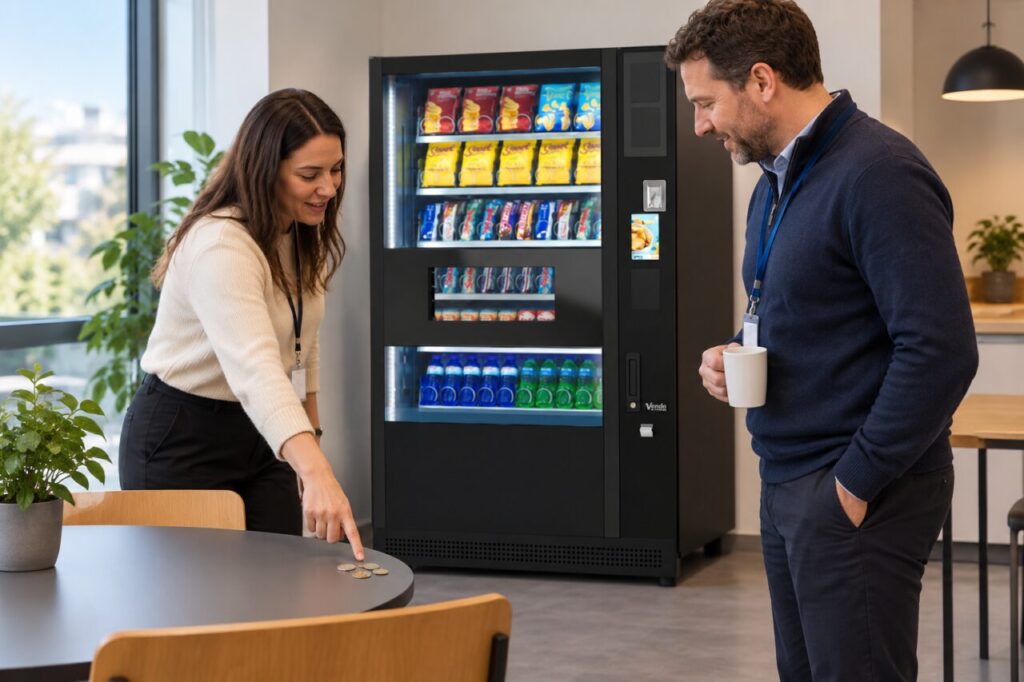
For a customer, the useful first step is to tell the nearby host or reception where the money was found. For a site contact, the task is to record and handle the finding consistently. This article offers a practical reporting approach; the site’s own lost-property rules should determine custody and any later claim.
Record the location accurately
Distinguish coins found on a nearby table or floor from money visible in a machine’s customer-accessible return area. Report the exact position and approximate time. Do not open the machine or reach into any service compartment to investigate. A customer should never need equipment access to tell the host about found property.
If a person is still nearby and appears to be looking for something, the host can follow the site’s normal procedure for checking a claim. Avoid announcing every detail publicly or handing money to whoever responds first. A simple factual record is more useful than speculation about the last person seen using the machine.
Keep found property separate from takings
Do not add the coins to the vending cash record as sales or use them to balance a stock or cash discrepancy. Found money and recorded machine takings are different categories of information. Follow the site’s custody process and identify who received the item, when it was handed over and which reference applies.
Where the operator and the building host are different organisations, agree who manages this situation. A customer should not be passed between them without an answer about the reporting route. When arranging vending services for a shared site, include the host’s general lost-property contact in the practical site information rather than inventing a machine-specific ownership rule.
Separate a purchase complaint from a finding
A customer who believes the coins relate to an incomplete purchase should give the usual transaction details through the support process. The discovery of nearby money does not by itself prove that a refund is due or that the original transaction failed. Keep the purchase enquiry linked to the correct machine and time.
Likewise, do not tell a customer to take unrelated found coins as an informal refund. That would mix two unresolved matters and create a poor record for both. The host can explain the lost-property route while the operator investigates the purchase through its established procedure. Each issue then has a clear responsible contact and evidence trail.
Look for a recurring practical problem
If loose coins are repeatedly reported in the same place, record the pattern and tell the operator. Customers may be misunderstanding a buying step, or there may be another issue that needs assessment. Describe what has been observed rather than diagnosing a coin mechanism from a few incidents in the surrounding area.
Review whether existing customer instructions are clear and whether the support contact is easy to find. Any equipment inspection or change should be handled by an authorised person. Close individual lost-property records according to the site’s rules, while keeping any recurring service concern separate. That approach protects the record without making assumptions about ownership or promising outcomes the host cannot verify.
Related guidance: A Vending Purchase Is Left Behind: Report It Without Assuming It Is Free.
For help assessing your site, contact Vending-Machines.ie.