
Vending Machine Hire: What Happens When Your Workplace Moves?
A workplace move raises a question that is easy to leave until late: what happens to the hired or leased vending machine? The equipment may still have an agreement attached to it, and the new building may need a different service or configuration.
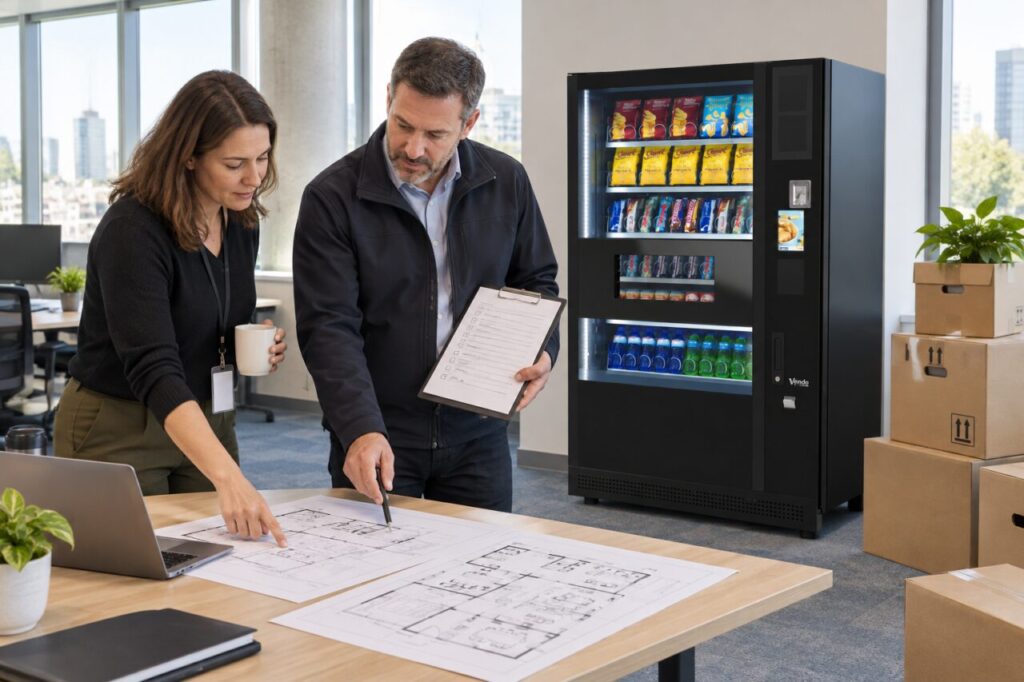
Start the conversation before the removal date is fixed. A machine relocation involves more than transport. It can affect equipment permission, site suitability, service access and the responsibilities of the business named in the agreement.
Identify the agreement you actually have
Find the current paperwork and confirm whether the arrangement is equipment hire, leasing, a managed vending service or another structure. Similar monthly costs do not mean the obligations are the same.
Check who owns the equipment, who is named as the customer and who should receive a relocation request. If a finance provider and service operator are both involved, establish which decisions each controls.
Our vending machine leasing information describes available arrangements, but the terms of an existing agreement should be checked directly. Do not assume a move is included or that changing address ends the original commitment.
Ask for a relocation proposal in writing
Explain the planned move date, new address, expected downtime and any changes in the workforce. Ask what approval is required and what information the supplier needs to assess the new location.
Request a clear breakdown of any proposed collection, transport, installation or reconfiguration work. Confirm who will arrange each part. A verbal agreement to “move the machine” can leave uncertainty about access, connection and commissioning.
If the business itself is changing, rather than simply its address, flag that separately. The supplier can explain what documentation is needed without anyone assuming that the agreement transfers automatically.
Assess the new building as a new site
Do not rely on the fact that the machine worked well in the old premises. Check the new delivery route, intended room, available utilities and access for ongoing service.
Compare the pattern of use too. The new office might have fewer staff on site, a different break area or a nearby café. Those changes may affect the product mix or the suitability of the existing equipment.
Share accurate photographs and request an assessment where needed. For the practical movement checklist, see our guide to planning a vending machine relocation.
Plan the gap between the two locations
Agree when sales will stop at the old premises and who will deal with remaining products. Decide what staff will use for refreshments while the machine is unavailable.
Tell the supplier about building handover deadlines and restricted delivery periods. A collection that is delayed by a locked loading bay can disrupt the rest of the move.
Keep support contact details available until any outstanding customer issues are resolved. Updating an address should not cause a previous purchase enquiry to disappear between the old and new site teams.
Confirm the service before reopening
After installation, agree who will check the machine and confirm that the approved products, payment settings and support information are correct. Revisit the expected service access arrangements at the new premises.
Record any changes to the agreement separately from the physical handover. A successful delivery does not, by itself, confirm the commercial terms or the ongoing service scope.
Once the first working days have passed, review whether the new location is being used as expected. If you are planning a workplace move, discuss your existing vending arrangement early and request a clear relocation plan. That gives everyone time to resolve the practical and contractual questions before the building changes hands.