
A Vending Machine Moves Between Branches: Close One Sales Period Before Starting Another
When a vending machine moves from one branch to another, its equipment identity may stay the same while its commercial context changes. Close the old site’s reporting period clearly before starting the new one. Otherwise sales, stock and later payment entries can be attributed to the wrong branch.
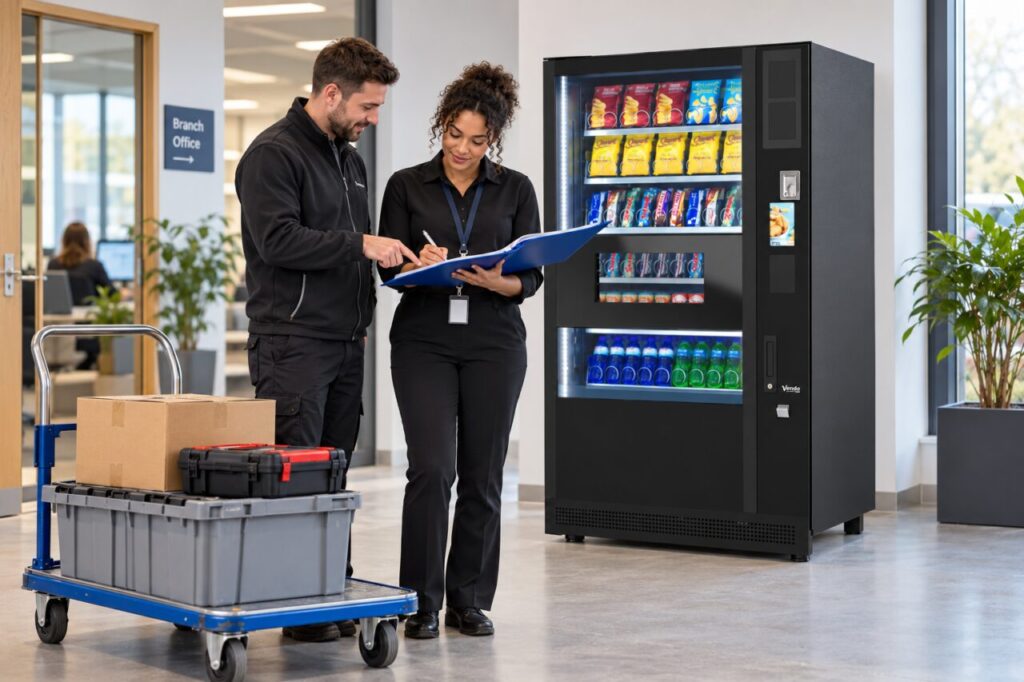
This record-keeping task is separate from arranging the physical move. Relocation should be coordinated with the authorised supplier and relevant site contacts. The reporting plan should follow the confirmed move and recommissioning dates, not an early estimate that later changes without being reflected in the records.
Agree the reporting cut-off before the move
Record the final operating date and time at the old branch and the first approved operating date at the new one. Keep any period when the machine is unavailable visible. If the reporting system uses a particular time zone, confirm it before extracting the closing and opening figures.
For a vending business operation, retain the machine identifier alongside both location records. Do not create the appearance of two physical machines simply because a new site entry is required. Ask the system administrator how to preserve history while changing the location used for future reporting.
Account for the stock that travels or stays behind
Record closing stock at the old site and identify what is removed, transferred or otherwise handled under the operator’s procedures. The opening stock at the new branch should be based on a verified handover, not assumed to equal the last refill quantity. Keep product condition and storage requirements within the normal operating controls.
Use a transfer reference that both branch records can recognise. Stock moved between locations is not automatically a sale. If the business uses separate cost centres, ask the responsible administrator how the transfer should be represented without inventing revenue or duplicating the purchase cost.
Keep later entries linked to the original activity
Payments, adjustments or customer queries may arrive after the machine has left the old site. Preserve enough information to identify the original transaction period and location. A later bank entry should not automatically become new-branch sales simply because the machine is now there.
Likewise, a complaint about a purchase before the move belongs with the relevant original service history. Keep old location names and support references discoverable during the transition. The customer should not be expected to know that the machine was relocated or to work out which branch now holds the equipment record.
Start the new comparison on a fair basis
Record the new branch’s opening hours, attendance pattern, range and prices as applicable. These may differ from the old location, so a change in sales does not isolate the effect of the move alone. Mark the launch period and any incomplete days before comparing weekly performance.
After the first reporting cycle, reconcile the closing old-site totals, transfer record and opening new-site totals. Investigate overlaps or gaps while the move details are still clear. A clean boundary allows the same machine’s history to remain continuous while each branch receives an accurate account of its own activity. That makes later commercial decisions more useful than a report that quietly mixes two sites together.
Agree who signs off each branch record. The outgoing contact can confirm the closing position, while the receiving contact confirms the opening position. A discrepancy should remain an open reconciliation item until the responsible administrator resolves it.
Related guidance: A Vending Business Has Two Bank Payouts for One Sales Period: Reconcile Both.
For help assessing your site, contact Vending-Machines.ie.


