
Vending Manufacturer, Supplier or Operator: Who Does What?
When researching a vending service, you may encounter manufacturers, equipment suppliers and operators. Some companies perform several of these roles. Others specialise in one part of the service and work with separate partners.
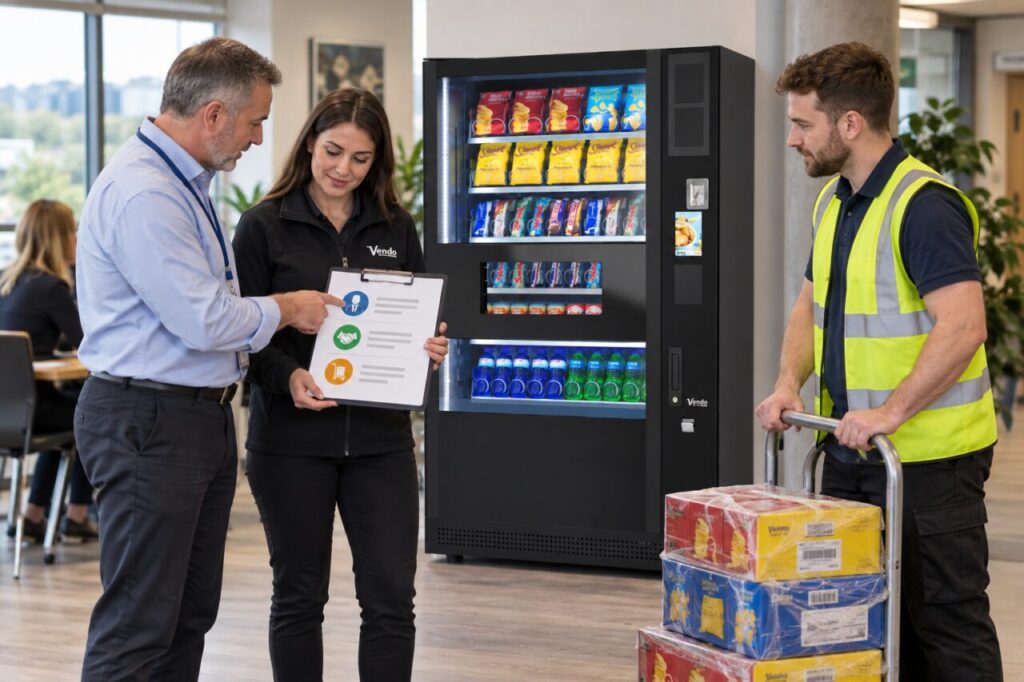
Understanding the distinction helps you ask better questions before ordering. The most useful outcome is not a label for the company, but a clear answer to who is responsible for equipment, installation, stock and support in your particular arrangement.
The manufacturer defines the equipment
The manufacturer develops the machine and its technical specification. That specification is the place to verify the exact model, approved operating conditions and available configurations.
For example, SandenVendo publishes a range of vending equipment. A machine from that range may then be supplied or operated through another business. The manufacturer’s name on the cabinet does not, by itself, tell the customer who will refill it or handle a local service request.
Ask for the exact model and configuration in the proposal. Optional features shown in a brochure should not be assumed to be included in every unit.
The supplier brings the equipment proposal together
An equipment supplier may advise on model choice, arrange delivery and help organise installation. Confirm those responsibilities rather than assuming that the quoted purchase price includes each service.
Ask who will check the site’s suitability and who will explain the installed controls. Clarify where to find operating documentation and how a fault should be reported after handover.
If several businesses are involved, request one clear contact route. A buyer should not have to work out whether an issue belongs to the delivery company, equipment manufacturer or payment provider before anyone acknowledges it.
The operator manages the ongoing vending service
Operating a machine involves more than owning it. Someone must plan products, replenish stock, review availability and respond to routine customer questions.
In a self-operated arrangement, those responsibilities may remain with the machine owner. Under our fully managed vending service, replenishment and technical care form part of the agreed service. The scope should be established before installation.
Ask which activities still require the site’s involvement, such as providing access or reporting a problem noticed by staff. A managed arrangement works better when those small but important responsibilities are understood.
One business can perform several roles
Do not assume that manufacturers never operate machines or that operators never sell equipment. CoreVend, for example, publishes separate information about design and manufacture and operated services. That illustrates why the actual proposal matters more than a single description of the company.
Compare suppliers on the service you are requesting. An equipment-only quotation and a managed-service proposal answer different needs, even if both feature a similar cabinet.
Also distinguish a product brand from a commercial relationship. Offering a recognised machine or drink brand does not automatically establish a partnership beyond the arrangement the supplier can substantiate.
Put the responsibilities on one page
Create a simple table with a task, responsible company, contact person and any relevant limitation. Include delivery, installation, stocking, cleaning responsibilities, fault reporting, payment support and end-of-service collection.
Ask the supplier to confirm it alongside the proposal. Use the document during handover so that the site manager knows what to do after the sales discussion has ended.
If your priority is convenience for staff, explain how much day-to-day work your team can realistically take on. If you intend to operate the equipment yourself, say so early. When you discuss vending options, clarity about responsibilities will help you choose an arrangement that fits your business rather than simply choosing the most appealing machine photograph.