
Vending Operator Training Across Languages: Check Understanding at the Machine
A vending operator can understand a conversation in a second language while still missing an unfamiliar equipment instruction. Training should therefore check practical understanding at the actual machine, especially when new staff will refill stock, recognise faults or explain the service to customers without the trainer present.
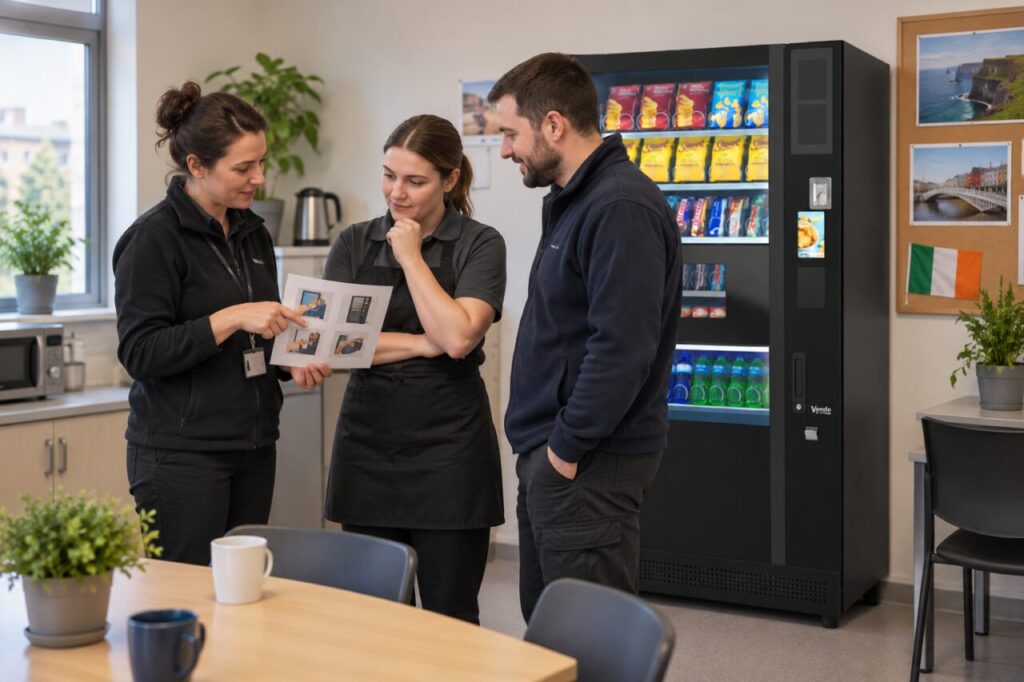
The aim is not to test someone’s fluency. It is to establish that the agreed work can be completed correctly and that the person knows when to stop and ask for help. Plan language support as part of the training arrangement rather than discovering the need during handover.
Agree the language support before the session
Tell the supplier which staff will operate the equipment and which language or communication support would help them. Ask what training materials are available for the exact machine. Do not assume an online translation of another model’s manual will describe the same controls, sequence or permitted work.
Where an interpreter or bilingual colleague will help, brief that person on the purpose of the session. They should have enough time to translate questions as well as the trainer’s explanation. A rushed summary that leaves out uncertainty can make everyone believe the instruction was understood when it was not.
Keep the trainer responsible for confirming the technical meaning. A helpful colleague should not have to improvise machine-specific advice or decide which warning can be omitted. If a term has no clear equivalent in the shared discussion, pause and demonstrate its meaning safely within the agreed training scope.
Demonstrate one ordinary task at a time
Use the real equipment and the approved operating instructions. Break the work into manageable tasks, such as identifying the machine, finding the correct support contact or recognising where customers collect purchases. Let the trainee ask questions before moving to the next task.
Ask the person to explain the next step in their own words or demonstrate an authorised routine action. This is often more informative than asking whether everything is clear. Observe without rushing to complete the task for them, because that can hide the point at which the instruction became confusing.
Practise the decision to stop as well. Give a simple example of an unexpected message or a product problem and ask who should be contacted. Do not use training to encourage access to electrical, refrigeration or other restricted parts. The correct response can be to record the observation and seek qualified support.
Make the working aid match the machine
A short illustrated reminder can support the full instructions, provided the supplier confirms that its steps are correct. Use photographs or diagrams of the actual control and label where appropriate. Keep the machine identifier and document version visible so a later equipment change does not leave misleading guidance behind.
Separate translated wording from the authoritative source and arrange review of any safety-relevant translation. Avoid relying on unreviewed automatic translation for technical warnings. Keep the original instructions available and make it easy for staff to raise a wording question without treating that question as a failure.
Check understanding after the handover
Arrange an early follow-up with the people who actually operate the machine. Ask which task required help and whether the working aid was easy to find. Update unclear wording through the agreed supplier process rather than allowing several unofficial versions to circulate across shifts.
When discussing vending equipment and support, include training language and attendance needs in the enquiry. The published start-up package includes customer training, but the exact format and language support should be agreed for your order. A clear request makes those needs reviewable before the equipment arrives.
Related guidance: Vending Training Videos: What Still Needs Hands-On Practice?.
Planning or reviewing vending at your site? Contact the team with your location, equipment details and the question you would like to resolve.