
Ordering Vending Machines in Stages: Agree What Is Fixed at Each Release
Ordering vending machines in stages can make sense when different sites are becoming ready at different times. The important question is what has actually been agreed for each stage. A discussion about several machines does not, by itself, establish the price, configuration or delivery arrangements for every later release. Make each commitment easy to identify before the rollout begins.
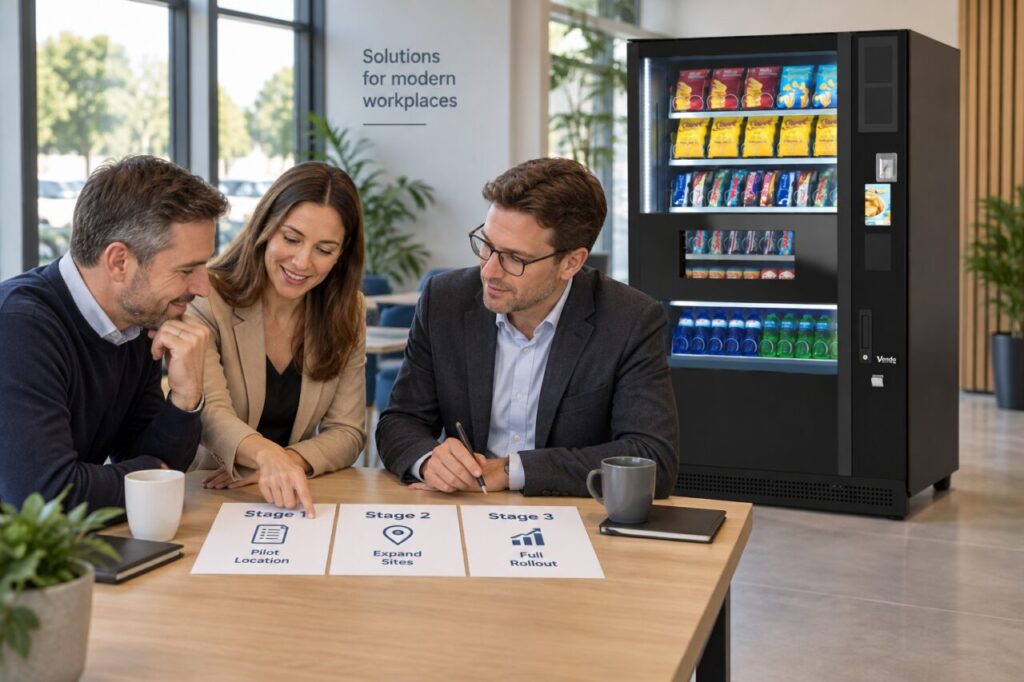
Define the stages in practical terms
Give each proposed stage a site name, equipment quantity and intended readiness date. Distinguish a confirmed order from an estimate of future demand. If a later location has not yet been surveyed, label it as unresolved rather than assuming it can use the first site’s specification. Two similar offices can have different access routes, staffing patterns and product requirements.
Discuss the overall vending equipment plan with the supplier, then ask for a clear written schedule showing which details apply to which release. This is useful even when one person buys everything. It helps facilities, finance and the receiving team understand whether they are preparing for a definite delivery or a possible future installation.
Ask what remains fixed
The supplier should explain whether quoted prices, available configurations and delivery assumptions apply only to the first stage or to the whole agreed order. Do not infer a future price guarantee from an earlier quotation. Ask which dates or conditions would require the later stage to be reviewed, and who will issue that review.
Record any shared requirements, such as the intended snack range or customer instructions, separately from site-specific requirements. Standardisation can simplify training, but it should not hide an unsuitable layout or an unconfirmed payment arrangement. A useful schedule has a common section followed by the exceptions for each site, with unresolved points clearly marked rather than left blank.
Release equipment against readiness
Before authorising the next stage, obtain a fresh readiness update from that site’s responsible contact. Confirm that the receiving route, final position, relevant site work and agreed access arrangements still match the plan. Ask the supplier to resolve equipment-specific installation requirements. An old building drawing is not enough if the fit-out has changed since it was prepared.
For example, the first office may be open while the second is awaiting furniture installation. Sending both machines on the same date could create an unnecessary storage problem. The decision is not simply whether the supplier can dispatch equipment; it is whether the receiving site can complete the agreed sequence. Keep dispatch, delivery and readiness to use as separate milestones.
Learn without silently changing the order
The first installation may reveal a useful improvement to instructions, stocking or handover. Share that finding, but do not assume it automatically changes later orders. Describe the proposed change, identify the affected sites and ask the supplier to confirm any impact on the agreed equipment, timing and price before the next release is approved.
After each stage, record what arrived, what was accepted and what remains open. Link that record to the next-stage decision so a recurring issue is addressed deliberately. Keep the current schedule accessible to the people organising delivery; retire superseded copies. A staged rollout works best when everyone can answer one simple question: what exactly is authorised to happen next?
If you are planning several locations, request a site discussion with the proposed sequence and known readiness dates.
Related guidance: Vending Machine Orders: Agree What Happens if the Preferred Finish Changes.