
Buying a Vending Machine: Separate Essential Features from Nice Extras
A vending machine proposal can become difficult to judge when every feature sounds essential. A larger screen, another product selection or an extra reporting option may be useful, but usefulness depends on the job the machine must do. Before comparing equipment, separate requirements that determine whether the service works from additions that make it more convenient.
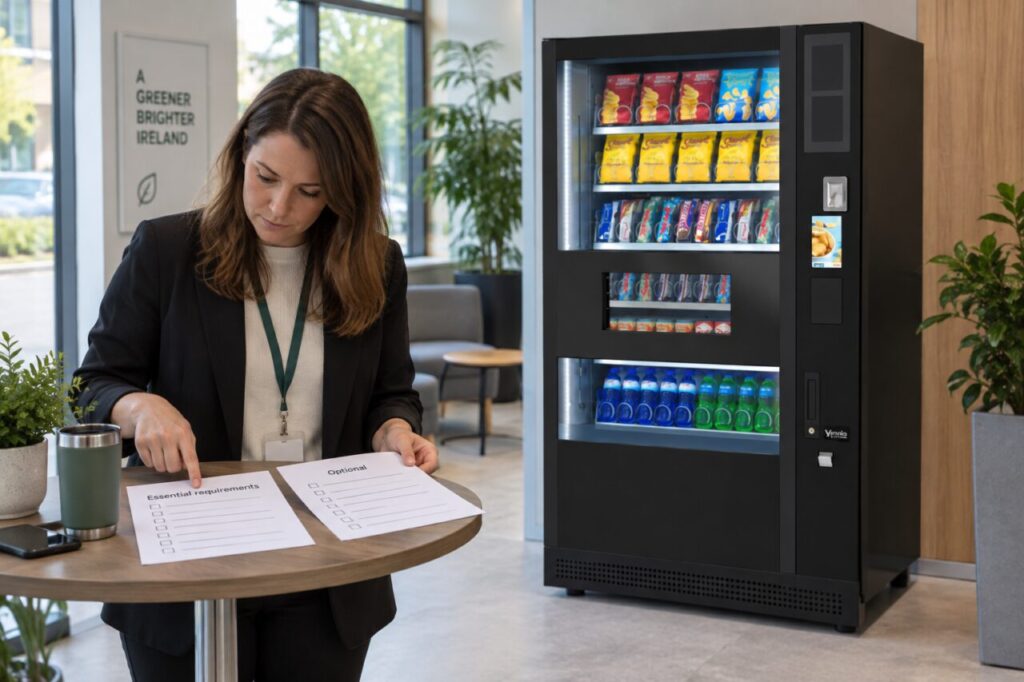
This is a practical buying exercise for a workplace or first site. It helps you explain priorities to a supplier without pretending that every machine needs the same specification.
Start with a service outcome
Write one sentence describing the problem. For example, staff need access to bottled water and sealed snacks when the canteen is closed. That sentence gives you a test for each proposed feature: does it help deliver that outcome, and what happens without it?
Describe the actual users, opening hours and products. A feature required for public customers may be unnecessary in a small staff-only room. Equally, something that looks optional during a showroom visit may be essential for a night shift with no nearby alternative. Ask representatives of those users before fixing the list.
Give each requirement a consequence
Make three columns: requirement, reason and consequence if absent. Product compatibility belongs here. If the intended water bottle cannot be dispensed reliably, the cabinet does not meet the brief regardless of its other features.
Payment suitability, available service access and a workable delivery route also deserve specific questions. Avoid filling the sheet with phrases such as modern or user-friendly. Replace them with observations that can be checked, such as whether a customer can read the selection information and collect the chosen item without assistance.
Keep optional features visible
An optional feature is not a bad feature. It simply needs a separate decision. Ask the supplier to price or describe it separately and explain whether it can be added later. Do not assume that a future upgrade will be possible on every cabinet or controller.
Give useful extras a reason too. Remote stock information might reduce unnecessary checking, but only if someone will use it and the supplied configuration supports it. A report that nobody reviews should not automatically outrank a feature needed for dependable daily service.
Test the proposed configuration
Compare the requirements against the exact equipment being offered, not a brochure for the wider range. Ask for demonstrations using representative products and the intended customer payment journey. Record anything that remains unconfirmed rather than treating silence as acceptance.
Our vending machine range provides a starting point for discussing available equipment. A supplier recommendation should explain which requirements it meets, which need a different configuration and which require a site check. Keep that explanation with the quotation so the decision remains understandable later.
Make the final choice traceable
Review the list with the person who will operate or manage the machine. Check whether the attractive extras create additional work, subscriptions or training needs. Ask for those responsibilities to be explained in the proposal, without assuming they apply in every case.
For a simple example, bottled water after the canteen closes can be an essential requirement, while a larger advertising display may be optional. Ask the supplier to show how the recommended configuration meets the first requirement before discussing the second. This keeps the decision connected to the service problem instead of the order in which features appear in a brochure.
If two options meet the essentials, compare their optional benefits against your actual priorities and total quoted commitments. Keep unresolved essentials as questions to answer before ordering. Our one-page buying brief guide helps bring these decisions together. When you contact our team, send the essential list first and the optional list alongside it.