
A Vending Quote Names a Model: What Configuration Is Actually Included?
A model name on a vending quotation is a useful starting point, but it is not a complete description of what will arrive. The buying decision also depends on the proposed product layout, customer controls, payment arrangement and services included with the equipment. Ask the supplier to describe the actual configuration in plain language before you approve the order.
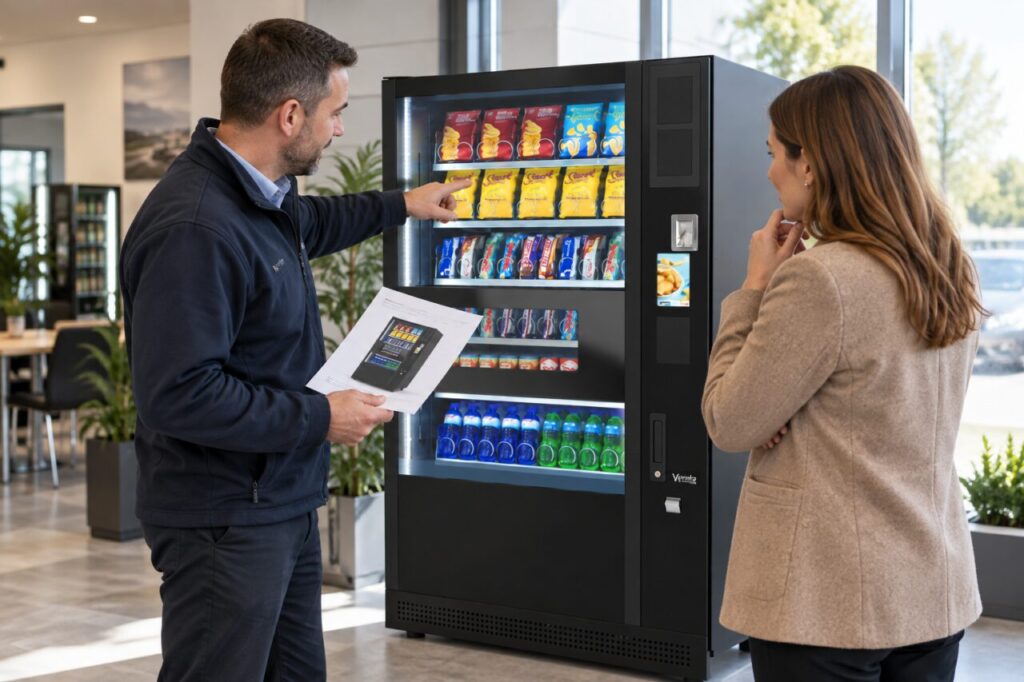
The aim is not to turn a buyer into an engineer. It is to prevent two people from agreeing to the same model name while imagining different equipment or responsibilities.
Identify the machine and its condition
Ask for the manufacturer, model and whether the quoted machine is new, used or refurbished. Where the offer concerns a particular used machine, ask how that individual unit will be identified in the order. A general catalogue image should not be treated as a condition report for an existing cabinet.
Keep any substitutions separate. If availability changes, request an explanation of the replacement and the differences that matter to your site. Similar appearance does not establish equivalent capacity, installation needs or product suitability. Review the revised details before accepting a change.
Describe the intended product layout
Provide the supplier with representative products rather than only broad categories. A snack bar, a large crisp packet and a water bottle can require different arrangements. Ask which proposed selections are configured for each item and how changes would be handled later.
Distinguish the number of product choices from the number of packs held. A layout with many choices may allocate fewer units to a popular line. Our capacity guide explains the planning distinction; confirm the exact usable capacity with the supplier rather than estimating it from a photograph.
Confirm the payment journey
Ask what payment equipment is included, who supplies it and what setup remains your responsibility. If a separate account or service arrangement is needed, identify the owner and the steps required before customers can purchase. Do not assume that a visible reader means the whole payment service is included in the machine price.
Request a demonstration of selection, payment and collection using the proposed setup. Record how a customer finds help if a purchase fails. Any optional functions should be described as included, available separately or unsupported, rather than left as an implied promise.
Separate equipment from services
Delivery, positioning, installation, staff familiarisation and initial stocking are different activities. Ask which are included and what site preparation must be completed first. This makes it easier to compare a supply-only quotation with a proposal involving ongoing support.
For an operated arrangement, discuss our fully managed service and confirm the responsibilities in the actual proposal. For a purchase, identify who will arrange replenishment, cleaning and technical assistance. Neither arrangement should rely on a verbal assumption that somebody else will handle a task.
Approve a written configuration summary
Bring the agreed equipment, product layout, payment setup and service scope into one short summary. Ask the supplier to confirm outstanding dependencies and identify any illustration that differs from the proposed unit. Retain this alongside the quotation and order confirmation.
Also ask which photographs or diagrams form part of the configuration summary. Mark an illustrative picture as illustrative, and request clarification where the visible payment equipment or shelf layout differs from the order. A version date on the agreed summary helps both parties identify the final choice when several proposals have been exchanged.
Use the summary during handover to check what was supplied and to record questions requiring follow-up. It should support a constructive discussion, not substitute for technical inspection. Start with our equipment range and send your requirements when you want a proposal based on your site’s actual use.