
Vending Quote Versions: Know Which Price and Scope You Are Approving
A vending quotation may be revised several times before an order is approved. Changes to equipment, delivery scope or accessories can leave different colleagues referring to different documents. Before giving approval, identify the exact version being accepted and confirm that its price and scope match the decision your team intends to make.
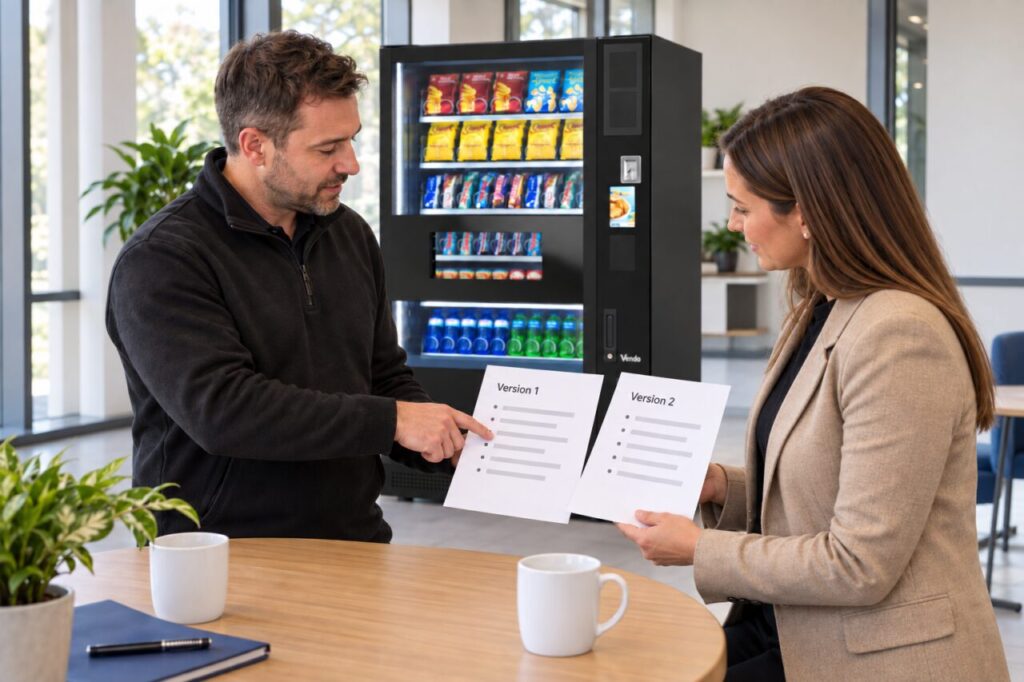
Establish the current quotation
Ask the supplier to identify the latest complete proposal by date and reference. Avoid assembling an order from the cheapest lines in several superseded quotations unless the supplier has issued a combined offer confirming that arrangement. A revised total may reflect a change elsewhere in the scope, not simply a discount on an identical package.
Keep the previous version available for comparison, clearly labelled as historical. This allows you to understand what changed without presenting two documents as equally current. When discussing vending equipment for sale, send the reference you are reviewing so the supplier can answer against the same proposal rather than guessing which attachment your question concerns.
Compare the changes line by line
Check equipment identity, configuration, included accessories and the work covered by delivery and installation. Then review the price and any recurring charges described in the proposal. Do not limit the comparison to the final total. A proposal that appears cheaper may involve a different service boundary, while an increased total may include something your team specifically requested.
Make a short change list with three columns: previous wording, revised wording and the question or decision arising from it. Quote the relevant line rather than paraphrasing it loosely. If a line disappeared, ask whether it has been removed, included elsewhere or omitted accidentally. Do not treat the absence of wording as a confirmed commercial answer.
Resolve comments before approval
Gather questions from the people responsible for the site, budget and operation. Ask one coordinating contact to return the consolidated list to the supplier. This reduces the chance of separate conversations producing conflicting assumptions. Keep any proposed amendment visible until the supplier has acknowledged how it affects the current quotation and the arrangement being offered.
If the supplier answers in an email, ask whether the quotation will be reissued or how the clarification forms part of the final proposal. Follow your organisation’s purchasing process for documenting approval. This article describes practical version control; it does not interpret contractual effect. Refer any uncertainty about commitments or terms to the person authorised to review them.
The guide to matching photographs and written specifications supports the equipment-identification part of this check. A revised image should not silently replace an agreed configuration. Keep the supplier’s confirmed description, relevant image and current quotation connected so the eventual receiving team can understand what was ordered without searching through several message threads.
Send one clear approval reference
When the decision is ready, record the accepted quotation reference and date through the normal approval channel. Identify any agreed supporting clarification precisely. Avoid a message saying approved beneath a long conversation containing multiple proposals. The supplier and your internal purchasing team should be able to identify the same final scope from the record.
Share that reference with the people arranging receipt, commissioning and handover. They may not have attended the purchasing discussion. Tell them where to find the current documents and whom to contact if delivered equipment differs from the accepted description. Keep earlier versions out of the ordinary receiving pack unless they are explicitly needed to explain a recorded change.
If another revision arrives after approval, treat it as a new change to review rather than quietly replacing the accepted file. Ask what differs and obtain the appropriate decision before proceeding. A simple version trail preserves the facts of the purchase and helps everyone distinguish a current commitment from an earlier option that was discussed but never accepted.
Ask our team to clarify the current proposal for your vending purchase.