
Vending Range Reviews: Compare Units Sold with Display Space
A vending product with a lower sales total may also have less display space or fewer periods of availability. Consider those conditions before removing it from the range. A useful review connects the observed units sold with the way the product was offered, rather than treating the total as a complete explanation of customer preference.
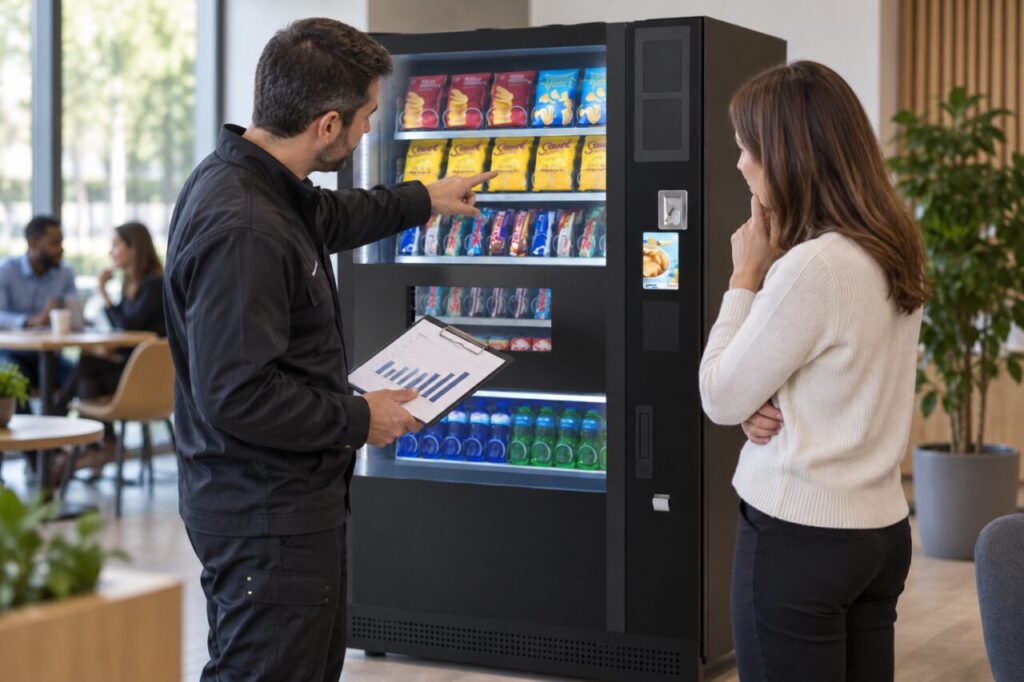
This is an operational comparison, not a guaranteed method for increasing revenue. Use the records available from the actual arrangement and state their limits. Different products may serve different customer needs, so the objective is not to rank every item by one figure while ignoring the role it plays in the overall range.
Record the allocation clearly
Identify the product, the machine and how it was presented during the period being reviewed. Ask the operator how display or stock allocation is recorded in the supplied setup. Keep the description specific enough to distinguish a single small allocation from a product that occupies several positions across the visible range.
Note changes during the period. If the product moved or its allocation changed, a single end-of-period photograph may not describe the conditions behind the total. Use the operator’s records where available and label any reconstruction as an estimate rather than presenting uncertain historical information as a measured fact.
Check availability before preference
Ask whether the item remained available throughout the comparison. A product cannot be chosen when its selection is unavailable, so a low total may need explanation before it is treated as rejection by customers. Separate stock availability from technical availability where the records allow, and avoid inventing missing detail to complete a table.
Our guide to reporting periods covers another part of a fair comparison. Use compatible dates and measures. Units sold, revenue and margin answer different questions, and a report should identify which one it is using rather than moving between them without explanation.
Consider the product's role
An item may provide a useful choice for a smaller group even when it does not lead the volume table. Discuss the intended range with the operator and site contact before making a decision. Keep verified customer feedback separate from assumptions about why a particular product matters to people who use the machine.
Avoid declaring a product healthier, more sustainable or better value solely because it performs well in the review. Those are different claims requiring appropriate evidence. The sales and allocation comparison can inform a range discussion without turning an operational observation into a nutritional, environmental or universal customer-benefit statement.
Test a defined adjustment
If the provider agrees that an allocation change is worth testing, record the change and the question being assessed. Keep other relevant conditions visible. Changing product, price and position together may be a valid service decision, but it makes it harder to attribute any later difference to display space alone.
Review the outcome using the same definitions and an appropriate agreed period. Record unusual site events or unavailable periods alongside the result. If the evidence is inconclusive, say so. A careful decision may be to gather better observations rather than announce a winning formula based on a small or inconsistent sample.
When developing a vending business, use range reviews to ask better questions about the service. Display space is one part of the context, not a substitute for understanding availability and customer needs. Keep the final decision and its evidence in the record so future changes build on a clear account of what was tested.
Discuss your vending requirements with our team when planning equipment and range responsibilities.