
Vending Refill Trolleys and Customer Queues: Test the Working Space Together
A vending area can feel spacious when the machine is closed and no one is waiting. During a refill, the trolley, stock cartons and working operator occupy space that customers normally use. Review those conditions together before deciding that the layout is practical.
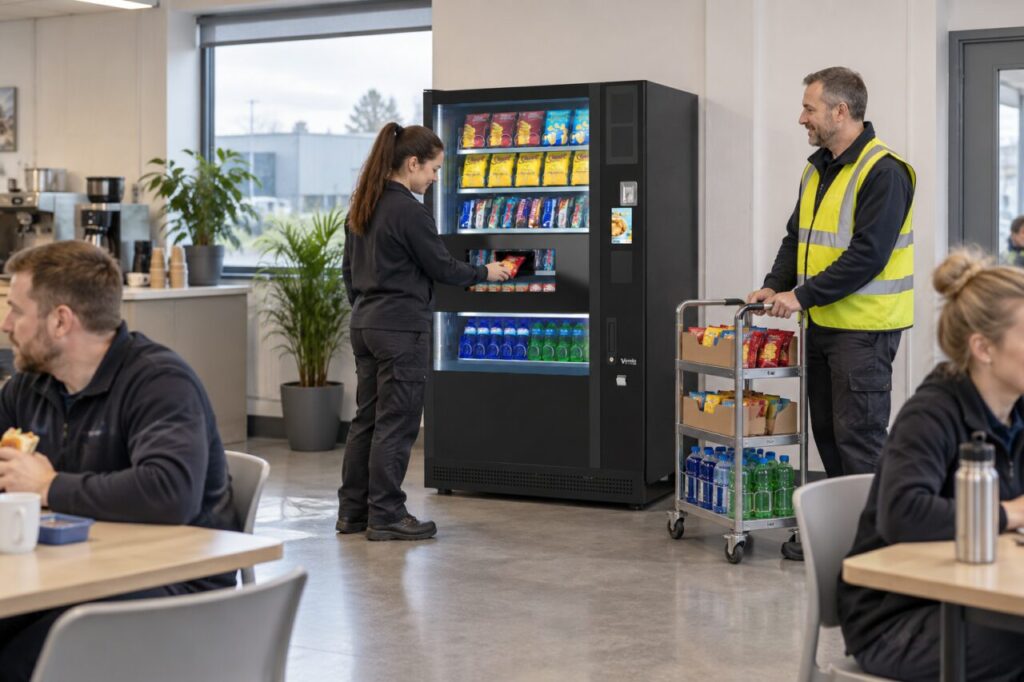
This is a working-space assessment, not a request for customers to squeeze past a refill. The aim is to give the operator an agreed place to work while keeping the customer route understandable and clear.
Map the space used during a visit
Ask the operator to describe the normal trolley, stock handling and service-door access for the equipment. Mark those areas on the site plan alongside the ordinary customer queue. Include where empty cartons go temporarily and how the trolley enters and leaves the room. The closed cabinet footprint does not show these activities.
Use the actual visit method where possible rather than an imagined small trolley. A larger delivery may need a different arrangement from a quick top-up. If the room changes between those visits, explain the difference to the operator so the plan does not rely on space that is only sometimes available.
Observe a representative busy period
Watch how customers approach, wait and leave during an ordinary break. Note whether chairs are pulled back into the proposed working area or whether people pause beside the machine to talk. These movements may not appear on a furniture drawing, yet they influence whether a refill can proceed comfortably.
Do not create a live obstruction to test the idea. Discuss the observations with the site lead and operator, then agree a suitable controlled trial. Where emergency routes or building access are involved, have the responsible site team review the arrangement. Vending convenience should not determine the building’s circulation requirements.
Choose a workable visit arrangement
The answer may be a different visit window, a designated trolley position or a short clearly managed interruption to vending access. Ask the operator what can be done without compromising their work. Avoid promising that refills will always take place outside breaks unless the service arrangement actually supports that commitment.
The fully managed service includes replenishment under the agreed site arrangements. Provide real access information when discussing that service. If customers must wait during a refill, decide where the temporary message will go and who explains the situation. Keep any alternative refreshments route accurate and accessible to the intended users.
Include the journey back out with the trolley. A position that allows arrival may become difficult to leave once customers gather. Agree how the operator can finish and depart without asking customers to move repeatedly around the working area.
Check the layout after changes
Review the arrangement when furniture, bins or nearby equipment move. A new microwave queue or a storage cupboard left open can remove space that was available at the original survey. Tell the operator about the change before the next visit rather than leaving them to discover it while carrying stock.
Record the agreed working area and the reason for it in the site instructions. This helps a relief colleague follow the same arrangement without relying on local memory. When choosing vending equipment, discuss both customer use and routine servicing; neither should be an afterthought. After a few normal visits, ask the operator and site staff whether the plan works in practice and adjust any specific problem through the agreed contact.
Related guidance: Vending Refills During a Busy Break: Agree Where Customers Wait.
Planning or reviewing vending at your site? Contact the team with your location, equipment details and the question you would like to resolve.