Vending Revenue Includes a One-Off Bulk Purchase: Show Its Effect on the Normal Sales Pattern
A large one-off purchase can make a vending sales period look unusually strong. It is real revenue, but it may not represent the normal pattern of individual customers buying refreshments. Keep the sale in the financial record while showing its effect separately when planning stock, comparing sites or estimating future demand.
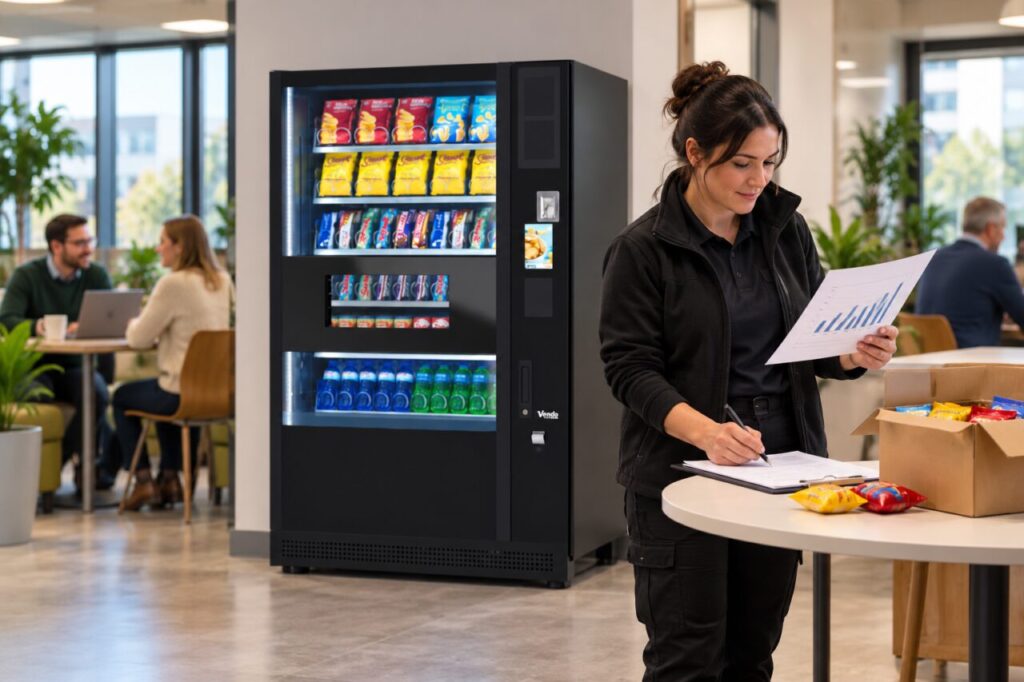
First establish what the transaction represents. Was it an ordinary sequence of purchases through the machine, a separately invoiced stock order or another arrangement? The reporting treatment should follow the actual records. Do not add an off-machine order to machine sales simply because the products came from the same supplier or storage area.
Identify the exceptional activity
Record the date, products, quantities and relevant sale reference. Explain why the purchase appears unusual, such as a single pre-arranged meeting order. Avoid labelling every busy day exceptional after seeing the result. Use a reason supported by the available information, and keep customer details limited to what the business needs for the record.
Check whether the large purchase reduced stock available to ordinary customers. If it did, the remaining day’s sales may also have been affected by availability. A simple subtraction may not fully describe the impact. Note any known stock gaps so the next range review does not mistake restricted supply for weaker everyday demand.
Show the total and the comparison view
Use two clearly labelled figures where helpful: total recorded sales and sales excluding the identified one-off activity for a specific comparison. Do not overwrite the original total. Explain the adjustment in the report so another person can reproduce it. The adjusted view is an analytical tool, not a replacement for the accounting record.
For a hypothetical example, suppose a period records €600 in sales, including a separately identified €120 exceptional purchase. The comparison figure excluding that purchase is €480. Those invented numbers illustrate the calculation only; they are not expected vending revenue. They also say nothing about profit because stock costs and other expenses have not been included.
Avoid turning one sale into a recurring forecast
Before increasing routine stock, ask whether the same buying occasion will recur and whether any future order is actually confirmed. Interest in another event is not a commitment. When planning a vending machine business, distinguish regular customer demand from occasional orders so the purchasing plan does not depend on an unsupported repeat.
Consider the products separately. A bulk purchase of one snack can change the apparent ranking without indicating a broad shift in customer preference. Review ordinary sales and availability alongside the event order. If the business wants to serve similar orders again, assess the extra stock, handling and customer-service work as a distinct activity.
Keep later comparisons consistent
When comparing periods, state whether exceptional purchases are included in both. Avoid comparing an adjusted week with an unadjusted month without explanation. Retain the source reference and the reason for each adjustment. If the supposed one-off activity becomes regular, revisit the definition rather than excluding it indefinitely because that was the original label.
Discuss the result in plain language: total sales rose, a named exceptional order contributed, and ordinary purchasing showed its own pattern. This gives the operator useful information without dismissing valid revenue or overstating repeat demand. The next stock decision can then reflect both confirmed special orders and the everyday service customers expect.
Related guidance: Average Vending Sale Value Changes: Check the Product Mix Before Assuming Prices Rose.
For help assessing your site, contact Vending-Machines.ie.