
Vending Service Review: Separate a One-Off Event from a Recurring Pattern
A busy open day, a delayed delivery or an unusual staff meeting can produce vending observations that do not represent an ordinary week. Before changing the range, visit schedule or equipment, ask whether the issue is a one-off event or part of a recurring pattern. This does not mean dismissing a serious incident. It means matching the response to the evidence rather than treating every unusual day as the new normal.
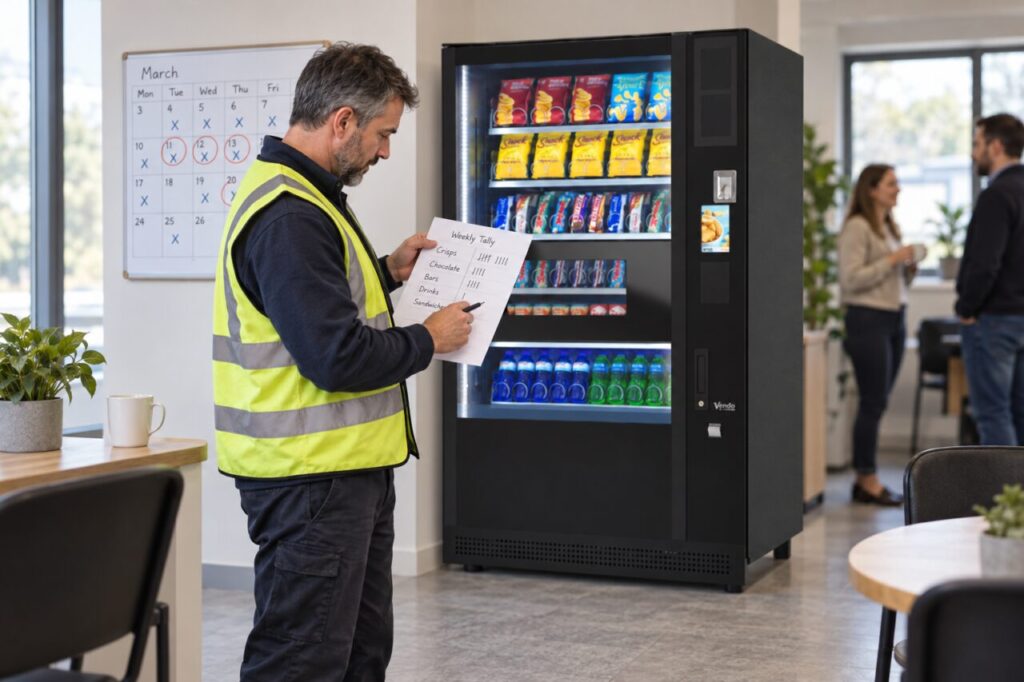
Describe the observation precisely
Start with what happened, where and when. Identify the machine, affected selection or service step, and separate direct observations from assumptions. A statement that everything ran out is less useful than a record of which products were unavailable at the time of the check. Do not infer the duration of a shortage from a single visit unless further information supports it.
Keep the discussion connected to the site’s vending service requirements. The operator may have relevant stock or visit records that the host does not see, while the host may know about a one-day event affecting attendance. Combining those perspectives can explain an observation more accurately than either party interpreting a short note alone.
Look for exceptional conditions
Ask whether the period included visitors, a closure, a temporary team, unusual working hours or another known change. Record the event rather than automatically removing the period from the review. An exceptional day may still reveal a useful planning need, such as a better way to notify the operator of future events. It simply should not be labelled typical without justification.
For example, high snack use during a training session may support an event-notification process rather than a permanent increase in every refill. Conversely, repeated shortages during the same ordinary break period may justify a closer look at capacity or replenishment. These are possible interpretations to investigate, not automatic conclusions. The relevant records and practical site arrangements should guide the decision.
Compare similar periods carefully
Use dates and observation methods that make sense together. A full working week should not be compared directly with a short holiday week without acknowledging the difference. Likewise, a morning check and an end-of-day check may describe different parts of the stock cycle. Write down those limits so a simple chart or total does not suggest more certainty than the underlying information allows.
Where evidence is sparse, agree a focused observation period with the operator. Decide what will be recorded and why. Avoid collecting named customer histories when aggregate site information is sufficient. The review should remain proportionate to the decision being considered, with enough detail to distinguish a repeating issue from an isolated event rather than generating records nobody will use.
Choose a proportionate next step
The next action might be a temporary event plan, a product trial, a service-schedule discussion or further investigation. Identify what the action is intended to improve and what would show that it helped. Do not change several unrelated parts of the service at once unless necessary, because that makes later interpretation harder. Keep any urgent safety or equipment concern on its proper immediate reporting route.
At the following review, compare the result with the original question and note other changes that occurred. Avoid claiming that one adjustment caused an improvement when the evidence cannot establish that connection. A useful service review leaves a clear account of what was observed, what was decided and what remains uncertain. That supports steady practical improvement without overreacting to every unusual day.
Discuss a service review with your site’s requirements and observations.
Related guidance: Vending Service Reviews: Turn Agreed Actions into a Checkable Follow-Up.