
Vending Route Planning: Separate Refill Work from Service Tasks
A vending route can contain several kinds of work that happen to share the same destination. Restocking products, checking a customer report and carrying out technical maintenance are not interchangeable tasks. When planning visits, identify what each site needs and who is authorised and equipped to do it before combining everything into one appointment.
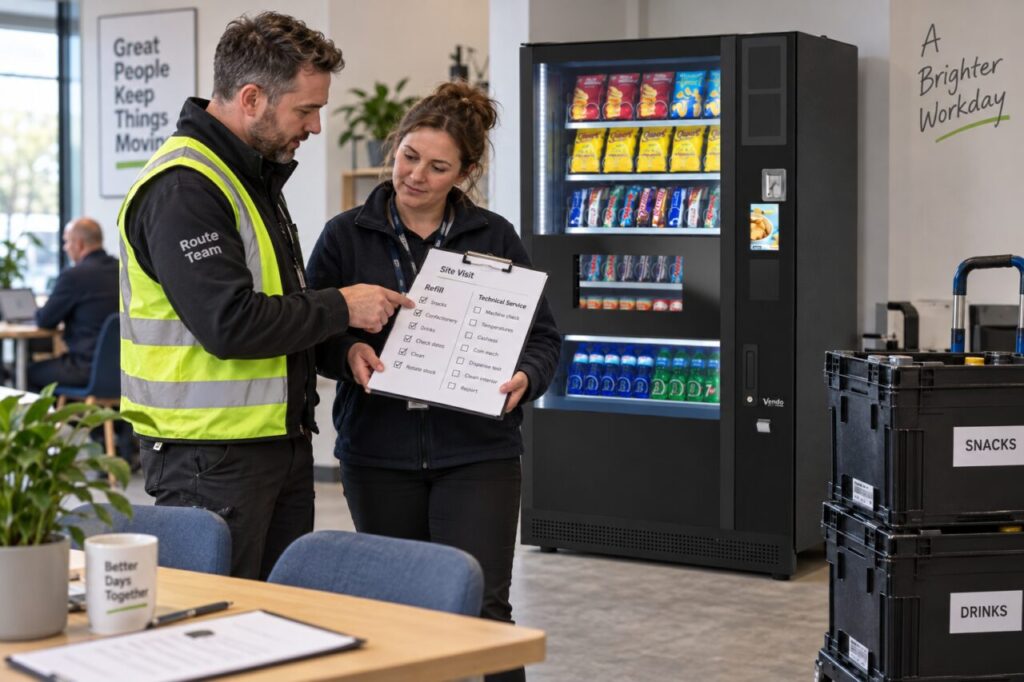
Describe the task rather than the destination alone
Write a clear purpose for each visit. Refill a stated range, inspect a reported issue under the provider’s process or complete a planned service task are different instructions. A route entry that says only visit machine leaves too much to interpretation. Give the assigned person enough information to understand the expected outcome and any limits on the work.
For operators developing a vending business, this distinction helps connect route planning with responsibilities. A person who can deliver stock is not automatically qualified to repair equipment. Keep technical work with appropriately qualified and authorised people. Do not let proximity to the site become the reason someone is asked to attempt an unfamiliar intervention.
Check dependencies before assigning the visit
Ask whether the work needs parts, documentation, customer information or a particular site contact. An appointment may be unproductive if the person arrives without a prerequisite that could have been identified beforehand. Record outstanding dependencies and who will confirm them. Do not mark the task ready merely because there is an empty slot on a route schedule.
Separate the machine’s availability from the task’s readiness. A refill may not be appropriate while a technical issue remains unresolved, depending on the provider’s assessment. Ask the responsible team for instructions rather than treating every low-stock report as permission to load products. Keep any restriction visible to the planner and the person attending the site.
Combine visits only when the arrangement works
There can be practical value in coordinating tasks at one location, but confirm the sequence and responsibilities. The refill person and technician may need different access or appointment conditions. Decide who tells the site what to expect. A combined calendar entry should not conceal the fact that two people or stages are required to finish the work.
Allow time for the actual tasks and the site’s access arrangements. Do not assume a technical visit fits into the time normally used for a routine refill. If the scope is uncertain, obtain an assessment from the responsible team. A realistic plan makes it easier to communicate changes than a tightly packed route built on unsupported estimates.
Use the guide to rebooked service appointments when an earlier visit could not proceed. Carry the reason and unresolved work into the new task. Starting a fresh route entry without that context can repeat the same obstacle and make it appear that several unrelated problems exist when there is one continuing issue.
Record completion by task
After attendance, ask for the outcome of each assigned activity. A successful stock delivery does not close an unresolved technical report. Likewise, a repair visit does not prove the planned range was replenished. Keep completed and outstanding work distinct so the next planner can see what still needs attention without interpreting a vague site visited status.
Use factual completion notes and refer specialist findings to the appropriate service record. If new work is identified, create a clear follow-up with an owner instead of silently expanding the original task. The site should receive an accurate explanation of current availability and next steps. Avoid promising a completion date before the necessary people and dependencies are confirmed.
Over time, review where mixed task descriptions cause repeat visits or confusion. Improve the planning information rather than simply urging staff to complete routes faster. Separating refill and service work gives each activity an appropriate scope and makes coordination clearer, while still allowing sensible combined visits when the provider confirms they can be carried out effectively.
Discuss equipment and service planning for your vending operation.