
Planning vending service in a corridor that cannot close at lunchtime
A vending machine may fit comfortably in a corridor during normal trading yet need much more space when an engineer opens it for service. If that corridor also carries the lunchtime queue, book maintenance around the actual flow of people. The aim is to provide a safe working area and a usable route, not to improvise a barrier after customers have arrived.
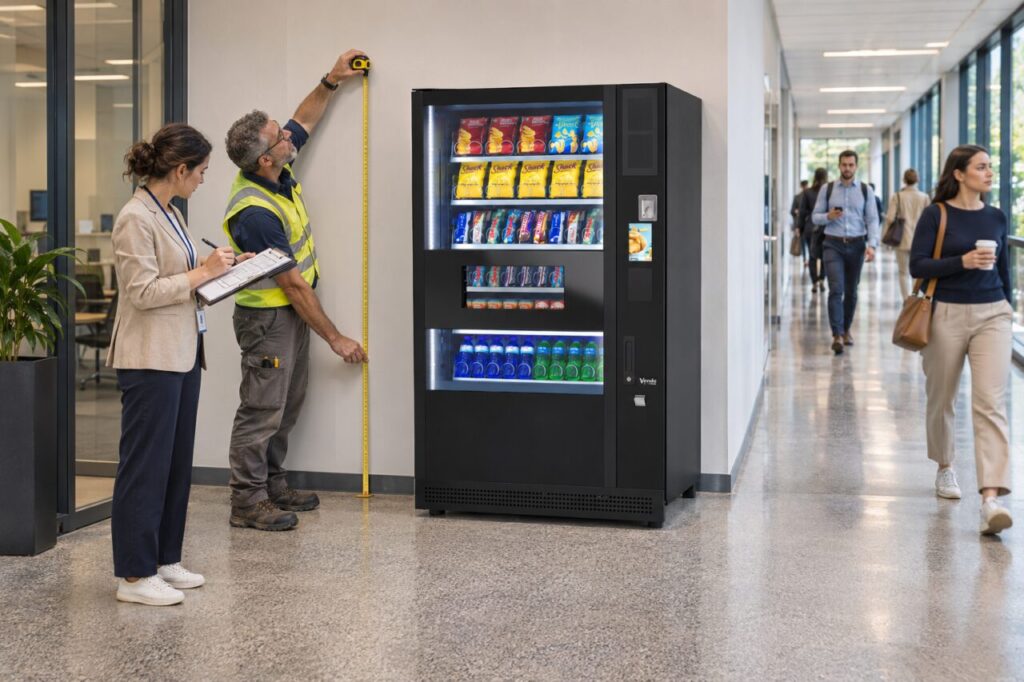
Survey the service arrangement as well as the cabinet
Ask the supplier to show the working envelope for the exact machine and the planned task. A routine inspection and component removal may need different access. Include the service door, tools, any removed items and the position of the technician. Do not use the closed cabinet’s width as the only measurement. Take the proposed arrangement to the site’s responsible facilities person.
Observe the corridor at its busiest time. Staff may stop to talk, wait for a lift or carry trays through the same space. Record adjoining doors that need to open and any equipment regularly parked there. A photograph taken before the building opens will not reveal those conflicts. The service plan should reflect ordinary use as well as the architectural drawing.
Choose a workable time window
Compare an early appointment, a later appointment and an agreed temporary alternative route. Ask the engineer for an expected duration and what could make the visit longer. Allow time for preparation and the checks needed before reopening. Do not schedule a job to finish exactly as a large break starts unless the site has a realistic plan for an overrun.
Confirm who can authorise a route change or temporary restriction. Never obstruct an escape route or make an accessibility decision informally at the machine. Where a safe arrangement cannot be agreed, discuss another service time or location with the responsible people. HSA work-equipment guidance provides a basis for planning maintenance with appropriate people and procedures.
Prepare the site before the engineer arrives
Name the person who meets the engineer, provides authorised access and explains the agreed boundaries. Tell reception and the affected teams about the expected interruption. Put any alternative refreshment information where staff will look for it. Keep stock movement separate from pedestrian movement, and ask the operator how products should be handled if the planned work requires them to be removed.
Check what happens if access is unavailable on arrival. Our service page describes an abortive-call charge among its published rates, making access preparation a practical cost issue as well as an operational one. Confirm the applicable terms for your booking rather than assuming a missed window will simply move without consequence.
Plan how the corridor reopens
Agree who confirms that tools, packaging and temporary barriers have been removed and the equipment is ready for customers. Let the engineer complete the technical handover before staff restart purchases. If further work is needed, update the unavailable notice and agree the next appointment. A partially completed job should have a clear status rather than an unexplained cabinet standing behind a barrier.
When choosing vending equipment for a busy building, service access deserves a place in the site survey. The cabinet-impact guidance also illustrates why keeping routine traffic away from vulnerable equipment can reduce avoidable interruptions. Review the layout again if pedestrian routes or break times change.