A Vending Service Note Has No Completion Date: Ask Whether the Work Is Finished
A vending service note without a completion date can leave the site unsure whether work is finished, awaiting a part or simply waiting for the report to be issued. Ask the service provider to clarify the status before filing the job as closed. An undated document is a reason to check the record, not proof that the work was not done.
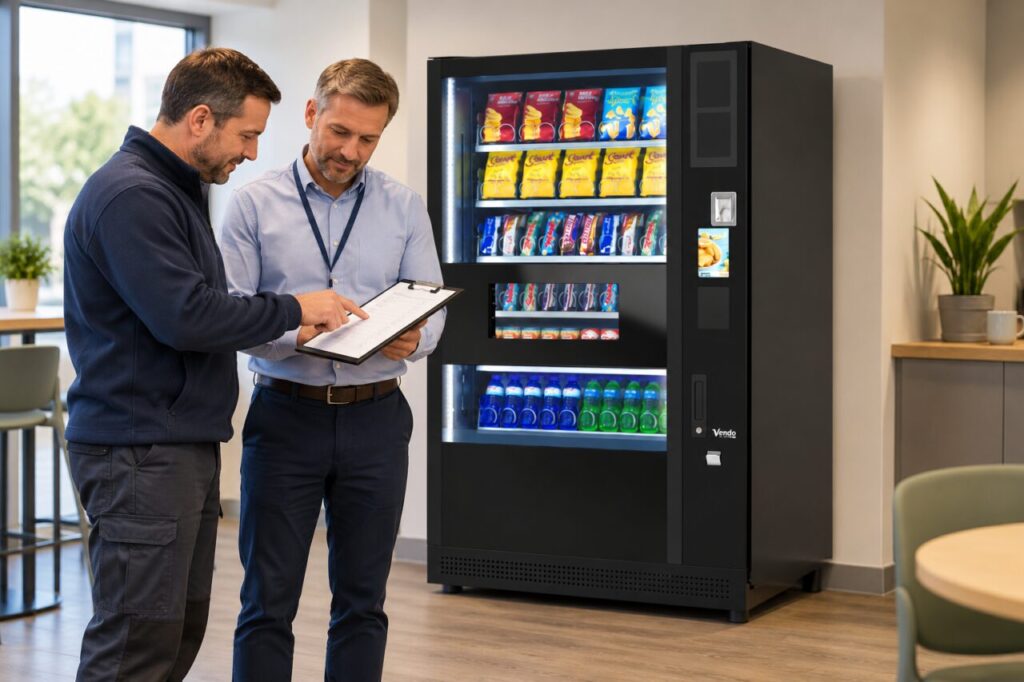
Start with the job reference, machine identifier and appointment date already held by the site. Compare those details with the note you received. This avoids asking about the wrong visit when several appointments concern the same machine. Retain the original note while requesting clarification so the provider can see exactly what is unclear.
Ask a specific status question
Explain that the completion date is missing and ask whether the described work has been completed. If it has, request the actual completion date and any relevant handover information. If it has not, ask what remains outstanding, who is responsible and when the next update is expected. These are separate questions from when the document was emailed.
Do not fill in a guessed date based on the appointment booking or invoice. A visit may have taken place without every task being finished. When discussing vending service arrangements, ask how completion is communicated so that the site’s records reflect the provider’s confirmed status rather than assumptions made by different colleagues.
Separate completed tasks from open tasks
A service visit can include several actions with different outcomes. Ask for a clear distinction between work completed, checks performed and items awaiting further action. A short plain-language explanation is usually more useful to the host than a list of abbreviations that nobody outside the service team can interpret confidently.
For example, an engineer may have inspected a reported symptom and identified a part to order. The inspection can be complete while the repair remains open. Record both facts accurately. Do not turn “visit attended” into “fault resolved”, and do not erase useful completed work merely because another task still needs attention.
Confirm the operating position
Ask whether the machine may be used normally and whether any restriction or customer message remains necessary. Follow the service provider’s specific guidance rather than deciding from the appearance of the cabinet. Site staff should not restart, adjust or test unfamiliar equipment simply to obtain their own evidence that the job is finished.
If the instruction is unclear, ask for a written explanation suitable for the person on duty. Include the agreed contact for further questions and the condition that will trigger another update. Keep that instruction where the relevant team can find it, while avoiding unnecessary circulation of technical or commercial documents to everyone in the building.
Reconcile the final paperwork
When a corrected or completed report arrives, link it to the original record and mark which version is current. Retain any history needed to understand the sequence of visits. If the completion date affects internal approvals or invoice processing, pass the confirmed information to the responsible person rather than changing those decisions yourself.
Close the service record only when its status and remaining actions are clear. A useful closure note identifies the machine, work outcome, confirmed date and any follow-up requirement. That gives the next person handling a fault a reliable starting point and prevents an administrative omission from becoming an unresolved disagreement about what happened at the site.
Related guidance: A Service Engineer Needs a Second Visit: Clarify What Remains Outstanding.
For help assessing your site, contact Vending-Machines.ie.