A Vending Service Report Uses Unfamiliar Abbreviations: Ask for a Clear Handover
A vending service report may make sense to the engineer but leave the workplace host unsure what happened. Short codes, component initials and phrases such as checked or adjusted can obscure the practical outcome. Ask for a plain-language handover that explains the machine’s status and any action expected from your team.
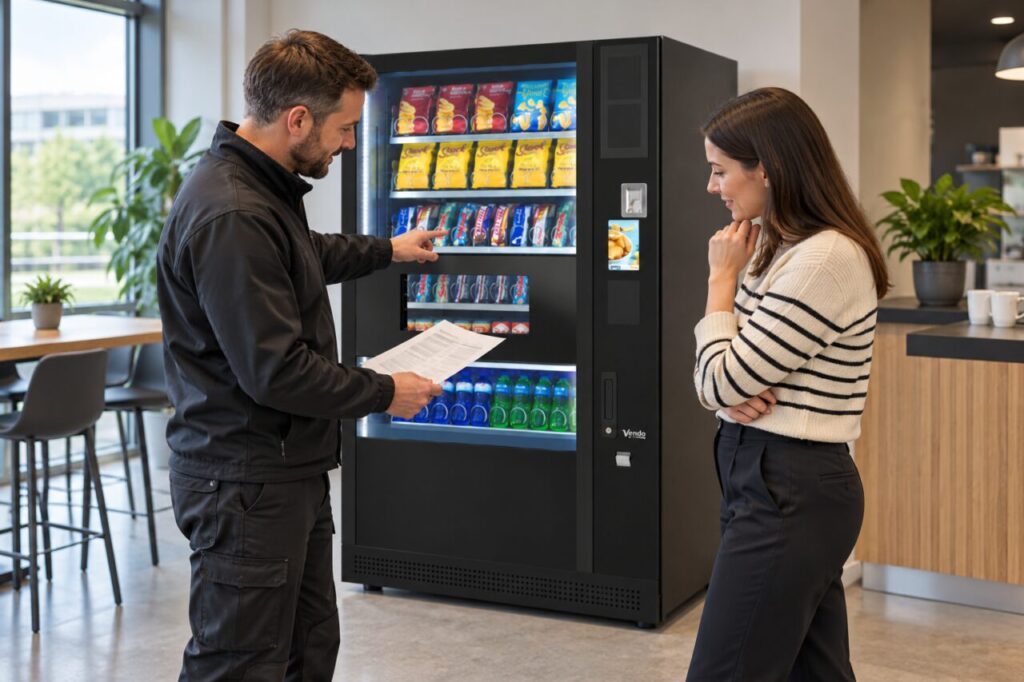
You do not need a technical training course to understand whether customers can use the machine, what remains outstanding and who will do the next step. Those are ordinary service-management questions. Clarifying them promptly is preferable to guessing what an abbreviation means after the engineer has left.
Start with the result rather than decoding every term
Ask the engineer to explain the reported problem, the work completed and the observed result in everyday language. If a part is named by initials, ask what it does in the context of the fault. There is usually no benefit in expanding a code without understanding why it matters to the customer experience.
Confirm whether the equipment has been returned to normal use, whether a selection remains unavailable or whether another restriction applies. Record the actual instruction rather than translating it yourself. Do not treat a tick beside a test as a promise that every possible operating condition has been examined.
Turn site actions into specific instructions
Sometimes a report asks the host to monitor the machine or report a recurrence. Ask what observation would be useful: the selection, time, displayed message or product delivery result, for example. Establish the contact route and any case reference to include. A general instruction to keep an eye on it is difficult to hand over between shifts.
Only undertake checks within the site’s agreed responsibilities. Ask the service provider to distinguish customer observations from work requiring a trained technician. An unfamiliar instruction involving internal equipment should be clarified before anyone attempts it. Do not infer permission to open panels or alter settings from a shortened note.
Preserve the original and attach the clarification
Keep the issued report intact and ask for a written explanation or amended version where necessary. Link the clarification to the same machine, visit date and case number. This avoids having an internal paraphrase become the only surviving account of the work. If the wording changes, retain the revision history in your service folder.
For example, an internal note could state that the engineer confirmed a particular selection remains unavailable pending a part, with the supplier responsible for arranging a return visit. That is more useful to reception than unexplained initials. It also avoids describing the whole machine as repaired when the provider has identified an outstanding item.
Make the handover usable for the next colleague
Share a short operational summary with the people who answer customer questions. Include the current availability, approved customer message and next contact point. Keep detailed technical paperwork in the service record rather than displaying it publicly. Customers need clear service information, not an engineer’s shorthand or internal job history.
When discussing a vending service requirement, ask how visit outcomes and follow-up actions will be communicated. A simple reporting format agreed in advance can make future handovers easier. It should identify completed work separately from recommendations, outstanding parts and actions awaiting the site’s approval.
At the next service review, check whether unclear wording repeatedly creates extra calls or missed actions. Provide a specific example and request a clearer format. The aim is not to remove useful technical detail from the engineer’s record; it is to ensure the workplace also receives an understandable account of what happens next.
Related guidance: Vending Service Agreement: Questions for Site Managers.
For help assessing your site, contact Vending-Machines.ie.