Two People Check a Vending Stock Count: Compare Independent Records
A second person can help check a vending stock count, but only if the second check does more than repeat the first person’s total. Ask each counter to record what they actually find before comparing results. The purpose is to identify differences that need investigation, not to make two signatures appear beside an unchecked number.
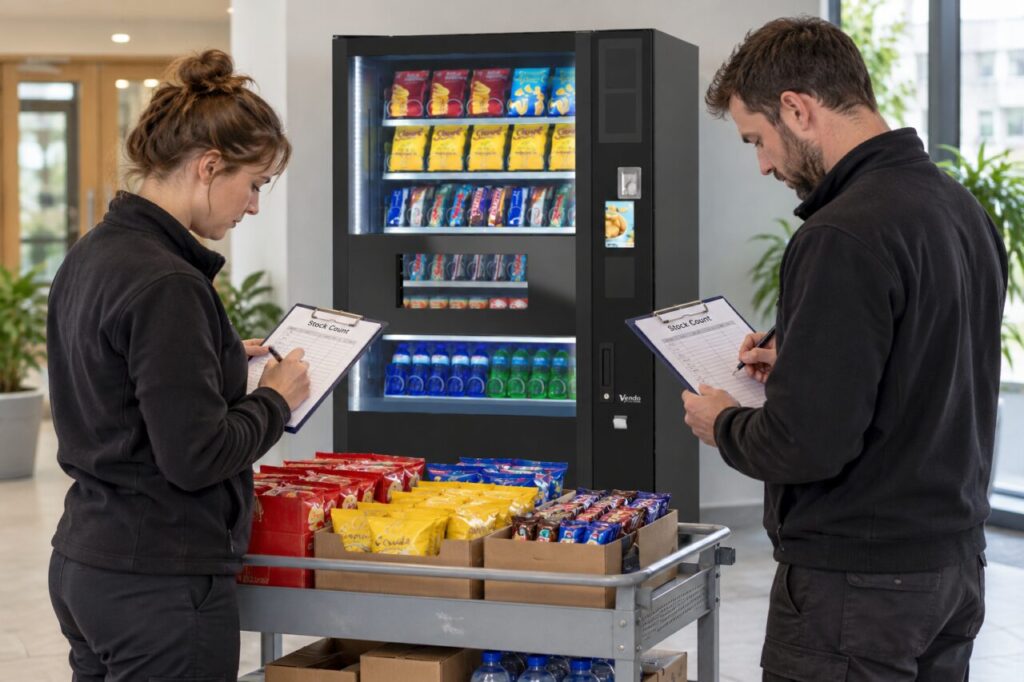
This approach can be useful when stock records are unclear or a previous count produced a surprising result. Keep the exercise proportionate to the site and follow the operator’s normal procedures. An independent recount is a practical checking step, not proof that every possible error has been eliminated or that a disagreement indicates wrongdoing.
Agree the same counting scope
Before either person starts, identify the exact products and locations included. Decide how stock in storage, on a refill trolley and inside the machine will be treated. Two accurate counts can disagree if one includes the trolley while the other counts only the storeroom. Write the boundaries down so the comparison answers one consistent question.
Use the same unit of measure and product descriptions on both sheets. An unopened case and an individual saleable pack are not equivalent entries. Give both counters the actual pack information they need, while keeping the first completed total out of the second person’s working view. This separates shared instructions from a result that could influence the recount.
Keep the second record independent
Provide a clean count sheet with product names and locations but without the first quantities already entered. Ask the second person to count physically rather than tick beside an expected total. They can note uncertainty about a product or package for later discussion. A blank result should remain unresolved instead of being copied from someone else’s sheet.
Keep normal handling and access rules in place throughout the exercise. Only authorised people should open or service the machine. Do not move food into unsuitable locations merely to make it easier to count. Where machine stock cannot be checked safely by the person involved, agree with the operator how that part of the verification will be performed.
Control changes between the two checks
Record when each count occurs and any stock movements between them. A refill, delivery or transfer can legitimately change the quantity. Where practical, agree a short pause in movements for the defined area. If movement must continue, maintain a separate note showing what moved, when and which count had already taken place.
For example, a first count of twenty packs and a second count of seventeen may be consistent if three packs were transferred between checks. Confirm that movement from the records rather than inventing it to explain the difference. If the timing remains unclear, recount the relevant stock under an agreed process instead of forcing a reconciliation from incomplete information.
Resolve differences with an audit trail
Compare the two records product by product and investigate differences in scope, units, movement and physical quantity. Keep both original sheets available. Record the agreed final quantity, the reason for any correction and who reviewed it. Do not erase the earlier figure so completely that nobody can later understand why the inventory record changed.
When planning a vending operation, agree who performs counts and who reviews exceptions. A modest independent check is useful when its scope and evidence are clear. The benefit comes from finding and explaining differences, then improving the everyday process, rather than treating matching signatures as a substitute for a reliable physical count.
For a proposal suited to your site, contact our team with the location, expected users and your main requirements.
Related guidance: Vending Stock Deliveries: Count Inner Packs Before Recording Available Units.