
Vending Stock Freight Is Charged per Carton: Check the Basis Before Combining Orders
Combining vending stock orders does not always reduce the delivery charge. If freight is priced per carton, the same number of cartons may cost the same to transport whether ordered together or separately. Check the supplier’s actual charging basis before increasing an order simply to avoid what appears to be a second delivery fee.
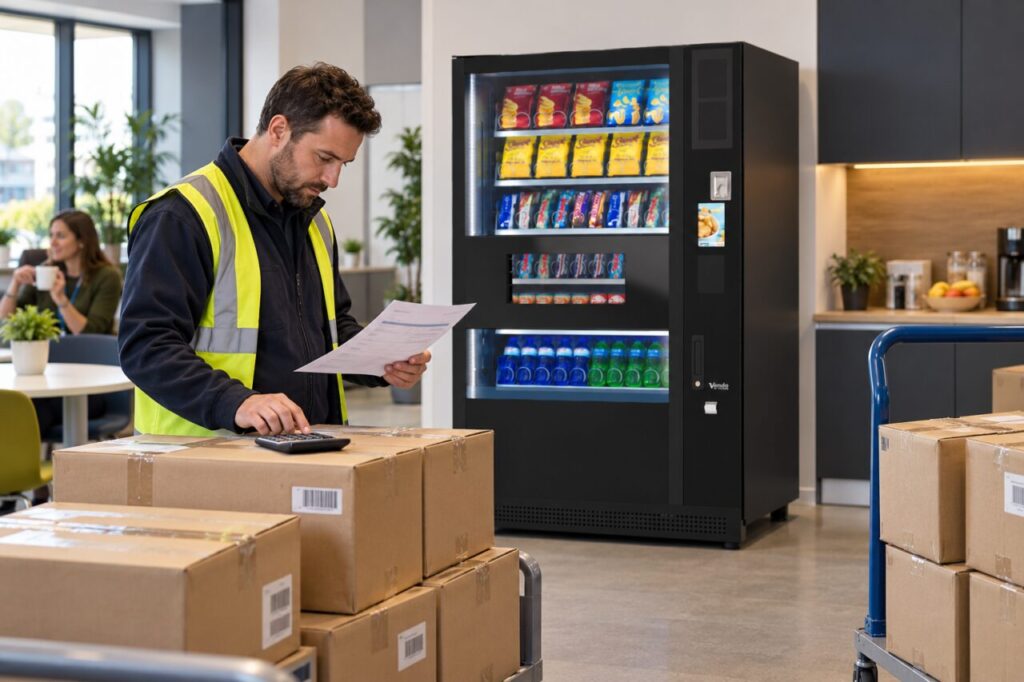
Ask whether the charge is per order, carton, pallet, shipment or delivery destination, and whether other conditions apply. Use the current written quotation or supplier terms. Do not assume that a previous order establishes the rule for a different product mix, packaging arrangement or destination. The relevant unit is the one the supplier actually invoices.
Establish what counts as a carton
Clarify whether the supplier means a product case, an outer shipping box or another transport unit. Those quantities may differ when several product cases are packed together. Record the expected shipment configuration before calculating the freight. An estimate based on the number of stock lines may be misleading if the supplier consolidates or splits packaging.
Ask how partial cartons, mixed products or additional shipments are handled where relevant. If an item is backordered, confirm whether its later dispatch creates another charge. Do not infer a free second shipment from an order total alone. Keep the answer with the purchase record so the eventual invoice can be checked against the agreed basis.
Compare the same quantity under each option
Use a simple calculation with the confirmed terms. For a hypothetical example, ten chargeable cartons at €3 each cost €30 in freight. Two shipments of five cartons at the same rate also total €30, if there are no other charges. The figures are invented to illustrate the method and are not supplier prices or a quoted service offer.
If a separate minimum charge or volume threshold applies, include it explicitly rather than assuming the example still holds. Compare the same stock quantity and destination under both options. This makes it clear whether combining orders changes freight, changes the amount of stock purchased or does both. Those are separate effects in a purchasing decision.
Include the stock consequences
Even where a larger shipment lowers the freight rate, consider storage space, product suitability and the cash committed to stock. Do not buy extra goods solely to reach a delivery threshold without a realistic use for them. When reviewing vending running costs, keep the transport saving visible alongside the additional purchasing commitment.
Check the dates and handling requirements of the actual products before consolidating deliveries. Avoid making a universal claim that larger orders are cheaper overall. The right choice depends on the confirmed charges and the site’s ability to use and store the stock appropriately. Ask the responsible operator to review the proposed quantity against expected replenishment needs.
Reconcile the invoice to the agreed basis
After delivery, compare the number of chargeable units and the rate with the quotation. Investigate differences such as an unexpected split shipment or packaging change. Keep the delivery record and supplier explanation together. Do not allocate the same freight charge again when stock later moves internally between machines unless you are recording a separate real cost.
Use the result to improve the next order estimate, while rechecking terms when the circumstances change. A clear freight calculation helps an operator distinguish a genuine consolidation saving from a larger stock purchase with unchanged transport costs. The useful question is what the complete order costs under the actual charging rules.
Related guidance: A Vending Stock Delivery Charge Is Refunded: Update the Cost Record Once.
For help assessing your site, contact Vending-Machines.ie.


