
A Vending Stock Order Arrives in Two Deliveries: Track the Outstanding Units
A supplier may confirm that one vending stock order will arrive in two planned deliveries. That is different from an unexplained shortage discovered at receipt. The stock record should show what has arrived, what is still expected and which original order both deliveries belong to. Without that distinction, the second delivery can look like surplus stock or prompt an unnecessary replacement order for units already on their way.
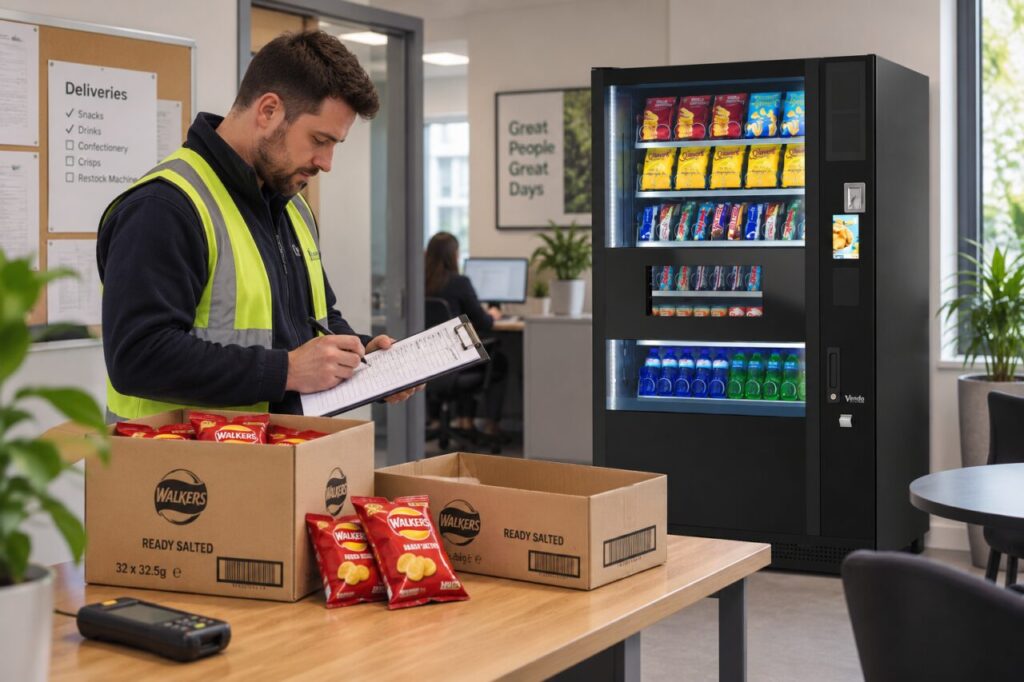
Record the agreed split against the order
Keep the supplier’s confirmation with the original order reference. Identify the products and quantities expected in each part, using consistent units. Cartons and individual packs should not be mixed in the same quantity field without a clear conversion based on the actual case contents. If the split changes, retain the current confirmation and make the superseded version distinguishable so the goods-in team knows what to expect.
Record expected dates as expected dates, not completed receipts. An order for a hundred packs with forty confirmed for the first delivery still has sixty outstanding until they arrive or the supplier agrees another outcome. Those figures are only an arithmetic illustration, not a recommended order size. The useful principle is to keep ordered, received and outstanding quantities separate throughout the process.
Receive each delivery on its own evidence
Check the first delivery through the operator’s normal receipt process, including product identity, quantity and condition. Update only the units actually accepted. Retain the relevant delivery reference and any information required by the business’s stock procedures. Do not mark the entire order complete because the first part has a delivery note, and do not treat the planned outstanding quantity as a discrepancy unless it differs from the agreed split.
Apply the same checks to the second delivery. It may contain different product dates or other details that need their own record. Connect it to the original order without replacing the first receipt. If the final amount differs from the confirmed balance, raise that specific difference with the supplier. A clear account of both receipts makes the enquiry easier than a single total that hides when each item arrived.
Keep available stock distinct from expected stock
The refill planner needs to know what can actually be allocated today. Goods still expected from the supplier should not appear as physical stock ready for loading. If the first delivery has already been distributed to machines, retain that movement in the record before adding the second receipt. Otherwise a combined order total can overstate the stock remaining in the store and distort the next refill decision.
Tell the person placing orders which quantities remain outstanding. Before buying replacements elsewhere, check whether the balance is still due and whether any cancellation or amendment has been agreed. Do not assume that an internal note cancels the supplier’s delivery. Record the supplier’s response so the business does not receive two sets of goods intended to solve the same temporary availability concern.
Close the order with a final reconciliation
Once the remaining delivery has been received or otherwise resolved, compare the ordered quantity with accepted receipts and any agreed adjustment. Use the actual documents to explain differences. Keep invoice review within the business’s normal purchasing process, particularly if separate deliveries generate separate paperwork. The stock record should establish what physically arrived; it should not silently change to match an invoice that has not been checked.
For readers exploring a vending business in Ireland, this is a small but useful stock-control discipline. It does not require a complicated spreadsheet, provided the chosen system can preserve the relationship between the order and its receipts. The result should be easy to answer: how much is usable now, how much is still due and what needs follow-up before the order can be closed.
Contact our team to discuss equipment and operating requirements for your vending plans.
Related guidance: Vending Stock Delivery Short? Record What Arrived Before Refilling.