
Vending Stock Has a Supplier Return Window: Check Eligibility Before Sending Packs Back
A supplier may accept some vending stock returns only within a stated window and subject to specific conditions. Check those terms before packing items for collection. Unopened packs are not automatically eligible, and a return request is not the same as the supplier agreeing to receive the goods or issue credit.
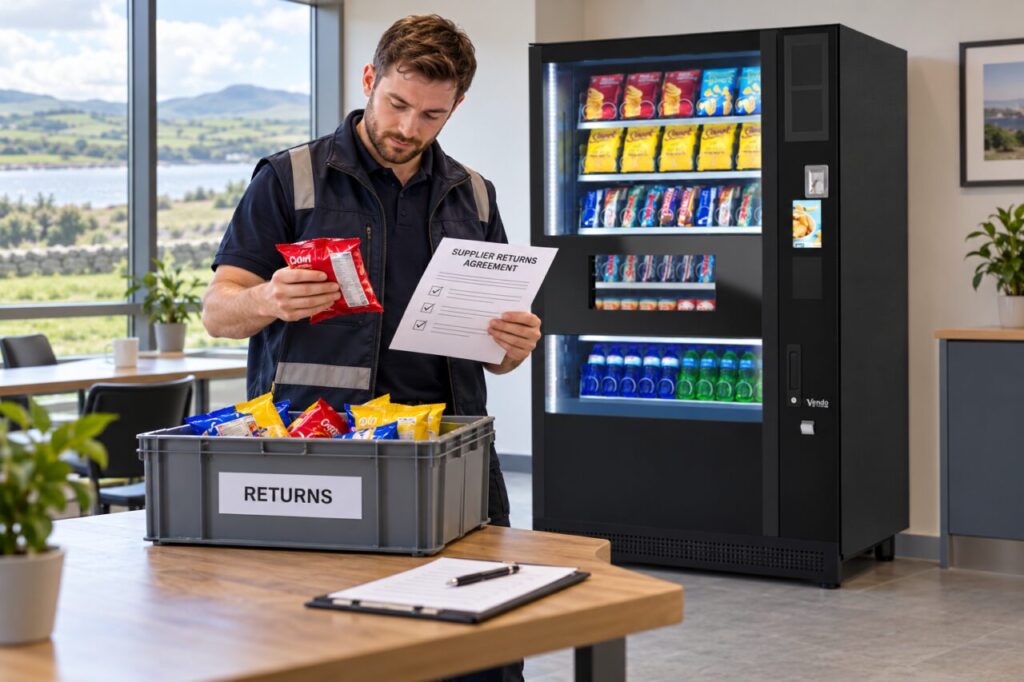
The practical aim is to preserve the relevant evidence and avoid an unauthorised shipment. Use the actual agreement for your supplier and products. This article does not promise a general right to return unsold stock, and a commercial change-of-mind request should not be confused with a product-quality or safety report.
Identify why the stock is being returned
Record whether the issue is over-ordering, a cancelled site launch, an incorrect delivery or a concern about the goods themselves. That reason affects which supplier process is appropriate. If there is a quality or safety concern, follow the responsible operator’s procedure and supplier reporting instructions; do not treat the goods as ordinary surplus available for another machine.
Match the packs to the delivery record, product description and relevant batch information. Count sellable packs rather than assuming that every case is full. Keep the quantity you want to return separate from any quantity already used, transferred or otherwise unavailable, so the request describes what is actually in your possession.
Read the timing rule precisely
Check what event starts the window: delivery, invoice date, request approval or another stated point. Also check whether the deadline concerns notifying the supplier, dispatching the goods or the supplier receiving them. These are different dates, and a vague note saying return within a week can lead to avoidable confusion.
If the wording is unclear, ask the supplier for a written answer before relying on your interpretation. Record the response and the person handling the request. If the window has already passed, explain the facts honestly and ask what options remain. Do not alter dates or represent an older delivery as a recent one.
Confirm condition and transport requirements
Ask about the supplier’s requirements for packaging, remaining shelf life, storage evidence and collection. Follow the applicable food handling procedures while the decision is pending. A sealed wrapper alone does not establish that every condition has been met. Avoid mixing return stock with routine refill stock in a way that makes its status unclear.
Obtain the return authorisation or reference where the supplier uses one. Agree who arranges transport and how the quantity will be acknowledged. Do not send products to an address copied from an old invoice without confirming that it is the correct returns destination for this request.
Reconcile the outcome separately
Keep the collection or delivery acknowledgement with the request. Record any difference between the quantity proposed, collected and accepted. If the supplier issues credit, match it to the accepted items and the relevant invoice. Do not reduce stock twice because both a collection note and a credit note describe the same return.
Finally, update the ordering review. If surplus arose because a site launch moved or a pack sold slowly, adjust the next purchasing decision using actual evidence. The return record should close the current transaction; the stock review should explain how to avoid repeating it. Neither requires assuming that the supplier will offer the same exception on a future order.
Discuss your site and equipment requirements with Vending-Machines.ie, or send an enquiry with the questions your comparison has identified.
Related guidance: Vending Stock Returned to a Supplier: Keep Collection and Credit Records Linked.