
Vending Stock Before a Supplier Holiday: Plan Around the Order Deadline
A supplier holiday can interrupt a vending stock routine even when customer demand remains steady. The critical date is often the last accepted order or dispatch, not the first day the supplier’s office closes. Confirm those dates early and build a practical stock plan around them. Keep the plan tied to the products and sites affected, rather than placing a large general order simply because a closure is approaching.
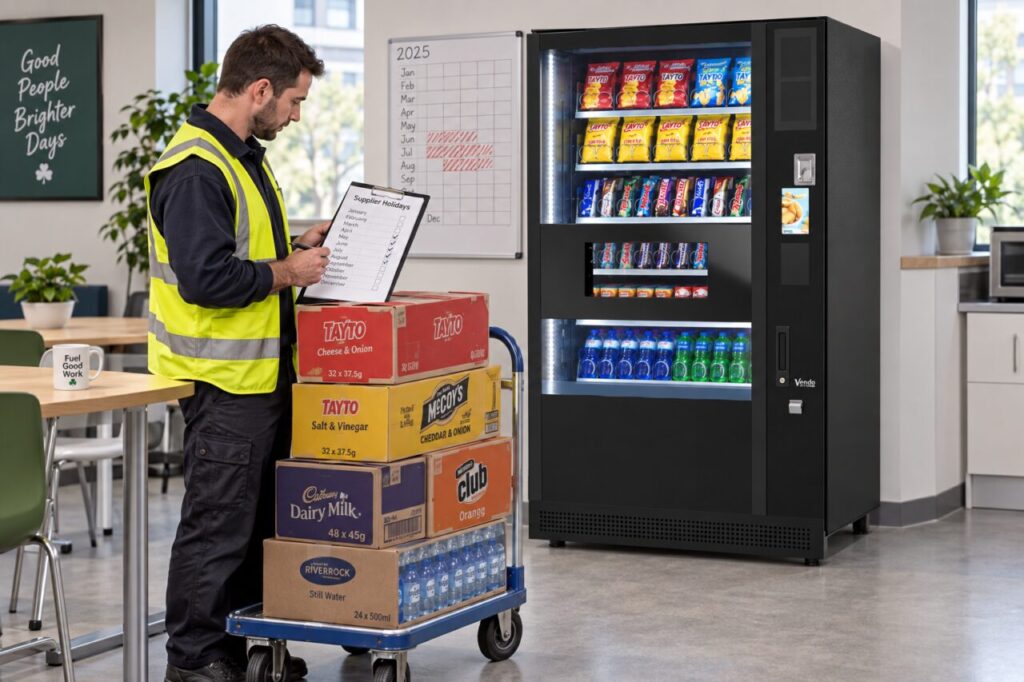
Confirm the complete ordering window
Ask the supplier for the final order deadline, expected dispatch arrangements and reopening date. Distinguish an order being accepted from stock actually arriving before the closure. Check whether the dates apply to all products and delivery areas you use. A general holiday notice may not answer the specific question of when your normal order can reach your storage location.
Identify the first realistic delivery after reopening as well. A supplier reopening on Monday does not necessarily mean your regular route receives stock that morning. Ask about any reduced service or accumulated orders that the supplier expects, without treating a possible delay as certain. Keep the confirmed information with the order plan and update it if the supplier issues a revised notice.
Estimate cover from comparable demand
Review recent sales and stock movement for the affected sites, allowing for confirmed changes in occupancy or opening hours during the period. Separate busy products from slower choices so extra cover is directed where it is useful. If reliable figures are unavailable, record the assumptions behind the order and keep the estimate cautious. Do not turn a guessed uplift into a claimed demand forecast.
Count usable stock already held before deciding what to buy. Include stock allocated to upcoming refills and distinguish it from stock available for other sites. Check dates and the conditions required by the products involved. More stock is not automatically better cover if there is insufficient suitable storage or if the planned quantities are unlikely to be used within the relevant product dates.
Agree alternatives before they are needed
Ask which affected products may be unavailable and whether suitable alternatives can be agreed in advance. A replacement needs to fit the machine and the customer range, not merely have a similar wholesale description. Confirm the actual pack, price and selection-information implications before committing it to a refill. Avoid giving blanket permission for unspecified substitutions that the operator later discovers cannot be used as planned.
If another supplier forms part of the contingency, check its ordering requirements, delivery timing and minimum quantities before relying on it. Record who can approve an exceptional order and how the stock will be received. A contingency is useful only if someone can carry it out during the closure period; an unverified contact name is not the same as an agreed supply route.
Review the plan before and after closure
Before the cut-off, confirm the order acknowledgement and identify any unresolved lines. Match arriving stock to the order and revise the available cover if quantities differ. Tell the relevant route operator which products need closer monitoring and which substitutions have been approved. Keep this instruction specific to the holiday period so it does not become an unexplained permanent change to the range.
After normal supply resumes, review remaining stock before placing the next routine order. Record where the estimate was too high or too low, along with any unusual site activity that affected it. Our vending business guide gives broader planning context. A useful holiday stock plan connects order deadlines, actual stock and the next confirmed delivery, then preserves the lessons for the following closure.
Speak with our team about vending equipment and service options.
Related guidance: When Should You Reorder Vending Stock? Allow for Supplier Lead Time.