
Vending Customer Support: Keep a Case Reference When More Than One Person Reports
A single vending problem can be reported by a customer, reception and the workplace coordinator within a short period. Multiple reports are understandable, but they can make the situation harder to follow if nobody knows which case is already open. Keep the support reference and explain how updates should be added. Do not assume that similar reports always describe the same incident or the same customer’s transaction.
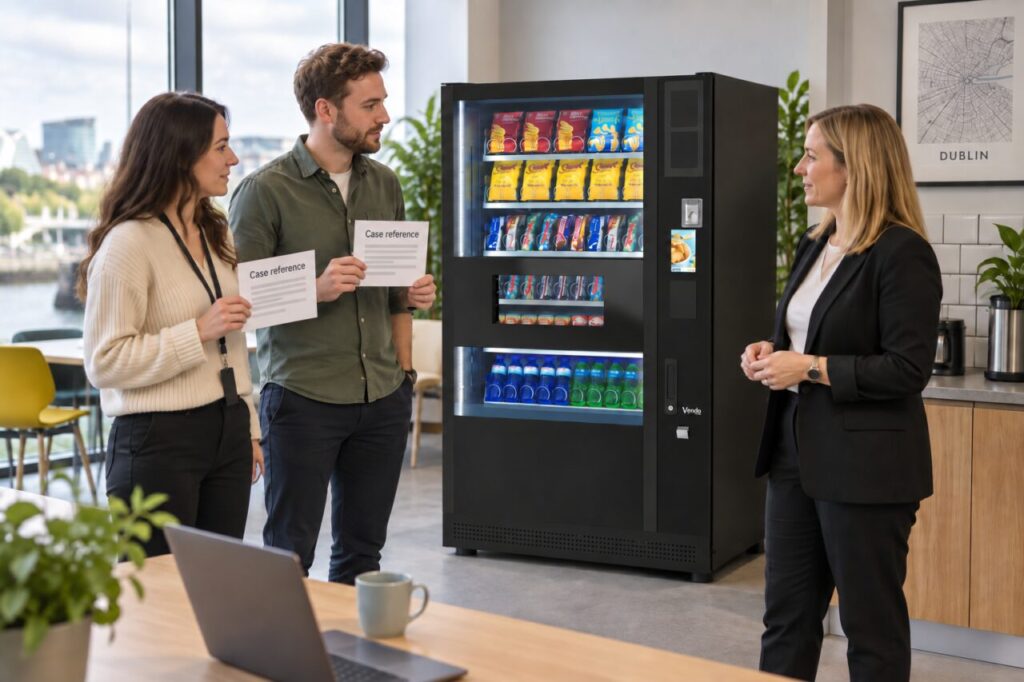
Establish what has already been reported
Ask the relevant site contact whether a report has been submitted and whether the operator supplied a reference. Record the machine location and broad issue alongside that reference. Avoid collecting unnecessary personal information simply to coordinate the site’s communication. The aim is to identify the existing report, not to build a public record of customers and their purchases.
Use the agreed vending support arrangement to confirm how follow-up information should be sent. Some providers may have a case form or other structured route; others may use a different process. Do not invent a reference format or assume that replying through any available channel will automatically attach the message to the correct case.
Distinguish equipment issues from transactions
Several failed purchases may relate to a wider equipment concern, while each customer may still need their own transaction reviewed. Keep those two needs distinct. A site-level report that a machine is unavailable does not necessarily replace an individual customer’s refund or payment enquiry. Follow the operator’s instructions for each type of issue rather than telling customers their concern is already resolved by another person’s report.
Similarly, two reports about the same product may involve different times or machines. Check the relevant identifiers before linking them. Record what is known and what is only suspected. The support team can decide whether the information belongs in one investigation. A coordinator should not close or merge customer concerns informally just because their descriptions sound similar.
Add useful updates without restarting
When sending a follow-up, include the existing reference if available, the machine location and the new information. Explain whether the condition has changed, another observation has been made or the site is asking about an agreed next step. Repeating the original report without a reference can make it harder to see what is new and what has already been considered.
Avoid sending unnecessary payment details, access codes or unrelated photographs in a general update. Use the provider’s approved channel for any information specifically requested. If the site is sharing an update among staff, remove customer-specific details they do not need. A brief factual status can keep people informed without exposing information collected for a different purpose.
Agree who coordinates site communication
Nominate a suitable site contact to maintain the shared equipment update, with cover when that person is absent. This should help staff find the latest status, not prevent customers from using their own support route. Explain what the coordinator knows, what remains with the operator and where individual purchase questions should go. Avoid promises about outcomes or timing that have not been confirmed.
When the operator reports resolution, record the reference and any agreed follow-up. If another concern arises later, describe the new observation rather than assuming the old case automatically covers it. Consistent references and clear distinctions help everyone understand the history. They reduce repeated explanations while preserving the important details that allow the operator to investigate each report appropriately.
Contact the team about support arrangements for your site.
Related guidance: After a Vending Complaint Is Resolved: Close the Feedback Loop.