
Vending Training Is Interrupted: Record Which Practical Tasks Still Need Sign-Off
A vending training session can end unexpectedly because a delivery is late, the site contact is called away or the equipment is not ready for every demonstration. Attendance alone should not be treated as evidence that every task has been learned. Keep a short record of what each person actually practised, what was only explained and what still needs supervised completion before responsibilities are handed over.
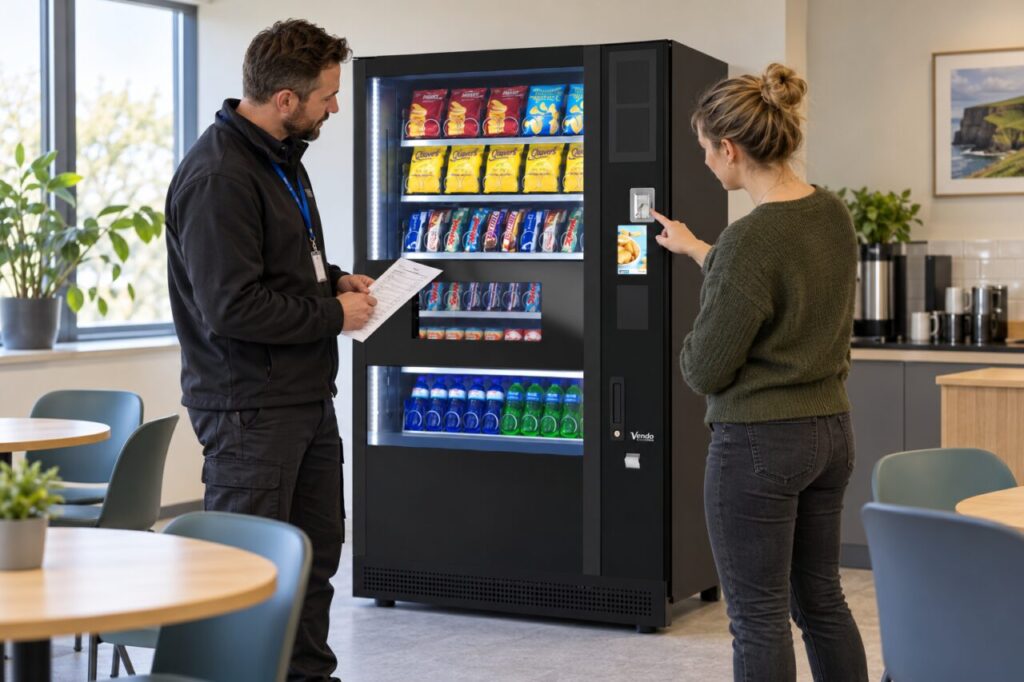
Separate attendance from demonstrated tasks
Start with the tasks agreed for the particular role. A host who directs customer enquiries may need different instruction from someone authorised to refill equipment. Avoid making one broad entry that says everyone was trained. Record each person’s relevant tasks and whether they observed, attempted or completed them with the trainer. This makes the unfinished work visible without implying that the person has failed.
For example, someone may have practised identifying the machine and reporting a fault but not completed the approved refill process. Those are separate outcomes. Do not fill the gap by asking them to improvise from another model or a colleague’s recollection. The supplier’s instructions and the agreed scope of the role should determine the remaining practice.
Capture why the session stopped
Write down the interruption in practical terms: the attendee left before the last demonstration, the required stock was unavailable, or the payment setup was not ready. These situations need different follow-up arrangements. A missing attendee requires another session; an unavailable feature requires confirmation that it is ready before arranging a demonstration. A vague note such as training incomplete does not tell the next organiser what to fix.
Keep the record proportionate. Date, machine identity, attendee, task, outcome and next action are usually more useful than a long narrative. Store it where the person arranging the handover can find it. Do not publish staff training records on the machine or include unrelated personal information in customer-facing notices.
Agree interim responsibility
Before the trainer leaves, identify who can cover the unfinished tasks. If the intended operator has not completed the relevant instruction, ask the supplier or service manager to confirm the temporary arrangement. Do not silently transfer a specialist task to reception because reception is nearby. Customers still need a clear route for reporting a problem while the training is completed.
Explain the temporary boundary to the site team. Someone may be able to check visible information and contact support without being authorised to open or adjust equipment. Keep those responsibilities distinct. An unfinished training item is a planning issue to resolve; it is not a reason to experiment with service settings or bypass the supplier’s operating procedure.
Close the actual gap
Arrange the follow-up around the missing tasks rather than repeating the entire presentation automatically. Ask the attendee to demonstrate the relevant process under appropriate supervision and explain what they would do if the expected result did not occur. Record the date and the completed task, preserving the earlier note so the sequence remains understandable.
A simple hypothetical example is a session with six agreed tasks where four were completed and two were postponed. The follow-up should establish evidence for those two tasks, not replace the original record with a blanket tick. If the equipment configuration changed in the meantime, review whether any earlier instruction also needs updating.
When discussing vending equipment and service options, include training completion in the handover questions. Ask who arranges missed demonstrations, what preparation is needed and how the site knows the agreed instruction is complete. That produces a clearer operating handover than relying on attendance alone.
Related guidance: Vending Training Videos: What Still Needs Hands-On Practice?.
Planning vending at your site? Contact the team with your location and requirements.