
A Vending Trial Uses a Different Room from the Final Site: Record What the Trial Cannot Prove
A vending trial in a convenient temporary room can answer useful questions about the products and buying process. It cannot automatically prove that the same arrangement will work in the final location. Differences in access, lighting, occupancy and service routes should be recorded before the trial is used to justify a purchase.
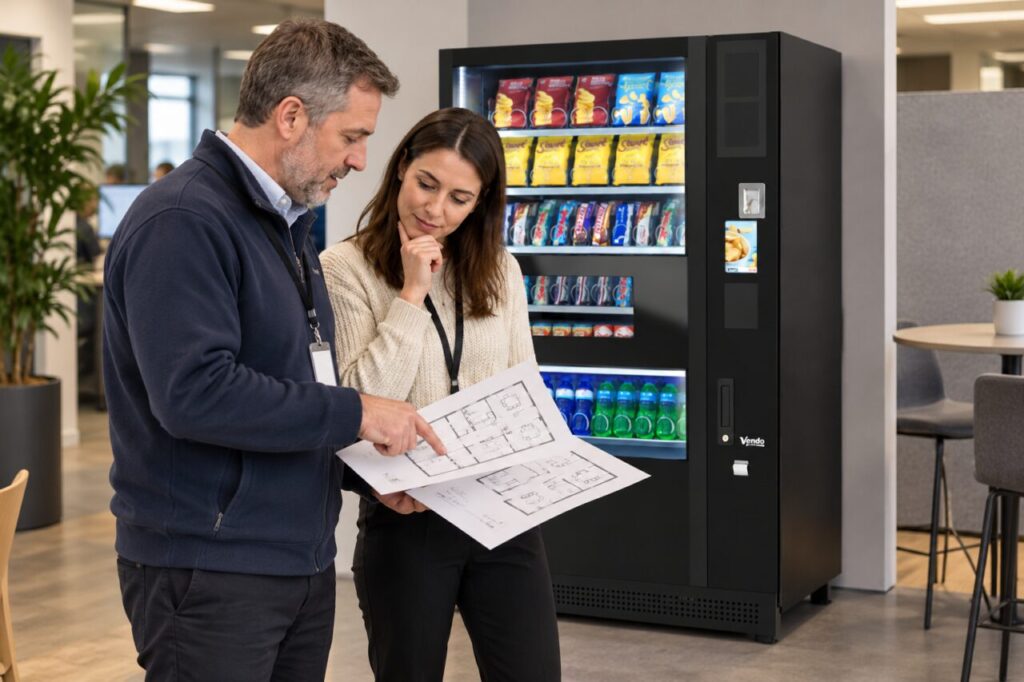
Begin by describing why the trial is taking place elsewhere. Perhaps the intended room is being finished or the equipment is temporarily available in a demonstration area. Keep the trial’s purpose specific. You can learn from it while openly identifying the site questions that still need assessment before installation.
List what is genuinely comparable
Record the equipment configuration, products, payment arrangement and instructions used during the trial. Ask whether these match the proposed final supply. If customers can practise the same selection and collection process, that observation may be useful. If the products or controls differ, qualify the conclusion rather than calling it a complete acceptance test.
The official SandenVendo G-Snack Evolution information provides a manufacturer reference for that product family. Your supplier still needs to confirm the actual configuration being offered. A catalogue family name and a successful trial purchase should not replace the written specification for the equipment you intend to buy.
Record the differences between rooms
Walk through the final customer journey: finding the machine, approaching it, reading the display, paying and collecting the product. Note differences in reflections, nearby furniture and the space people use while waiting. Photograph or sketch relevant site conditions with permission, keeping unrelated personal information out of the record.
Consider the service journey separately. The final room may have a different trolley route, door arrangement or authorised access window. Ask the supplier to assess the final position and applicable installation requirements. Do not move a machine yourself to recreate the trial or assume that spare floor area proves the location is suitable.
Interpret trial demand cautiously
Record who could use the temporary room and when. A trial beside a busy meeting space may attract people who will never pass the permanent location. Conversely, a trial restricted to a small group may understate wider interest. Keep sales totals attached to those conditions instead of treating them as a guaranteed forecast.
Ask participants what they learned about the buying process and what they could not assess. Someone can confirm that a product was easy to select without knowing whether the final location will be convenient during their break. Separate equipment feedback, range feedback and location feedback so the different questions remain visible in the review.
Close the remaining site questions
Use a simple record with three headings: demonstrated, observed under temporary conditions and still to be checked. Assign a responsible person and next action to the remaining items. Include final-site assessment, any required product testing and the handover checks agreed with the supplier. Avoid an unconditional sign-off while material questions remain open.
When reviewing vending options for your premises, share this record with the supplier rather than sending only the trial sales figure. The useful outcome is a purchasing decision based on what the trial actually established, supported by a separate assessment of the final site. That makes a temporary trial informative without asking it to prove too much.
Related guidance: A Vending Demonstration Uses Different Stock: Ask for a Second Product Trial.
For help assessing your site, contact Vending-Machines.ie.


