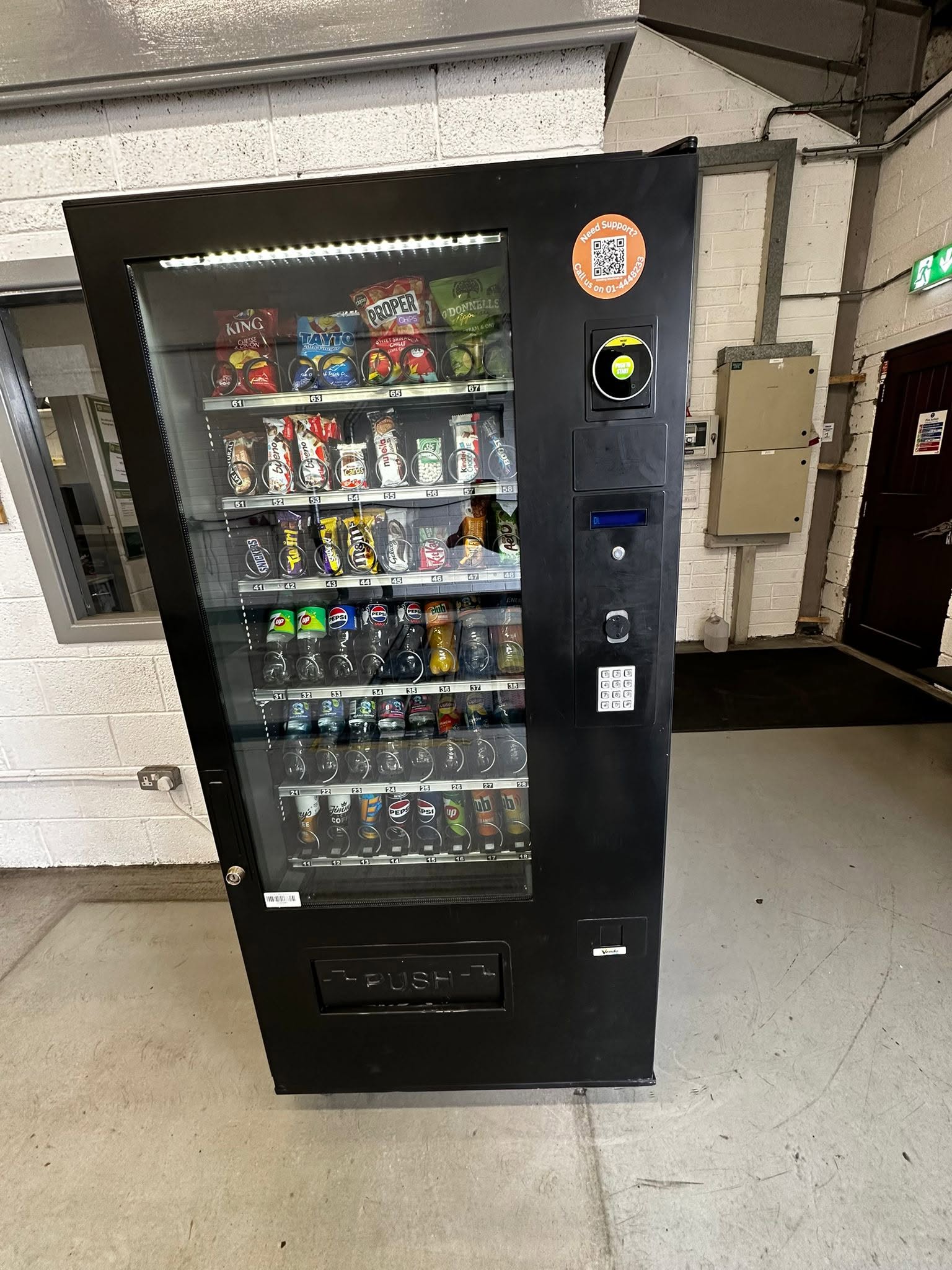
Two Teams Clean the Same Vending Area: Agree the Handover and Avoid Missed Tasks
The workplace cleaning team and the vending operator may both clean around the same machine. Without a clear division of tasks, each can reasonably believe the other has dealt with a particular surface or area. Agree the handover in terms of specific jobs, not a broad statement that both teams look after cleanliness.
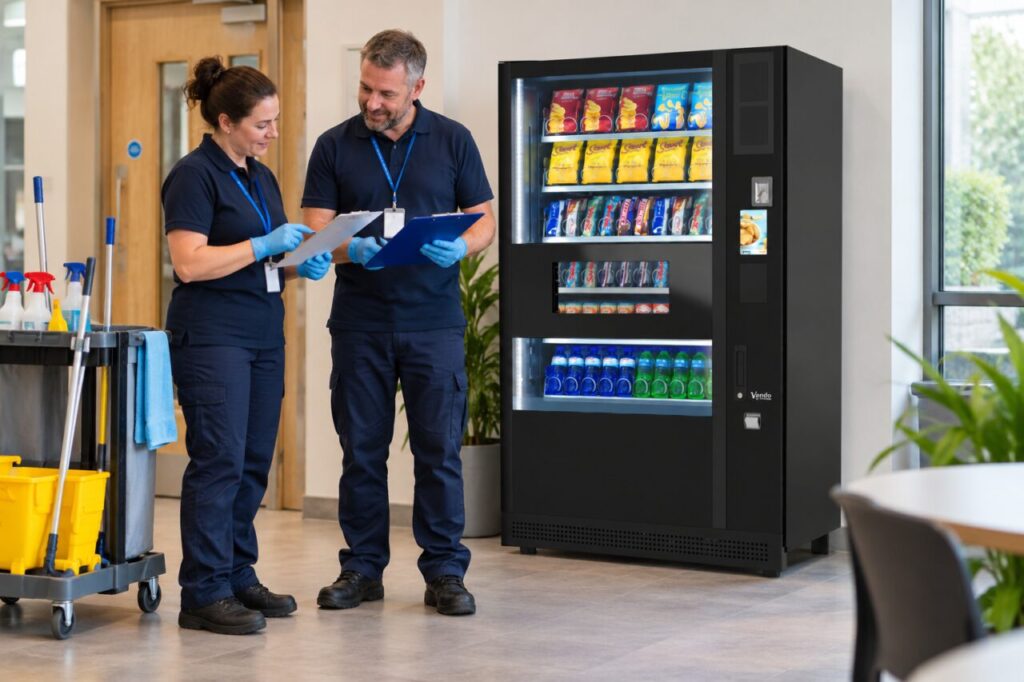
This is not a reason to ask either team to take on unfamiliar equipment work. It is a reason to make the existing scope understandable. The floor around the cabinet, nearby tables, customer-facing surfaces and internal machine work should not be treated as one interchangeable cleaning task.
Map the agreed responsibilities
Walk through the area with the relevant contacts and list the tasks covered by each arrangement. Identify boundaries clearly, especially where the room-cleaning schedule meets the operator’s machine-care instructions. Ask the equipment provider which work is appropriate for the workplace team and which should remain with trained personnel.
Record the approved method and materials through the responsible provider’s instructions. Do not assume a product used on nearby furniture is suitable for the machine. Likewise, a team’s access to the room does not mean it is authorised to open the cabinet or clean internal components. Keep the task list within the agreed scope.
Coordinate timing as well as ownership
Two teams may both complete their work but leave the area inconvenient to use because the visits overlap. Discuss normal service and room-cleaning times, particularly around busy breaks. Where timing cannot be fixed, agree a simple way to avoid conflicting work and keep the customer route clear while a task is underway.
Decide how the site should report an unexpected spill or other issue between planned visits. The answer may differ from the routine schedule. Staff need a contact and immediate site procedure, not a guess about when the operator is next due. Do not leave a reported issue unassigned because it falls between two written timetables.
Use a handover that records exceptions
A useful log states the date, relevant task and whether anything prevented completion. It should not require a long essay after every routine visit. If access was blocked or a task was outside the team’s scope, record that exception and who was informed. A tick beside the whole area can otherwise conceal an unresolved gap.
For example, the workplace team might confirm that the surrounding floor and tables were completed while noting that a machine-surface concern was referred to the operator. That is clearer than recording the vending area as done. Keep the language factual and avoid treating the log as proof that another team’s separate work was completed.
Review the arrangement when people or contracts change
Include the task division in new-starter and contractor handovers. A replacement cleaner should not need to reconstruct the arrangement from informal comments. If the vending service or room-cleaning contract changes, revisit the boundaries and update both teams’ copies rather than leaving an old checklist beside the machine.
When discussing workplace vending provision, ask how routine care responsibilities will be explained to the host. Review recurring gaps with both contacts using specific dates and tasks. The objective is a dependable, understandable routine that respects equipment instructions and gives the site a clear route when something falls outside the normal schedule.
Related guidance: Who Cleans the Vending Area? Agree the Gaps Between Visits.
For help assessing your site, contact Vending-Machines.ie.