
One Vending Machine Has Two Symptoms: Keep Both in the Service Request
A vending machine may be reported as having a payment problem and an occasional collection problem during the same week. It is tempting to write one broad complaint such as machine not working. A more useful service request preserves both symptoms without deciding that they must have the same technical cause.
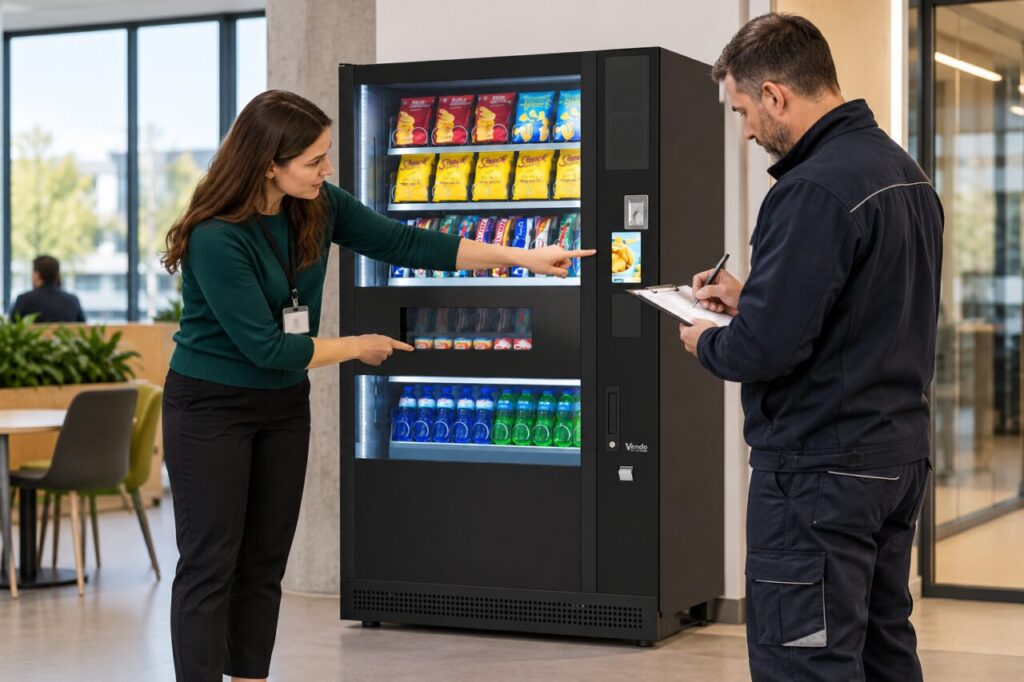
The site contact does not need to diagnose the machine. Their job is to describe what users experienced, when it happened and which part of the purchase journey was affected. Clear separation helps the authorised service team decide what information, attendance or investigation is appropriate.
Give each symptom its own description
Use a short heading for each observation. Under payment, describe the visible outcome: for example, a customer saw a message and did not continue. Under collection, describe whether a product arrived, where it could be seen and whether the customer retrieved it normally. Avoid translating those observations into component failures.
Record the machine identifier and exact location once, then attach the relevant time and selection to each incident. If different people reported the symptoms, say so. A second-hand account is still useful when it is labelled honestly. Do not fill a missing detail with an assumption merely to make both reports look consistent.
Explain whether they happened together
The service team needs to know whether both symptoms occurred during one purchase or on separate occasions. Write the sequence in plain language. If payment appeared to finish and the customer then reported no item, that sequence differs from an unrelated payment difficulty the previous day.
Equally, do not join two incidents just because they occurred at the same cabinet. Note any successful purchases between them, if actually observed. This is context, not proof that the machine is fault-free. Keep unknown periods unknown rather than saying it worked perfectly whenever nobody reported a problem.
Keep customer outcomes traceable
If a customer has requested assistance or a refund, link that request to the relevant incident through the approved support process. Keep unnecessary personal or payment information out of a shared site log. The service observation and the customer’s financial query may require different people to handle them.
Do not ask staff to repeat uncertain purchases simply to reproduce a problem. Follow the operator’s guidance about whether the machine should remain in use. Never reach into the cabinet, defeat a guard or open a service panel to investigate. Technical testing belongs with authorised personnel using the relevant machine instructions.
Preserve both items when the case is updated
When an engineer or operator provides an update, record which symptom the update addresses. One successful payment check does not automatically close the collection concern. Conversely, an explanation of a collection issue may leave a separate customer payment query unresolved. Ask for the remaining action to be named clearly.
An example case note could say that the operator reviewed the selection issue and requested further timestamps for the payment symptom. This is more accurate than closing the whole report as fixed. Keep the original descriptions alongside the update so later observations can be compared with the same starting point.
At the next agreed review, ask whether either symptom recurred and under what conditions. Avoid monitoring indefinitely without an owner or purpose. A concise case with two clear observations, two outcomes and any remaining action is easier to use than several competing messages describing one vaguely unreliable machine.
Related guidance: read Vending Service Notes Say No Fault Found: Add the Conditions That Trigger the Problem for the connected question.
When making an enquiry, include the machine location and the separate observations rather than an assumed diagnosis.