
Vending Warranty Questions: Separate Equipment Faults from Accidental Damage
A vending machine warranty should be read alongside the way your site will report damage. A component failing during ordinary use and a cabinet being struck by a trolley may lead to different assessments. Before purchase, ask the supplier to explain the proposed process for both. Do not assume that a warranty covers every incident, or decide that an unfamiliar symptom must be excluded before the supplier has assessed it.
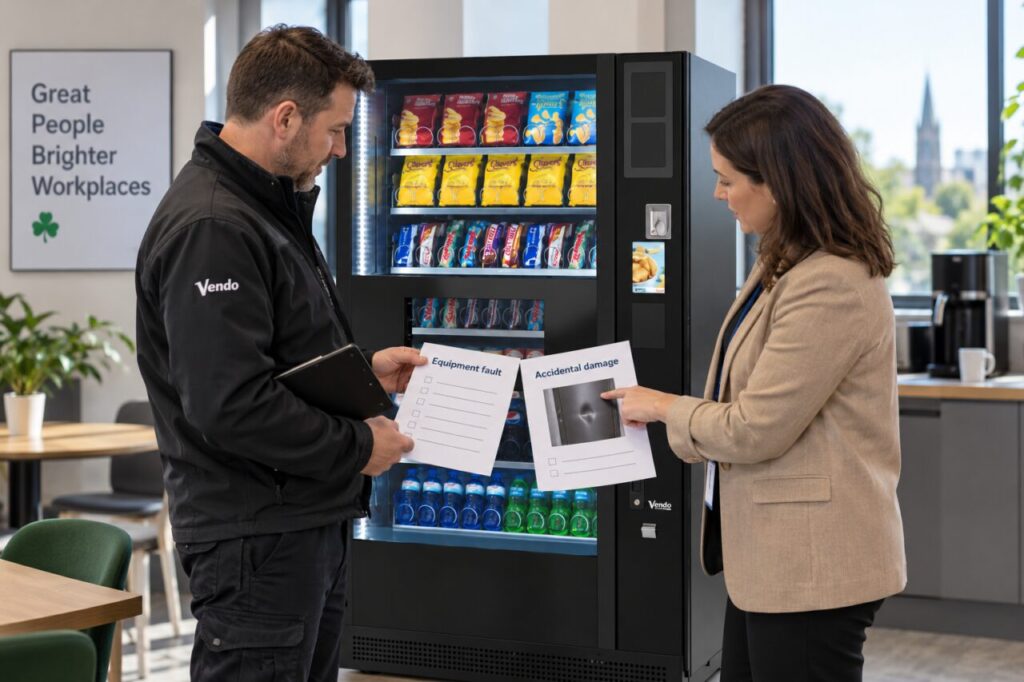
Ask for the applicable terms
Request the terms that apply to the actual equipment and transaction. Check whether the offer concerns a new unit, refurbished equipment or a separately supplied component. A general website statement may not answer the questions raised by your quotation. Keep the version supplied with the accepted order and record where the site contact can find it when reporting a problem later.
Ask the supplier to explain any wording you do not understand, particularly exclusions and conditions attached to reporting. Avoid relying on a verbal description such as fully covered. Useful questions concern who assesses an incident, what information they require and whether inspection itself could be chargeable. This is a practical purchasing checklist; the specific agreement determines the proposed commercial cover.
Separate observations from conclusions
If damage occurs, record what was seen, when it was noticed and which machine is affected. A photograph of an external mark may help the provider understand the report, but it does not establish the condition of internal components. Do not open panels, attempt repairs or continue an unsafe inspection to gather more evidence. Follow the provider’s instructions and the site’s established reporting arrangements.
Describe any known event accurately without guessing at cause. For example, staff may have seen a delivery trolley contact the cabinet, while nobody knows whether a later payment problem is related. Keep those facts separate. Equally, an existing cosmetic mark should not automatically be blamed for a new symptom. A clear report allows the qualified assessor to consider the relevant evidence.
Agree approval for additional work
Ask what happens if the assessment identifies work outside the agreed cover. Who receives the proposed charge, who can approve it and what happens while a decision is pending? Make sure the site host and the buyer use the same approval route. A receptionist arranging access should not inadvertently be treated as the person authorised to accept an unexpected repair bill.
Separate inspection, parts, labour, transport and any temporary service arrangement in the discussion. Not every proposal will use the same structure. Request clarification where a charge is described only as a call-out, and retain the explanation with the case record. If an insurance question arises, refer it to the organisation’s responsible contact rather than assuming that a particular policy will respond.
Make the reporting process usable
Before launch, give the nominated site contact the machine identification, supplier details and a short route for reporting concerns. Include an alternative contact for absence. Keep the full contractual paperwork in the appropriate business record, with a simple reference available to the people who need to report an incident. They should not have to interpret every clause before asking for help.
When comparing vending machines for purchase, discuss the practical assessment process as well as the length of the stated warranty. A useful answer explains how the supplier distinguishes a reported symptom, an assessed cause and the proposed remedy. Record unresolved questions before agreeing the order so a later incident can be handled through a known process instead of a hurried debate about assumptions.
Ask about the proposed support arrangement for your site.
Related guidance: Vending Machine Parts Warranty: What About Labour and Call-Outs?.