
Growing Workplace, Same Vending Machine: When Should You Review Capacity?
An increase in staff does not automatically mean that a workplace needs another vending machine. It does mean that the existing arrangement deserves a review. More people may use different products, arrive on different days or take breaks together. The right response depends on the constraint you actually observe.
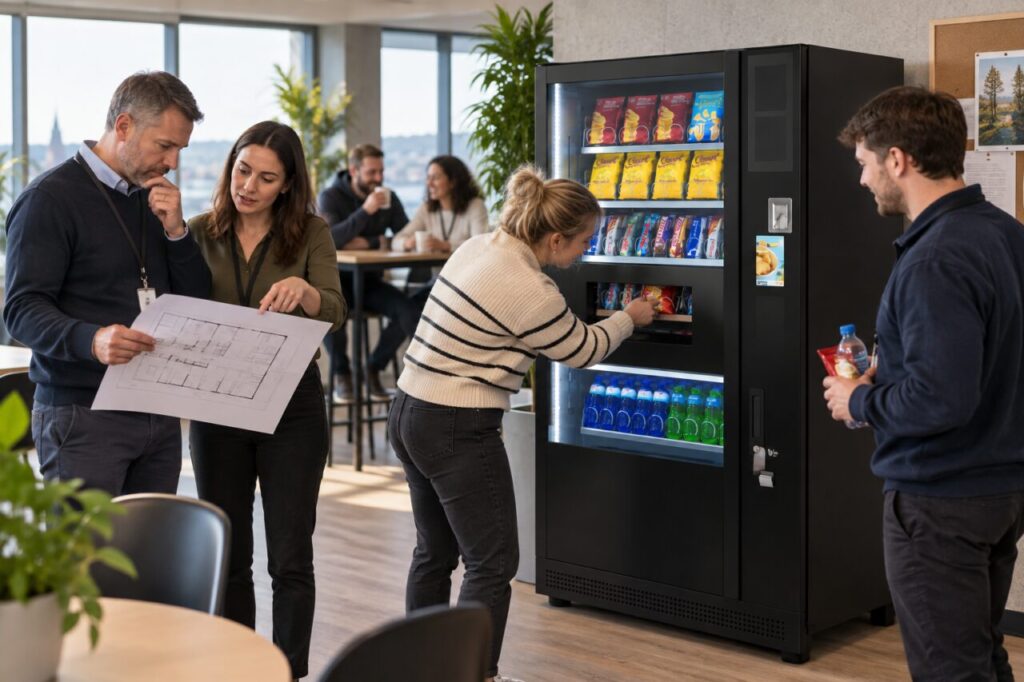
Before requesting a larger cabinet, separate product availability, customer waiting and refill workload. These problems can happen together, but they do not always have the same solution.
Describe what changed at the site
Record the practical change rather than only the new headcount. A second shift, a new tenant or a canteen closing earlier may alter demand more than a similar increase in employees spread across the week. Identify when the additional people are present and what refreshments they need.
Use a short observation period covering representative working days. Note unusual events so they do not become the basis of a permanent decision. A busy induction day can be useful evidence, but it should not automatically stand for the normal pattern after everyone settles into their routine.
Identify the actual constraint
If popular products run out, record which selections empty and when the next refill occurs. If customers wait, observe whether the delay occurs during choosing, payment or collection. If refilling takes longer, ask whether the issue is access, stock handling or the amount being replenished.
Avoid interpreting an empty selection as proof that the entire cabinet is too small. The existing space may be allocated poorly for the current product mix. Equally, adding more products does not necessarily resolve a customer queue if each person still uses the same transaction point.
Compare practical changes first
Discuss whether the current layout, product allocation or refill timing can respond to the new pattern. Ask the supplier which changes the actual machine supports and whether they require a technician. A proposed adjustment should have a clear purpose and a way to judge whether it worked.
Our capacity planning article is a useful starting point for discussing break periods. Keep the current review focused on the new workplace conditions rather than repeating the original assumptions from installation day. Those assumptions may no longer describe who uses the service.
Assess an additional location separately
If another machine is proposed, consider where it would serve people who currently struggle to access refreshments. Placing it beside the existing cabinet may help one problem while leaving a distant staff area unchanged. Ask for an assessment of customer access and the service route as well as equipment.
Compare the ongoing work involved in two locations. Replenishment, cleaning and support contacts still need clear ownership. Request a proposal explaining why the suggested arrangement is appropriate rather than choosing only by cabinet size or the number of selections visible through the glass.
Agree a review decision
Write down the evidence, the selected change and when you will review the result. Useful observations include availability during the relevant shift, customer waiting and the operator’s experience of the new arrangement. Do not treat higher sales alone as proof that every user now receives a better service.
For example, record that the water selection emptied before the evening break on several ordinary days, rather than writing that the machine is always too small. Then ask whether allocation, refill timing or additional equipment best addresses that observation. A precise description gives the supplier a better basis for proposing a proportionate change.
Discuss our office vending options alongside the equipment range when preparing the next step. Send your updated site requirements with the observed constraints so the recommendation responds to workplace growth rather than simply replacing one machine with a larger one.