
A Workplace Snack Range: Compare Price Bands Without Losing Choice
A workplace snack range should offer choices people can understand and afford. Filling every selection with the cheapest packet may leave important preferences unmet, while choosing only premium products can limit everyday use. Comparing a few clear price bands gives a buyer a more useful conversation with the vending supplier.
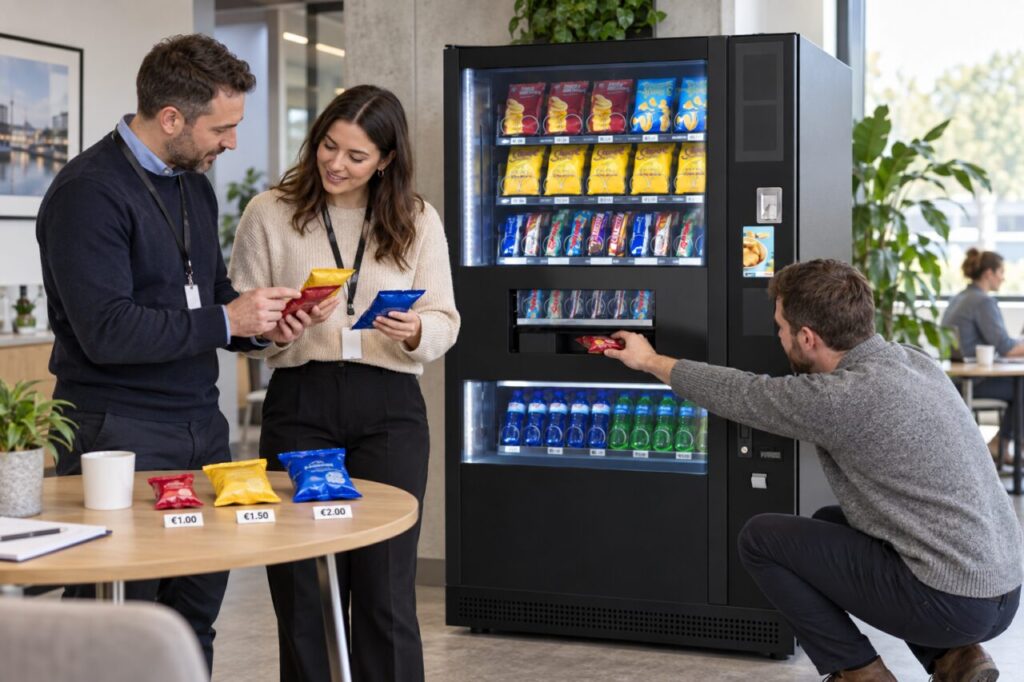
This is a range-planning exercise, not a recommendation for particular selling prices. Use actual supplier proposals and product information rather than assuming that a certain price automatically means better value or quality.
Start with the customer occasion
Ask what people need from the machine during a typical working day. A small snack with coffee, a drink after a shift and a more substantial item during a long break are different occasions. Customers may reasonably choose different products at different times.
Record the occasions you want to cover before choosing brands. This helps you avoid treating several similar premium bars as broad variety while leaving no familiar everyday option. Keep the discussion grounded in the workplace rather than copying the range from a venue with different customers.
Compare the complete pack
Look at the pack size, product type and information on the actual item. Two packets with similar names may offer different amounts or serve different preferences. Compare the whole purchase rather than the headline price in isolation.
When considering nutrition, use the label and avoid treating expensive, natural-looking or sports-branded packaging as proof of a healthier choice. Our protein bar comparison guide offers a related approach. Any product claims should come from reliable information for that exact item, not a general assumption about the category.
Make the range understandable
Ask the supplier to propose a small number of everyday and alternative options with a clear reason for each. Customers should be able to see what they are choosing and what it costs before purchasing. Similar wrappers and unclear product identification can make an apparently varied range difficult to use.
Discuss whether the proposed items fit the machine’s actual configuration. A product cannot earn its place through price alone if it does not dispense reliably. Use representative sealed packs in a demonstration and ask how future replacements would be checked.
Test demand without overreacting
Agree how the initial range will be reviewed. Look at availability, purchases and useful customer feedback together. A product that was empty during busy periods has not had the same opportunity as one that was continuously available.
Do not remove an affordable choice merely because a premium item sold well during a short promotion. Check whether the trial period represented normal attendance and normal prices. Keep changes small enough to understand which adjustment made a difference, while responding to a clear issue promptly.
Keep changes visible to the site
Ask who approves product substitutions and price changes under the service arrangement. A replacement that looks similar can change the customer offer, so the decision should use the actual new item and its proposed price. Record the reason and planned review date.
For each proposed price band, ask what customer need it serves and which alternatives remain available. Avoid setting an arbitrary equal number of selections in every band. The right balance should follow the workplace and the trial findings, with enough clarity that a customer can understand the difference between the available purchases.
Explore our vending equipment and service options when discussing how the range will be delivered. Contact our team with the workplace’s main refreshment occasions and preferences. A useful proposal explains the choices, the price structure and the review process without claiming that one range will suit every customer.