
A Vending Machine Is Moved Within the Same Room: Recheck the Customer Journey
Moving a vending machine a short distance within a room can change more than its appearance. Customers may approach from another direction, queue beside a different doorway or find the collection point less convenient. Treat the revised position as a small site change that needs checking. The machine should be moved and returned to service only through the agreed supplier or competent service arrangements, with the relevant equipment instructions followed.
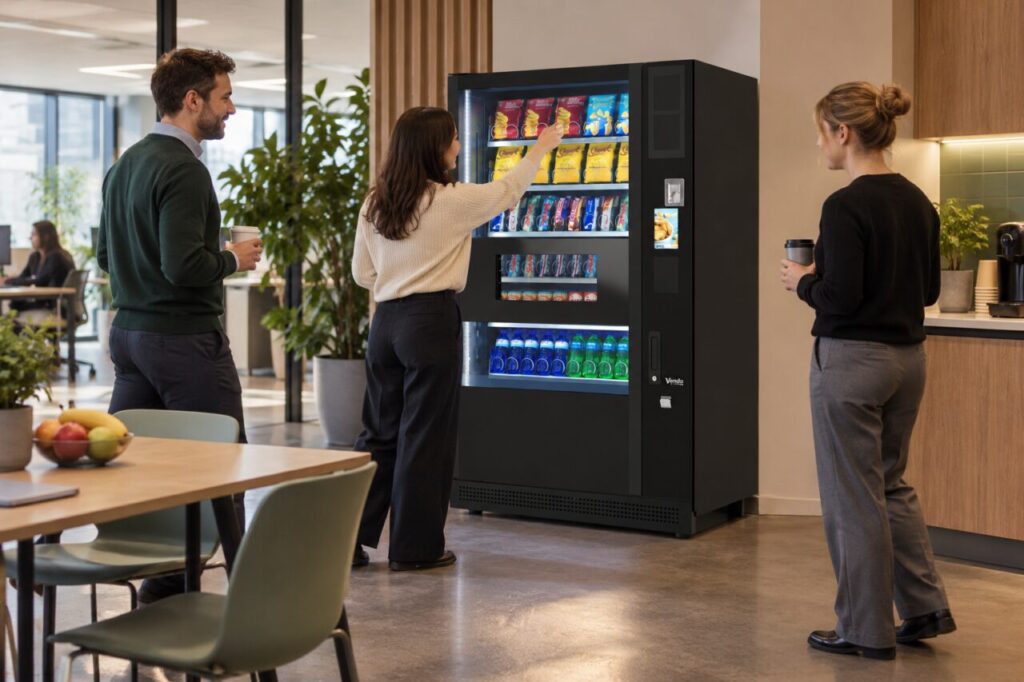
Establish what the move changes
Record the reason for the move and the proposed final position. Is it intended to create seating, improve circulation or accommodate another appliance? Share a simple room plan with the person responsible for the equipment. Include doors, furniture, sockets and any space needed for routine operation. Do not assume that a nearby electrical outlet establishes that the new position is suitable.
Ask which installation requirements need confirming for the specific machine. Clearances, ventilation, connections and levelling are matters for the relevant instructions and responsible team. Avoid quoting a universal distance or reconnecting unfamiliar equipment yourself. The purpose of the room review is to identify questions and give the service team accurate information.
Walk through an ordinary purchase
Once the equipment is ready for use, approach it as a customer would. Check whether the product display, prices and normal instructions are visible without standing in a doorway or obstructing another activity. Follow the actual selection and payment sequence. Then collect the purchase and leave the area, noticing where another person would wait.
Include people who use the room differently, where practical. Someone carrying a bag or using a mobility aid may notice a problem that an empty-room sketch misses. Record observations without declaring the site compliant with an accessibility standard on the basis of this informal exercise. If specialist assessment is needed, ask the building’s responsible team to arrange it.
Check the operator's working space
The space that customers need is only part of the requirement. Ask the operator to review access for refilling, cleaning and technical work in the new position. A nearby table may leave enough space for purchases but interfere with an open service door or trolley. Agree where furniture belongs so that the operating area does not gradually disappear after the move.
For a broader change, use the vending service overview to discuss the room’s needs with the supplier. Keep the actual service agreement and model instructions as the basis for responsibilities. Moving the cabinet does not automatically change who is authorised to handle stock, connections or internal components.
Update the small details people rely on
Check directions, asset descriptions and support instructions that refer to the old position. A help request saying “beside reception” may become misleading if the machine is now around a corner. Give the operator the revised location description and tell the site contact when the move is complete. Keep the machine identity consistent even if the room layout changes.
After a few normal operating days, ask whether the new position creates queues, missed signs or repeated questions. Review at a busy period as well as when the room is empty. A successful move should improve the intended aspect of the room while preserving a clear purchase journey and workable service access. Fixing a small layout issue promptly is easier than allowing it to become the accepted daily inconvenience.
Related guidance: Vending Packaging Litter: Place the Bin Around the Customer Journey.
Planning vending at your site? Contact the team with your location, equipment details and requirements.