
Vending Packaging Litter: Place the Bin Around the Customer Journey
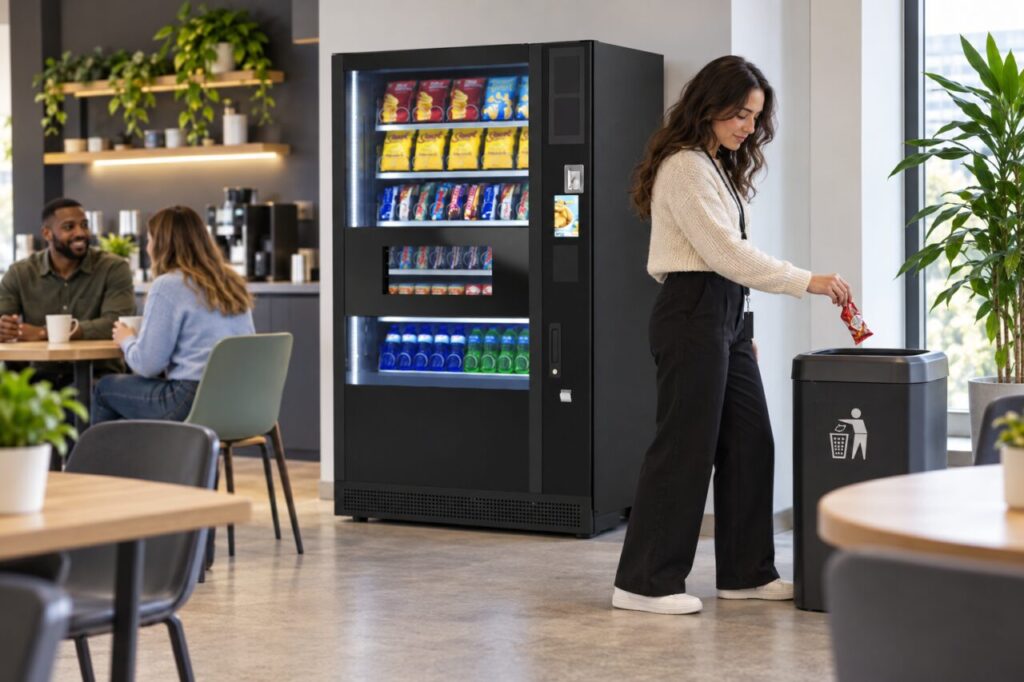
A bin placed beside a vending machine may seem like the obvious answer to packaging litter. However, customers may carry products to a seating area or another part of the workplace before opening them. Review the actual journey so waste facilities serve the point of use without obstructing the machine or its approach.
The site remains responsible for its waste-management and safety arrangements. This article is a practical layout review, not a universal rule about bin type, separation or placement. Follow the relevant collection instructions and involve the facilities team before changing a workplace route or introducing a new waste point.
Observe where packaging appears
Look at the areas where litter is found during normal use. Distinguish packaging left near the machine from material left at tables or along another route. Keep the observation factual and avoid attributing behaviour to particular individuals or groups without evidence. The purpose is to improve the arrangement, not to identify people to blame.
Ask the cleaning or facilities team what pattern they see across the day. One isolated incident may not justify a layout change. Use their practical observations alongside the customer route, while keeping the review proportionate and avoiding unnecessary monitoring or recording of individual purchases.
Keep access and service space clear
Discuss possible positions with the responsible site team. A bin should not make it harder to approach controls, collect a product or carry out an approved service visit. Do not move furniture or place containers in required circulation space simply because the location is close to the vending machine.
The guide to service working space explains why the area around the cabinet has more than one use. Consider customers and authorised operators together. Where the site has specific access or safety requirements, those should guide the assessment rather than an improvised arrangement based on appearance alone.
Match labels to the waste process
Use the site’s confirmed waste instructions when choosing labels and separation. Do not assume every snack wrapper or drink container belongs in the same stream. Packaging varies, and the relevant collection service should inform how material is handled at the workplace. Avoid making a recycling claim merely because a bin has a familiar colour.
Keep messages short and consistent with other waste points on the site. Contradictory labels can make correct use harder. If the vending range changes significantly, ask whether the existing waste information still suits the products supplied, without claiming that the equipment itself provides a complete waste-management solution.
Include servicing the bin
Assign responsibility for checking and emptying the waste point under the site’s normal process. A well-positioned bin can still create a problem if it is regularly full or the surrounding area is neglected. Do not assume the vending operator handles the site’s waste unless that responsibility is explicitly part of the agreement.
Our article on cleaning-contractor handover covers a related responsibility gap. Keep the waste arrangement visible when personnel change, and give the relevant team a route for reporting repeated problems rather than leaving each shift to improvise its own response.
When planning vending at your workplace, include what happens after customers collect their products. Review the result after any agreed layout change: is the facility easy to find, is access still clear and has the observed litter pattern changed? Record what you actually see rather than claiming a waste reduction that has not been measured.
Discuss your site layout with our team as part of the vending planning process.