
Vending Machine Dimensions: Include the Space Needed During a Service Visit
A vending machine can fit into a room while still being awkward to service. The cabinet dimensions describe the equipment, but a visit may also require access for approved opening, replenishment or maintenance activities. Ask about those needs when assessing the position, rather than discovering them after furniture has been installed around the machine.
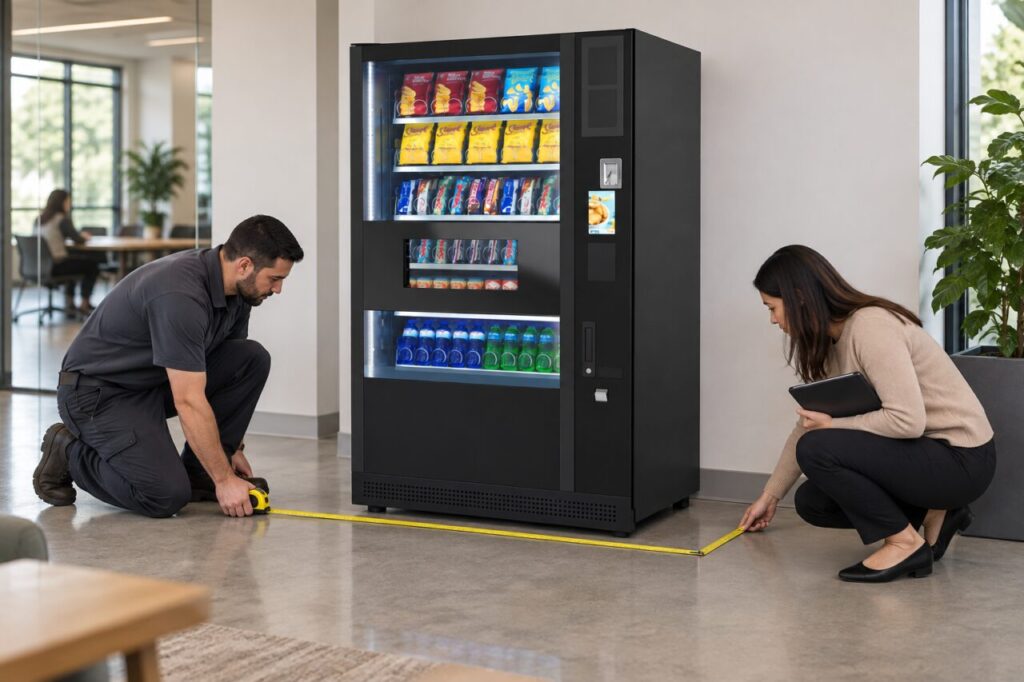
Use the requirements for the actual supplied model and the responsible service team’s process. This article does not prescribe universal clearance measurements. Installation, ventilation and technical access requirements must come from the relevant equipment guidance and site assessment, not from a guessed gap based on a photograph.
Separate customer and service use
Start by describing how customers will approach the machine during normal operation. Then ask the provider how authorised staff will work at it during a visit. These are related but different situations. A tidy customer-facing arrangement may need temporary space for approved service activity without blocking essential circulation.
Identify the items likely to be nearby, such as tables, bins or other equipment. Do not assume that staff can move them every time a visit occurs. If the plan relies on something being relocated temporarily, ask the site team whether that is realistic and agree who is responsible for the arrangement.
Ask about the complete visit
Discuss the access route, the working position and any supplies brought to the machine. A refill visit may involve stock containers, while a maintenance visit may have different needs. Ask the provider to explain the relevant process without requesting that untrained site staff open the cabinet or attempt the work themselves.
Record any model-specific requirements in the site plan. The official SandenVendo product information helps identify equipment, but confirm the installation and service instructions for the unit being supplied. A headline width and depth should not be treated as the complete site specification.
Consider the busy period
Ask how planned visits interact with the normal use of the area. If a machine stands beside a break-room entrance or shared refreshment point, discuss a suitable visit arrangement with the provider. Avoid promising unrestricted access if the area is routinely occupied or controlled by another team.
Keep emergency routes and the site’s safety arrangements under the responsible facilities process. Do not redesign access around the convenience of the machine alone. Where the proposed position creates uncertainty, seek a site assessment before the order or installation proceeds, rather than using temporary obstacles as an informal workaround.
Preserve the agreed arrangement
Once the position is agreed, keep a record of the conditions on which the assessment was based. If furniture or adjacent equipment changes, tell the provider and review the effect. A service arrangement that worked at installation can become impractical after a room is reorganised without considering the vending position.
Our guide to the layout after building work covers a related change point. Apply the same principle to smaller alterations: the final physical setting matters. Keep the site record current enough for a covering contact to understand why particular space was left available.
When considering vending machines for your site, ask about operation and servicing together. This helps the equipment choice fit the whole working arrangement rather than only the visible floor footprint. Confirmed requirements and a practical visit plan are more useful than squeezing the largest possible cabinet into the smallest apparent gap.
Request a site discussion with the intended location and relevant access information.