
Building Work Finished? Reconfirm the Vending Position Against the Final Layout
A vending position chosen during building work may change before the room is finished. Joinery, doors, furniture or service points can end up in slightly different places from the original drawing. Before installation, confirm the completed location with the supplier using current information.
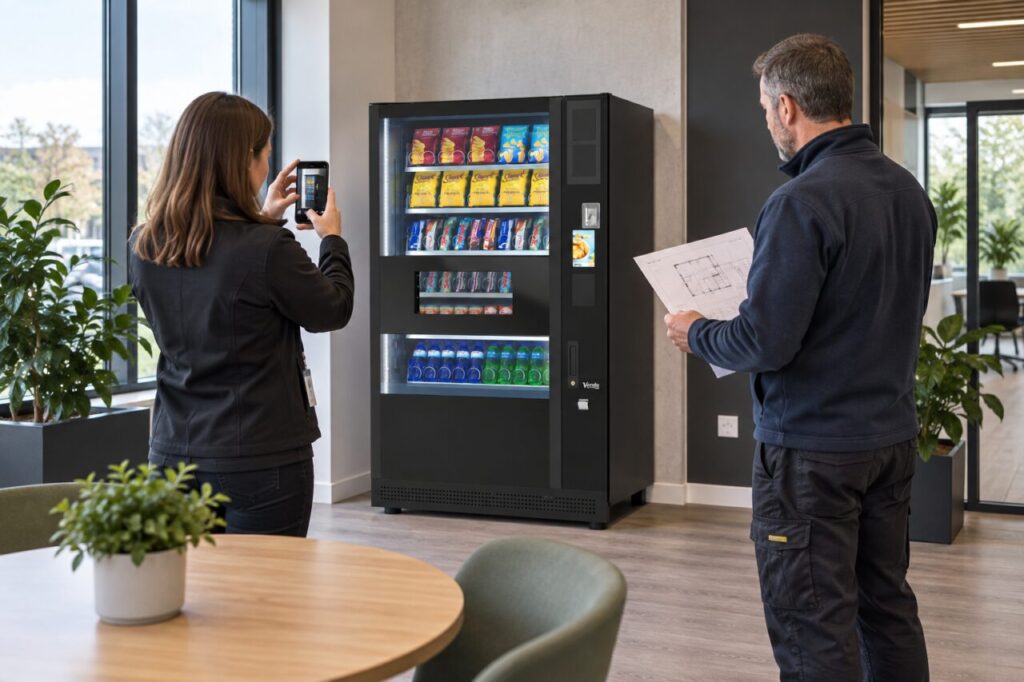
The aim is not to repeat the whole project unnecessarily. It is to identify differences that affect the agreed machine position, delivery route or customer use. A short final review can separate a harmless drawing change from an issue that needs a revised installation plan.
Use the last agreed layout as the starting point
Find the layout or site record used for the equipment proposal. Identify the machine position and the assumptions that mattered to the supplier. These may include access, surrounding space and the availability of the required site services, which should be assessed by the appropriate people.
Compare that record with the finished room rather than an intermediate construction photograph. Label new photographs with the area and date, and keep the previous version for context. A clear before-and-after record is more useful than several unexplained images sent in different messages.
Show the surrounding space
Photograph the complete position and the approach customers will use. Include adjacent furniture, doors and other equipment so the supplier can understand the relationship between them. A close-up of an empty wall may hide the very change that needs attention.
Also describe any change on the delivery route. Newly fitted doors or fixed furniture can alter access even when the final machine footprint remains available. Refer to the site video guidance if a walkthrough would explain the route more clearly than separate photographs.
Separate visual confirmation from technical approval
Photographs can help identify questions, but they do not certify the suitability of electrical work, structural conditions or equipment clearances. Ask the supplier what requires an in-person check or confirmation from the relevant competent person. Do not infer approval from the absence of a visible problem.
Keep any outstanding requirement explicit. For example, if a service point has moved, record that change and ask whether it affects the proposed arrangement. Avoid improvising extensions, altering the machine or squeezing it into the original position simply to preserve an old drawing.
Confirm readiness for installation
Agree when the area will be ready for the installation team, including completion of relevant building work and the site’s normal cleaning and access preparation. If other contractors will still be working nearby, explain that situation so the supplier can decide what coordination is required.
Ask who gives the final site readiness confirmation. Where the building contractor, facilities team and equipment supplier each have a role, make the sequence clear. A general message that the room is finished should not leave everyone assuming someone else checked the vending-specific requirements.
Update the installation record
Once changes have been assessed, save the confirmed position and any revised instructions with the order. Tell the receiving and installation contacts which version is current. Remove ambiguity in the working plan while retaining previous records through your normal document process.
When selecting vending equipment for the completed space, focus on the conditions customers and service staff will actually encounter. The useful result is a shared, current installation plan, not a collection of drawings that describe different stages of the building work.
For a review of the proposed vending position, send an enquiry with the final layout and any changes since the original survey.